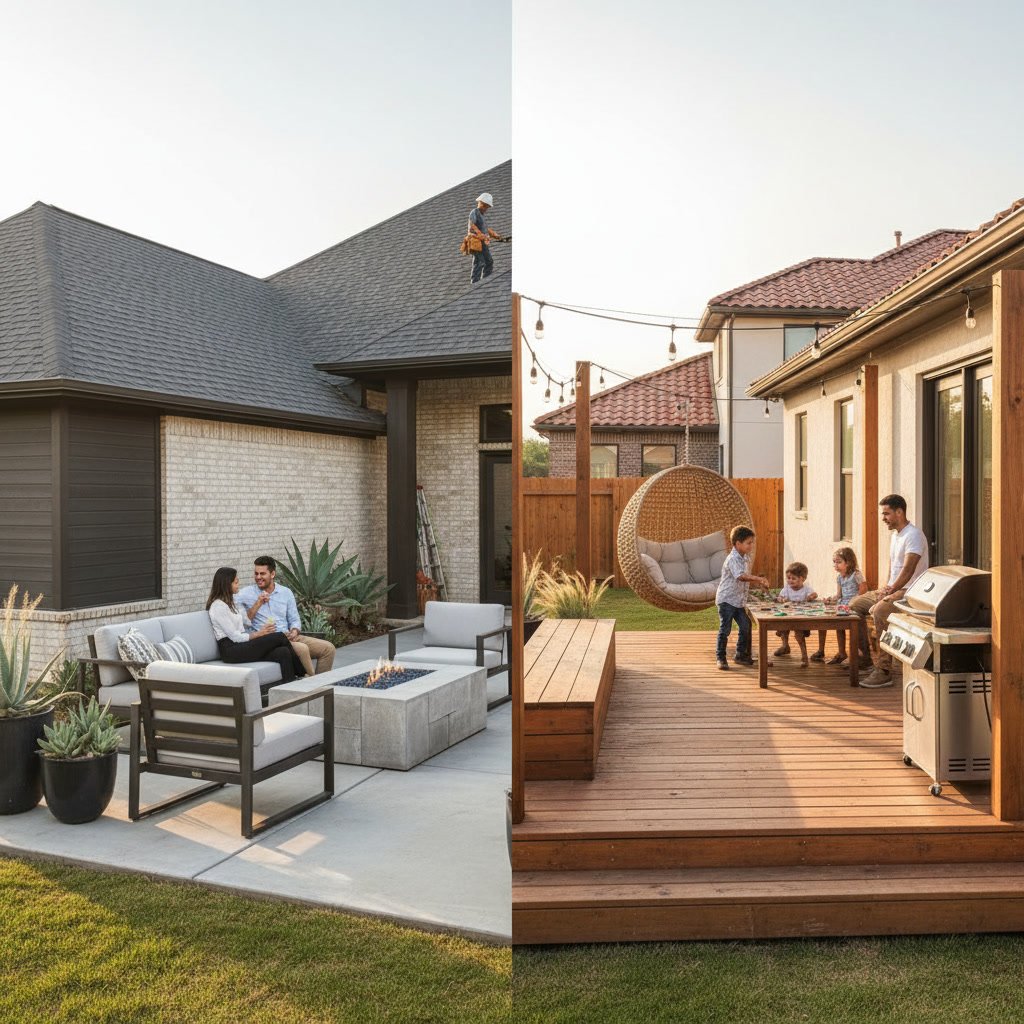
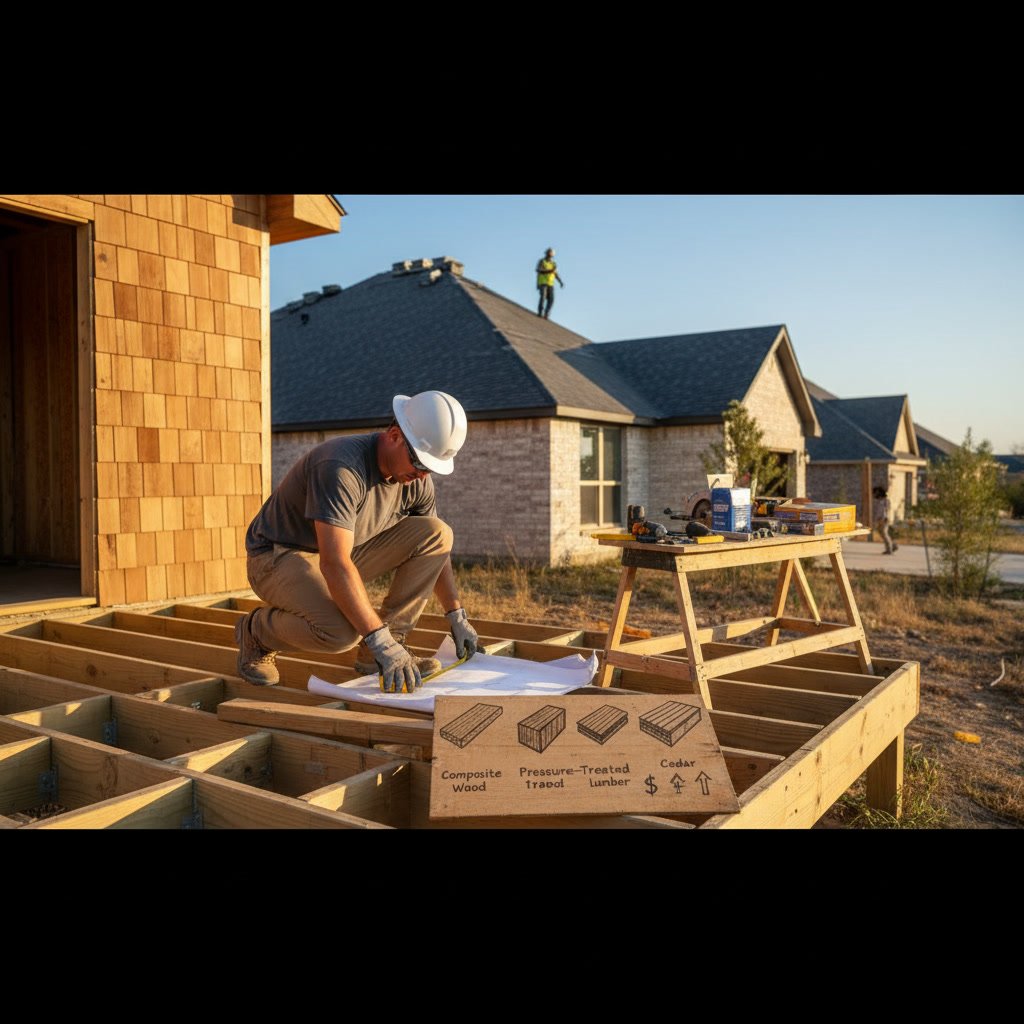
Your backyard has potential, but you’re tired of looking at bare concrete or patchy grass. A new deck could transform that space into the outdoor retreat you’ve been imagining. Before you start planning furniture layouts and grill stations, you need to know what you’re going to spend. Understanding deck cost Irving factors helps you budget accurately and avoid surprises halfway through your project.
This guide breaks down the real costs of building a deck in Irving, from materials and labor to permits and hidden expenses. You’ll see what drives prices up or down, which choices offer the best value, and how local factors affect your final bill.
What Determines Deck Cost in Irving
The price you pay for a new deck depends on several key factors. Size matters most, since materials and labor scale directly with square footage. A 12×16 foot deck requires far fewer boards and work hours than a 20×30 wraparound.
Material selection creates the biggest price spread. Pressure-treated pine costs roughly $15 to $25 per square foot installed, while composite decking runs $30 to $50 per square foot. Cedar and redwood fall somewhere in the middle at $25 to $40 per square foot.
Design complexity adds cost quickly. A simple rectangular deck at ground level costs less than an elevated structure with stairs, railings, and multiple levels. Built-in benches, planters, and custom railing designs push budgets higher but create unique outdoor spaces.
Labor accounts for roughly 40 to 60 percent of total project cost. The more complex your design, the more hours contractors need to complete the work. Demolition of an existing deck or significant site preparation increases labor expenses.
Average Deck Costs by Material Type
Pressure-treated lumber remains the most affordable option for homeowners watching their budget. A 300-square-foot deck typically costs $4,500 to $7,500 installed. This Southern Yellow Pine resists rot and insects when properly maintained, lasting 15 to 20 years with regular staining and sealing.
Composite decking eliminates maintenance hassles but requires a larger upfront investment. That same 300-square-foot deck runs $9,000 to $15,000 installed. You never need to stain or seal composite boards, and most manufacturers back their products with 25-year warranties.
Cedar offers natural beauty and moderate durability at mid-range prices. Expect to pay $7,500 to $12,000 for a 300-square-foot cedar deck. The wood weathers to an attractive silver-gray or maintains its warm tone with annual sealer applications.
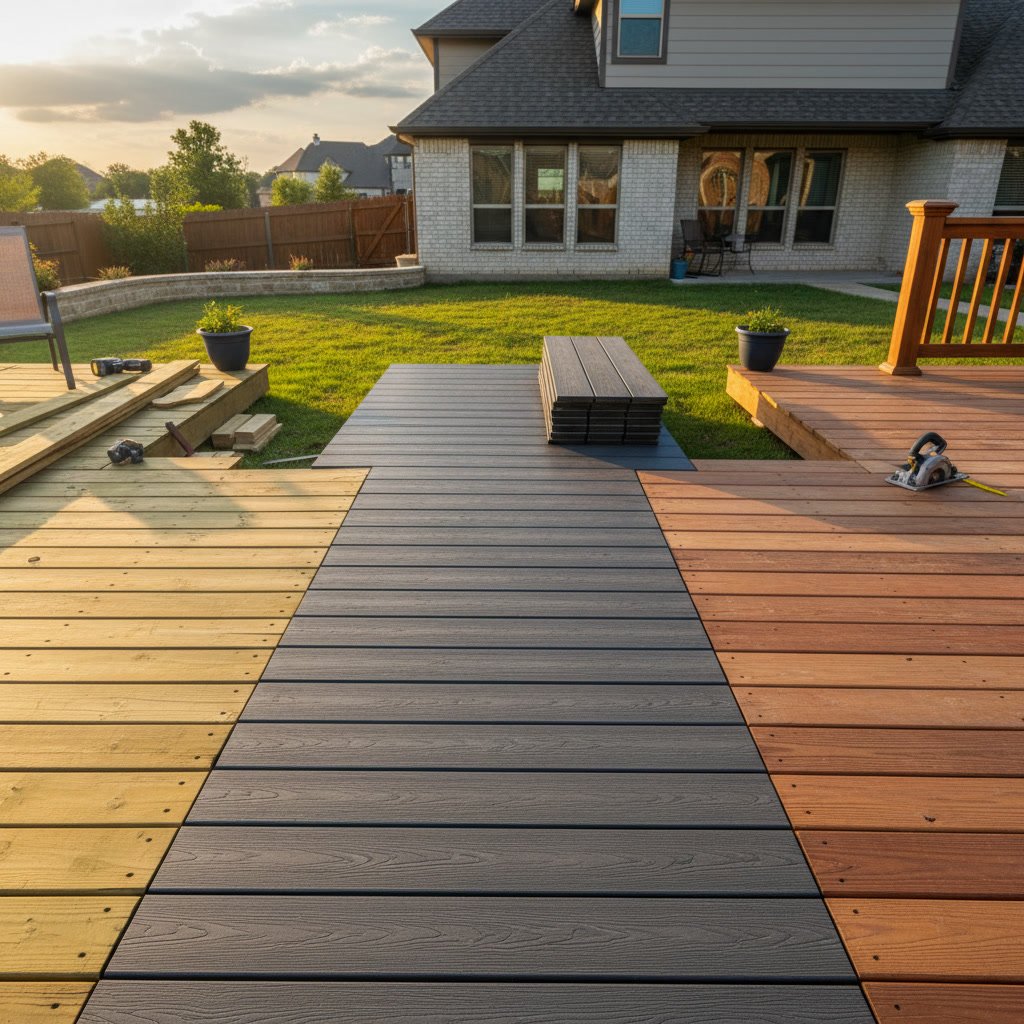
Tropical hardwoods like Ipe deliver exceptional longevity and stunning appearance but command premium prices. A 300-square-foot hardwood deck costs $12,000 to $18,000 or more. These dense woods resist scratches, fading, and decay for 40 years or longer.
Material Pros and Cons
Pressure-treated pine works well for homeowners planning to sell within ten years or those who don’t mind annual maintenance. The wood accepts stain readily and repairs easily when boards crack or splinter.
Composite decking makes sense for busy families who want to use their outdoor space instead of maintaining it. The material stays cooler than wood in direct sun and won’t fade, splinter, or harbor mold with quality brands.
Cedar and redwood appeal to homeowners who value natural materials but want better rot resistance than pressure-treated pine. Both woods contain natural oils that repel insects and moisture.
Size and Design Impact on Budget
Most Irving homeowners build decks between 200 and 400 square feet. A 200-square-foot deck provides enough space for a table, chairs, and a grill. This size typically costs $3,000 to $10,000 depending on materials.
A 300-square-foot deck accommodates larger gatherings and multiple seating areas. Budget $4,500 to $15,000 for this mid-size option that balances space with cost.
Decks exceeding 400 square feet create true outdoor living rooms with distinct zones for dining, lounging, and cooking. These larger projects run $8,000 to $25,000 or more.
Ground-level decks cost less to build than elevated structures. When your deck sits less than 30 inches above grade, you might not need railings under certain code conditions. Elevated decks require substantial support posts, beams, and always need railings.
Pro Tip: Multi-level decks add visual interest and define separate spaces, but they increase material and labor costs by 20 to 40 percent compared to single-level designs.
Built-in features enhance function but expand budgets. Integrated benches add $500 to $1,500. Pergolas or patio covers over part of the deck cost $2,000 to $8,000 depending on size and materials.
Permit and Inspection Fees
The City of Irving requires building permits for most deck construction. Permit fees typically range from $150 to $400 based on project scope and value. Your contractor should handle permit applications and scheduling inspections.
Decks must meet specific code requirements for structural integrity, railing height, stair dimensions, and footing depth. Irving sits in a region with expansive clay soils that shift with moisture changes. Proper footings prevent structural failure as the ground moves.
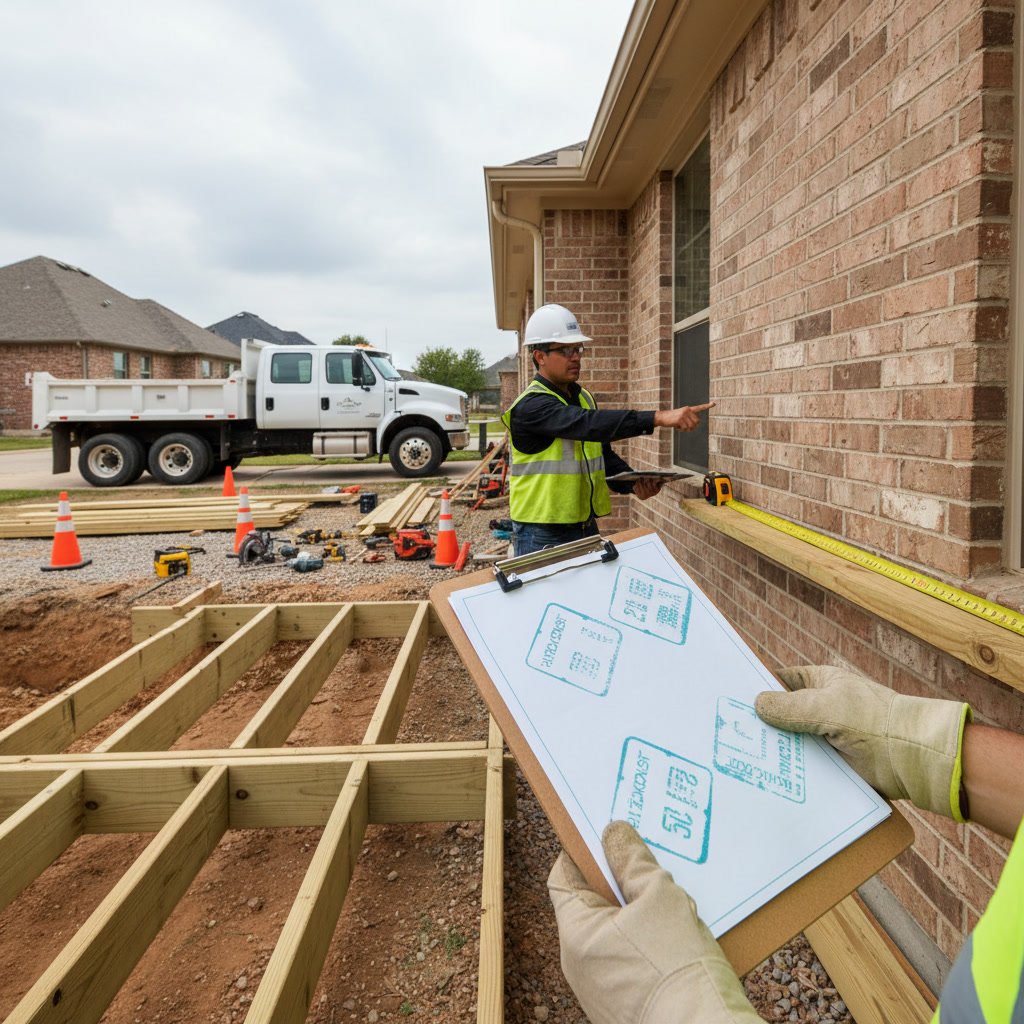
Inspection delays occasionally extend project timelines when building departments run behind schedule. Budget one to two weeks for the permit review process and factor in inspection hold points during construction.
Skipping permits creates serious problems. Unpermitted work complicates home sales, voids insurance claims after deck-related injuries, and results in fines. Buyers often demand deck removal or refuse to close when title companies discover unpermitted structures.
Additional Costs to Consider
Site preparation varies widely by property. Removing an old deck costs $500 to $2,000 depending on size and disposal fees. Grading uneven ground adds $300 to $1,000. Tree removal or stump grinding increases expenses further.
Stairs add $1,000 to $3,000 to your project. Simple box steps cost less than multi-flight staircases with intermediate landings. Railing style affects price too, with basic wood balusters costing less than metal cable systems or glass panels.
Lighting transforms your deck into usable evening space. Budget $500 to $2,000 for post cap lights, stair lighting, and under-rail fixtures. Low-voltage LED systems minimize electrical work and operating costs.
Finish costs depend on material choice. Pressure-treated decks need stain and sealer every one to three years at $300 to $600 per application. Composite and PVC decking requires only occasional washing with soap and water.
Many homeowners add complementary features during deck projects. Pergolas provide shade and architectural interest. Some families combine deck projects with fence installation for privacy or concrete patios that extend entertainment space.
How Irving Location Affects Pricing
Local labor rates influence total project cost. Irving contractors charge competitive rates compared to surrounding areas, with most quoting $40 to $65 per hour for skilled carpentry work. Projects in Plano or The Colony typically see similar pricing.
Material availability rarely creates problems in the Dallas-Fort Worth area. Multiple lumber yards and building supply stores serve Irving, keeping prices competitive. Delivery fees add $50 to $150 for most residential projects.
Climate considerations affect material choices and costs. North Texas heat, humidity, and occasional severe weather demand durable materials and proper construction techniques. Composite decking’s heat resistance matters during July and August when surface temperatures soar.
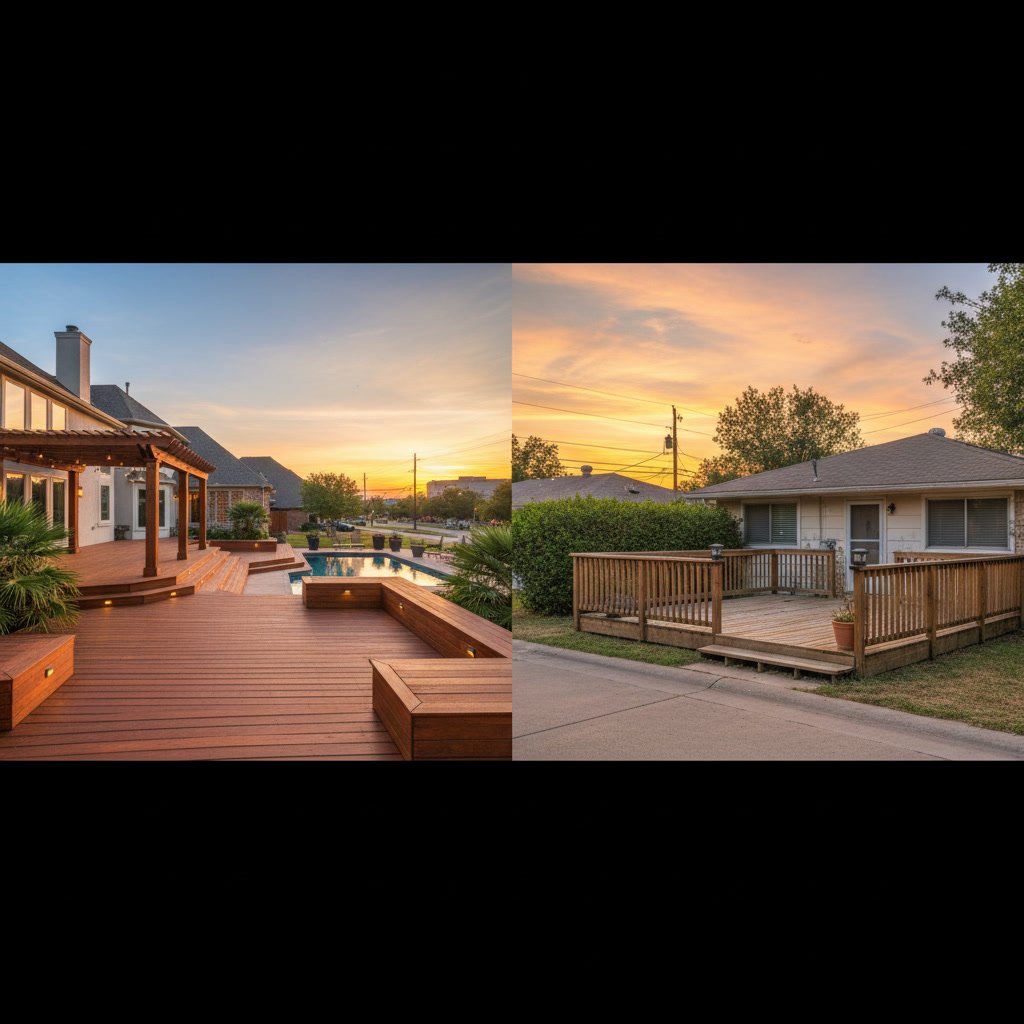
HOA requirements in many Irving neighborhoods dictate design elements, color schemes, and approval processes. Review your association’s architectural guidelines before planning your deck. Some HOAs require specific railing styles or prohibit certain materials, potentially affecting your budget.
Getting Accurate Estimates
Detailed quotes from multiple contractors help you compare pricing fairly. Good estimates specify materials by brand and grade, break out labor costs separately, and list included services like permits and disposal.
Watch for incomplete bids that exclude important elements. Some contractors lowball estimates by omitting railings, stairs, or finish costs. Others use inferior lumber grades or outdated composite products.
Request references and verify contractor licensing and insurance. Ask previous clients about project timelines, communication quality, and how contractors handled unexpected issues. Companies like Moore Construction Co. build reputations on completing projects as quoted without surprise charges.
Timing affects availability and sometimes pricing. Spring and early summer book quickly as homeowners rush to complete outdoor projects before peak entertaining season. Fall often offers better contractor availability and sometimes modest discounts.
Financing options make larger deck projects manageable. Many contractors offer payment plans or work with home improvement lenders. Compare interest rates and terms carefully, since financing adds to total project cost.
Key Takeaway: Get at least three detailed written estimates before choosing a contractor. The lowest bid isn’t always the best value if it cuts corners on materials or workmanship.
Maximizing Your Deck Investment
Smart material choices balance upfront cost with long-term value. Pressure-treated lumber makes sense for budget-conscious projects, but composite decking eliminates maintenance expenses that accumulate over decades.
Phased construction spreads costs across multiple seasons. Build the main deck now and add railings, stairs, or a pergola later. This approach requires careful planning to avoid rework but helps manage cash flow.
Simple designs reduce labor costs without sacrificing function. A well-built rectangular deck serves families just as effectively as complex multi-level designs. Save decorative elements for furniture and landscaping instead of expensive built-ins.
Quality construction protects your investment. Proper joist spacing, secure ledger board attachment, and adequate footings prevent costly repairs years later. Similar attention to detail matters for other exterior projects like roofing, where quality installation extends material lifespan significantly.
Regular maintenance preserves deck appearance and safety. Clean composite decking twice yearly to prevent mildew. Inspect and tighten fasteners annually. Seal or stain wood decks according to manufacturer recommendations.
Frequently Asked Questions
How long does it take to build a deck in Irving
Most residential decks take one to two weeks from permit approval to completion. Simple ground-level designs might finish in three to five days, while complex elevated structures with multiple features need three weeks or longer. Weather delays and inspection scheduling affect timelines.
Do I need to replace my deck or can I refinish it
Structural damage, widespread rot, or loose railings usually require replacement. Surface wear, faded stain, or minor board damage often responds to refinishing. Have a contractor inspect your deck to assess structural integrity before deciding. Refinishing costs $3 to $8 per square foot compared to $15 to $50 for replacement.
What deck material lasts longest in Texas heat
Capped composite decking and tropical hardwoods offer the best heat and UV resistance. Quality composite brands resist fading and maintain structural integrity for 25 years or more. Ipe and other hardwoods last 40-plus years with minimal maintenance. Pressure-treated pine requires more upkeep but performs adequately when properly maintained.
Can I build a deck myself to save money
Experienced DIYers can build simple ground-level decks and save 40 to 60 percent on labor costs. Elevated decks require carpentry skills, proper tools, and code knowledge. Mistakes create safety hazards and expensive corrections. Most homeowners find professional installation worth the cost for complex projects. Understanding basic construction helps whether you’re comparing contractors or reading about carport costs in nearby areas.
How much does deck size affect resale value
Well-maintained decks typically return 60 to 80 percent of construction cost at resale. Oversized decks that consume most of the backyard may reduce appeal to some buyers. Right-sized decks proportional to home size and lot dimensions add the most value. Quality materials and professional construction matter more than square footage alone.
Planning Your Irving Deck Project
Understanding deck cost Irving factors helps you budget realistically and make informed material choices. Most homeowners invest $5,000 to $15,000 for quality decks that enhance outdoor living and add home value. Material selection, size, and design complexity determine where your project falls in that range.
Moore Construction Co. provides detailed deck estimates for homeowners throughout Irving and surrounding communities. Our experienced team handles everything from design consultation through final inspection, treating your project with the care we’d give our own family’s home. Call +19728205950 to discuss your deck plans and receive a comprehensive quote.
Ready to explore your options? Visit our decks page to see completed projects and learn more about our construction process.