


When it comes down to it, the choice between sliding and casement windows boils down to a simple trade-off: sliding windows offer space-saving simplicity and big, open views, while casement windows deliver unbeatable ventilation and a tighter, more energy-efficient seal. Your decision really hinges on what you value more—sleek, modern aesthetics and effortless operation, or maximizing airflow and battening down the hatches against the weather.
Decoding Your Window Options
Choosing the right windows for your home is about more than just looks. The style you pick directly impacts your home's energy efficiency, how comfortable you feel inside, and even your peace of mind when it comes to security. This guide is designed to cut through the noise, giving you a straightforward comparison of sliding and casement windows, specifically for Dallas-Fort Worth homeowners like you.
We'll break down the important differences in how they operate, how they perform against our Texas weather, and what they mean for your home's value in the long run.
This quick decision tree can help you visualize which window style clicks with your top priorities, whether that's getting a great cross-breeze or dealing with a tight space.
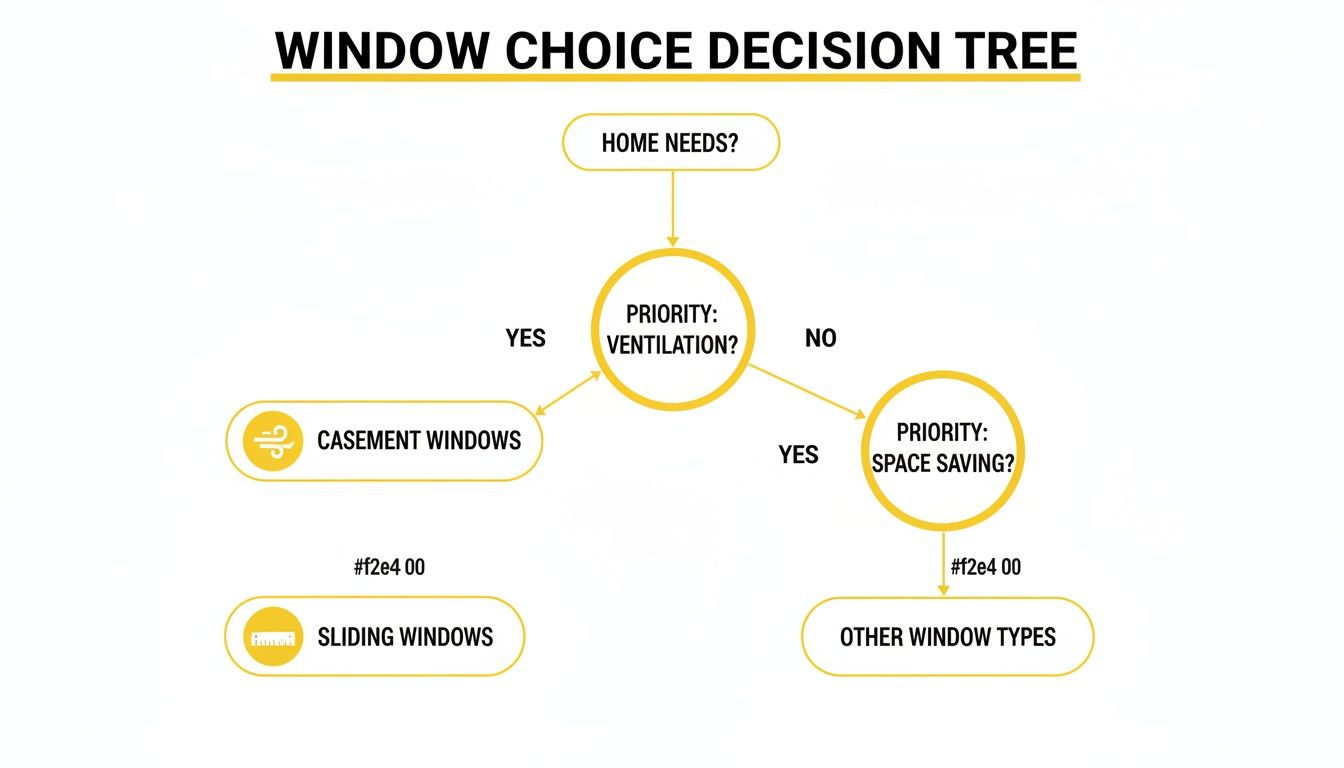
As you can see, if getting as much fresh air as possible is your main goal, casement windows are the clear winner. On the other hand, sliding windows are the perfect solution for spots where you don't have much clearance outside.
Sliding vs Casement Windows At a Glance
To make the sliding vs. casement debate a little easier, we've put together a quick summary table comparing their most important features. This should give you a fast look at the core strengths and potential downsides of each before we get into the nitty-gritty details.
| Feature | Sliding Windows | Casement Windows |
|---|---|---|
| Operation | Sashes slide horizontally on a track. | Opens outward from the side with a crank. |
| Ventilation | Good, but only half the window can be open. | Excellent, the entire sash opens to catch breezes. |
| Energy Efficiency | Good, relies on weatherstripping at meeting rails. | Superior, creates an airtight seal when closed. |
| Best For | Modern homes, tight spaces, panoramic views. | Traditional homes, hard-to-reach areas. |
| Security | Generally secure with latch locks. | Highly secure with multi-point locking systems. |
After looking at the table, it's clear that both options have their place. But it's worth remembering that the right window does more than just fill a hole in the wall—it enhances how you live in your home and boosts its overall value.
A key takeaway here is that casement windows often come out on top for security and energy efficiency. That's all thanks to their compression seal technology, where the sash presses tightly against the frame when locked. This design creates a formidable barrier against both potential intruders and the harsh Dallas weather we all know and love.
As you weigh these factors, getting expert advice tailored to your home can make all the difference. Exploring professional window installation services can provide the clarity you need and ensure a perfect, long-lasting fit for your property.
How These Windows Actually Work and Let Air In
The way a window opens and closes might seem like a small detail, but it completely changes how you use it every day. It affects everything from how easy it is to open over a kitchen sink to the quality of the breeze you get on a nice spring day in Dallas. When you're looking at sliding vs. casement windows, the biggest difference starts right here with their basic mechanics.
Sliding windows, sometimes called gliding windows, are the definition of simple. One sash just slides horizontally over the other on a track. That’s it. Because nothing swings in or out, they're the perfect choice for tight spaces. Think about that wall along your narrow side yard, the window behind your patio furniture, or a spot on the deck where a window swinging outward would just get in the way.
The Big Difference in Airflow
Casement windows, on the other hand, operate with a hand crank. A few turns of the handle and the window sash pivots outward, opening from the side just like a little door. This isn't just a different way to open a window; it's a game-changer for ventilation.
When you're making a choice, this is a huge factor. A sliding window gives you decent airflow, but since one panel is always fixed in place, you can only ever open up 50% of the total window area.
Here's where a casement window really shines: it acts like a sail. The open sash can actually catch breezes coming from the side and funnel them straight into your house. This creates way more air movement than a slider that's only halfway open, making casements the clear winner for rooms that need good cross-ventilation.
Let's Talk Real-World Ventilation
Picture a warm Dallas evening where you'd rather not crank up the AC just yet.
- With Sliding Windows: You open them in the living room and bedroom. You’ll get a nice, direct breeze, but it’s limited to half the window’s total size. It's pleasant, but not powerful.
- With Casement Windows: You crank them open all the way. Those outward-swinging sashes catch that southerly breeze and direct it right inside, creating a strong cross-current that can cool down the whole room.
This ability to direct air makes casement windows incredibly effective if you love using natural ventilation to keep your cooling costs down. The crank also gives you total control, letting you fine-tune the opening from just a tiny crack to the full 90 degrees. So while sliders are unbeatable for their space-saving design, casements are the champions when you want maximum, controlled airflow.
Analyzing Energy Efficiency And Weather Resistance
In the Dallas-Fort Worth area, we know a thing or two about extreme weather. Between the summer heat that sends our AC units into overdrive and storms that roll in out of nowhere, a window's ability to seal out the elements isn't just a nice feature—it's an absolute must-have. When you get down to the nuts and bolts of how sliding and casement windows operate, you’ll see one style has a clear advantage in this department.
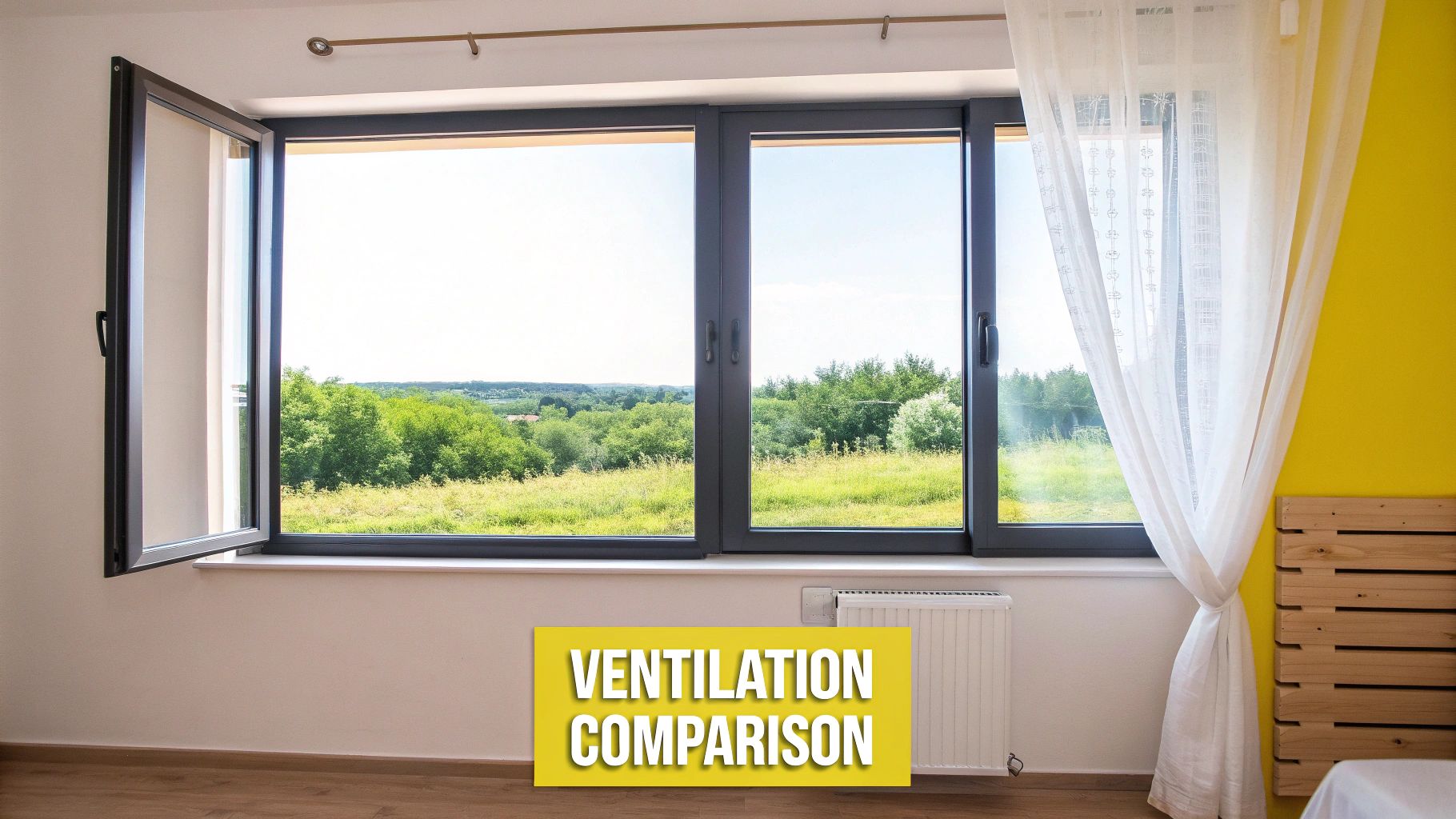
Casement windows are engineered from the ground up for a superior seal. When you turn that crank, the window sash pulls inward, pressing tightly against the weatherstripping on all four sides of the frame. This creates a powerful, continuous compression seal that makes it one of the most airtight window designs you can get.
For Dallas homeowners, that tight seal is your first line of defense against our brutal summer heat and high winds. It drastically cuts down on air infiltration, keeping your cool air in and the hot air out, which can lead to real savings on your energy bills.
Sliding windows, on the other hand, use weatherstripping where the two sashes overlap and along the track they slide on. Modern sliders have come a long way and offer decent performance, but the design itself is just more susceptible to small air leaks over the years. As the weatherstripping wears down and debris collects in the track, that seal can be compromised.
Performance During Severe Weather
When we talk about weather resistance, especially during Texas storm season, the locking mechanism is a game-changer. Here's where the casement window really pulls ahead.
- Casement Windows: These almost always feature multi-point locking systems. This means the sash is secured to the frame in several spots, not just one. Combined with that compression seal, you get an incredibly tough barrier against wind-driven rain and the high-pressure winds we often see.
- Sliding Windows: Your typical slider uses a simple latch where the two sashes meet. It’s perfectly secure for everyday use, but that single point of contact just isn't as robust against extreme weather as a multi-point system.
The proof is in the performance. When every degree of cooling counts during a Texas summer, the airtight seal of a casement window gives you better peace of mind and real, measurable value in the long run.
Optimizing Your Home's Thermal Performance
At the end of the day, the choice often comes down to prioritizing peak performance. While both window types can be upgraded with fantastic, energy-efficient glass packages, the fundamental structure of a casement gives it an undeniable edge in stopping energy loss.
Of course, beyond the window itself, you can add layers of protection. Solutions like residential window tinting can further boost your home’s thermal performance, reflecting even more of that intense Texas sun. It all works together to keep your home comfortable and your energy bills in check.
Understanding Cost Investment And Long Term Value
When you're comparing sliding and casement windows, the conversation about money starts with the initial price tag but definitely doesn't end there. To make a smart investment in your Dallas home, you need to look at both the upfront cost and what you get back over the long haul.
Generally, sliding windows are the more budget-friendly choice right out of the gate. Their design is simpler, with fewer moving parts, which usually means the installation is quicker and less complex.
But the full financial picture is about more than just what you pay on day one. It’s really about the return on investment over the window's entire lifespan. This is where casement windows start to make a compelling case for themselves.
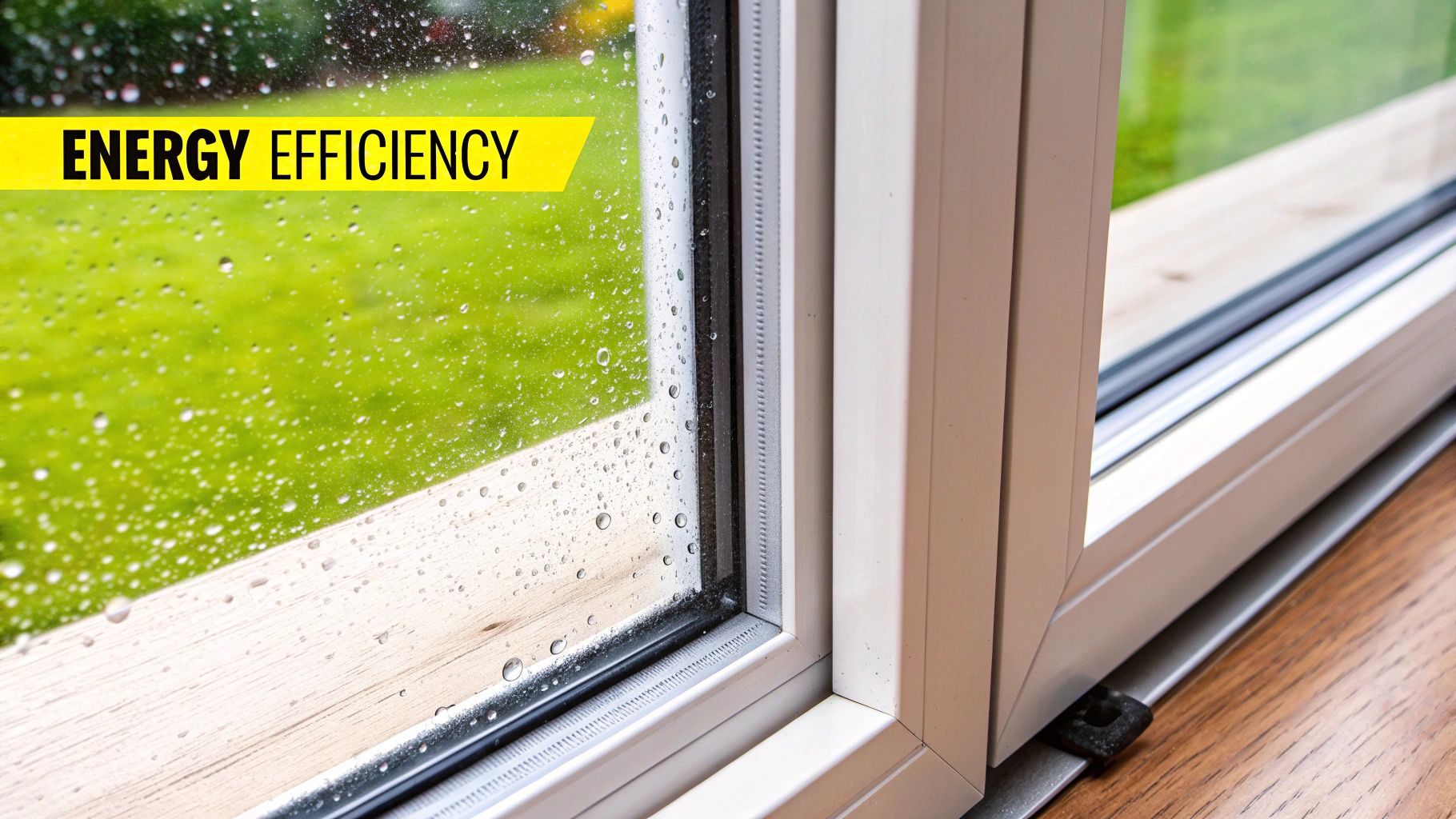
Analyzing Lifetime Value And Efficiency Gains
The fantastic energy efficiency of casement windows can lead to real savings on your utility bills. Their airtight compression seal is simply better at stopping air leakage than the weatherstripping on sliding windows. That means your HVAC system doesn't have to work nearly as hard to keep things comfortable during our brutal Texas summers. Over 15 or 20 years, those savings can really add up and eat into their higher initial cost.
Durability is another huge piece of the puzzle. Yes, casement windows have higher installation costs—sometimes 20% more than sliders because of the more intricate hardware. But that's often balanced by their longevity. A well-maintained casement window can last up to 30 years, while a sliding window typically has a 20-25 year lifespan. You can learn more about the growing casement window market to see the trend.
The decision often comes down to balancing your immediate budget against future returns. A lower upfront cost for sliders might be tempting now, but the cumulative energy savings and longer lifespan of casements could provide much greater value over time.
Material Choices And Final Costs
The material you pick—like vinyl, fiberglass, or wood—will also have a big impact on the final price for either style.
Vinyl is often the most cost-effective route for both sliding and casement windows, and it offers great durability with low maintenance. Wood, on the other hand, is beautiful but is definitely a higher-end investment.
To get an accurate comparison that's tailored to your home, a professional estimate is the only way to go. Talking with experts on window replacement services will give you a clear picture of how different materials and styles will affect your specific budget and the long-term value of your home.
Matching Window Style To Your Home's Architecture
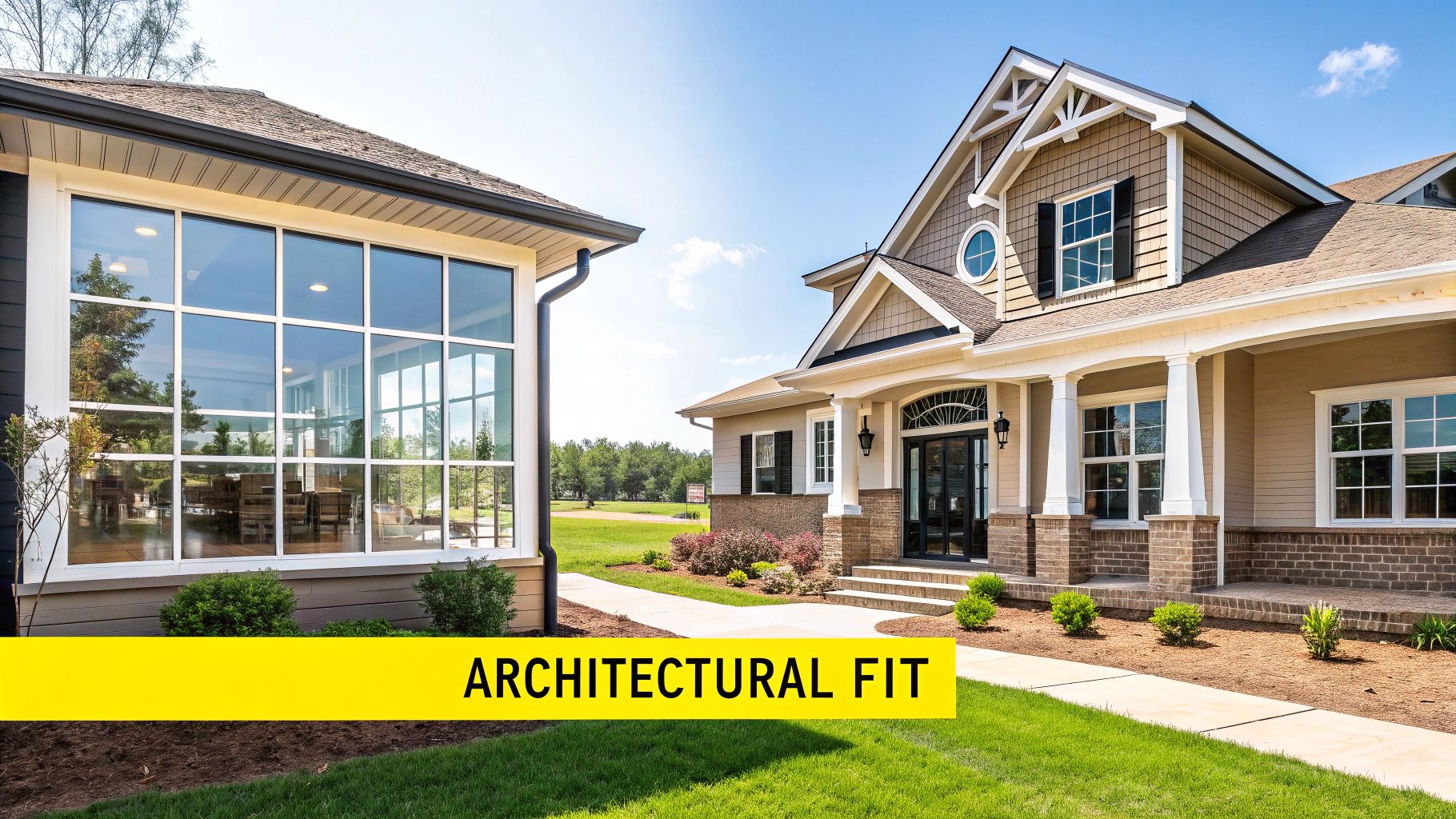
Think of a window as more than just a piece of glass in a wall. It's a critical architectural feature, one that helps define your home's entire personality and curb appeal. The right window choice can make your home's design sing, while the wrong one can feel jarring and out of place. This is especially true when you're weighing the very different aesthetics of sliding versus casement windows.
Sliding windows, with their clean horizontal lines and wonderfully simple frames, are a natural fit for modern and contemporary homes. Their design is all about emphasizing width and an uncluttered feel, which makes them the perfect choice for certain architectural styles.
The Modern Appeal of Sliding Windows
Sliding windows really shine in homes where a strong connection to the outdoors and a minimalist look are priorities. Their wide, uninterrupted panes of glass offer sweeping panoramic views, effectively bringing the landscape right into your living space—a true hallmark of contemporary design.
They look right at home in these styles:
- Ranch Homes: The low-slung, horizontal profile of a classic ranch house is mirrored perfectly by the shape and motion of a sliding window. It just works.
- Contemporary and Mid-Century Modern: These styles are all about simple forms, geometric lines, and large glass areas. Sliders fit in seamlessly, enhancing that sleek look without adding any fussy details.
The beautiful simplicity of a sliding window gives you an unobstructed sightline, especially with larger units. This makes them a go-to choice for any room you want to feel open, bright, and airy.
The Timeless Elegance of Casement Windows
On the other hand, casement windows bring a more traditional and classic charm to the table. Their vertical shape and the ability to feature decorative grilles or muntins make them incredibly versatile for homes that celebrate rich detail and historic character. They offer a touch of sophistication that sliders often can't match.
Casement windows are often the best choice for these home styles:
- Craftsman and Bungalow: The beautiful woodwork and classic lines of a Craftsman home are accented perfectly by casement windows, which often look fantastic grouped in sets of two or three.
- Tudor and Colonial: These traditional, European-inspired designs feel complete with the classic, door-like swing of a casement window, which aligns perfectly with their historical roots.
One of the biggest architectural wins for a casement window is its ability to give you a 100% unobstructed view when fully open. Unlike a slider or a double-hung window, there’s no center rail or sash cutting your line of sight in half. It’s just a pure, clear connection to the outdoors.
At the end of the day, the goal is harmony. A sliding window on a Tudor home can look awkward, just as a detailed casement might disrupt the clean flow of an ultra-modern design. Matching the window to your home’s built-in style is absolutely critical for a cohesive and beautiful result.
A Practical Look At Maintenance And Security
Beyond looks and energy ratings, your day-to-day life with new windows really comes down to the practical stuff: maintenance and security. When you put sliding and casement windows head-to-head, you start to see some major differences in both the upkeep required and the peace of mind they offer.
Sliding windows are built on a track system—that's their biggest strength for operation, but also their main point of failure when it comes to maintenance. Over time, those tracks inevitably become a magnet for dust, leaves, and all sorts of gunk. Once that debris builds up, the window gets harder to slide and the seal can even be compromised.
To keep them working right, you have to clean the tracks regularly. Usually, a quick vacuum and a wipe-down with a damp cloth will do the trick. It's not a hard job, but you have to stay on top of it to avoid problems down the line.
Casement windows operate with a crank, so their needs are a little different. The moving parts in the crank and hinge might need a bit of lubrication every now and then to keep things turning smoothly. The big plus? No tracks to collect dirt, which makes that part of cleaning a non-issue. No matter which style you lean towards, understanding the importance of regular window maintenance is key to making sure they last and perform well for years.
Comparing Security And Ease Of Use
When it comes to securing your home, casement windows have a clear edge. Their design is inherently more secure, thanks to multi-point locking systems with hook-shaped locks that embed directly into the window frame.
When you close and lock a casement window, the sash is pulled incredibly tight against the frame and secured in several spots at once. This creates a powerful seal that is extremely difficult for anyone to pry open from the outside, giving homeowners a serious upgrade in security.
Casement windows are often considered one of the most secure window types available. Their locking mechanism, combined with the compression seal, creates a formidable barrier that deters potential intruders far more effectively than a simple latch.
Sliding windows, on the other hand, typically rely on a simple latch where the two sashes meet in the middle. While these locks do their job, that single locking point can be a weak spot compared to the robust, multi-point systems you'll find on casements.
Finally, think about where the window is going. The crank on a casement window makes it the perfect solution for hard-to-reach places, like over a kitchen sink or behind the couch. It's a lot easier to turn a small crank than it is to get enough leverage to slide a heavy window sash open when you're leaning over something.
A Few Common Questions We Hear
When you're trying to decide between sliding and casement windows, a few questions always seem to pop up. Getting straight answers is the best way to feel good about your investment and pick the style that's truly right for your house and how you live in it.
Are Casement Windows Better For Storm Protection?
Yes, without a doubt. Casement windows offer much better protection during the kind of storms we see in the Dallas-Fort Worth area. Their design is just inherently superior for weather resistance.
When you crank a casement window shut, the sash presses firmly into the frame, creating an airtight seal that is incredibly effective at keeping wind-driven rain out. On top of that, their multi-point locking systems secure the window in several places, making the whole unit more rigid and resistant to high winds.
When it comes to standing up to severe weather, the robust, multi-point locking mechanism of a casement window gives it a huge security and structural advantage over the simple latch on most sliding windows.
Can I Replace My Sliding Windows With Casement Windows?
Absolutely. Swapping out old sliding windows for new casement windows is a common—and very smart—home upgrade. It's a project we handle all the time.
A professional installer like our team at Moore Construction Co. will make sure the new casement unit is measured perfectly to fit the existing opening. Making this switch can dramatically improve your home’s ventilation, energy efficiency, and security, making it a fantastic investment in your property.
Which Window Type Is Easier To Clean?
This is a bit of a toss-up, as both styles have great modern features to make cleaning less of a chore. Many sliding windows are designed so the sashes can be lifted right out of their tracks, letting you clean both sides from inside or outside your home with ease.
Newer casement windows, however, often come with "easy-clean" or egress hinges. These clever hinges let the sash pivot toward the middle of the frame, which gives you safe and easy access to the exterior glass from inside your house. This feature is a game-changer for cleaning second-story windows without ever having to get on a ladder.
Have more questions? We’ve probably answered them. Take a look at our complete window replacement FAQ to get all the details you need.
Ready to upgrade your home with windows that deliver on both performance and curb appeal? The experts at Moore Construction Co. are here to help you choose and install the perfect windows for your Dallas-Fort Worth home. Schedule your free, no-obligation estimate today by visiting us at https://mooreconstructionco.com.
Made with the Outrank app


