


So, what exactly is Hardie Plank siding? You’ve probably heard the name thrown around, and for good reason. It’s the top brand name for fiber cement siding, a tough-as-nails composite material made from cement, sand, and cellulose fibers.
Imagine getting the classic, beautiful look of real wood siding, but without all the headaches. No more worrying about rot, termites, or constant repainting. That's the promise of Hardie Plank.
Understanding Hardie Plank and Its Appeal in DFW
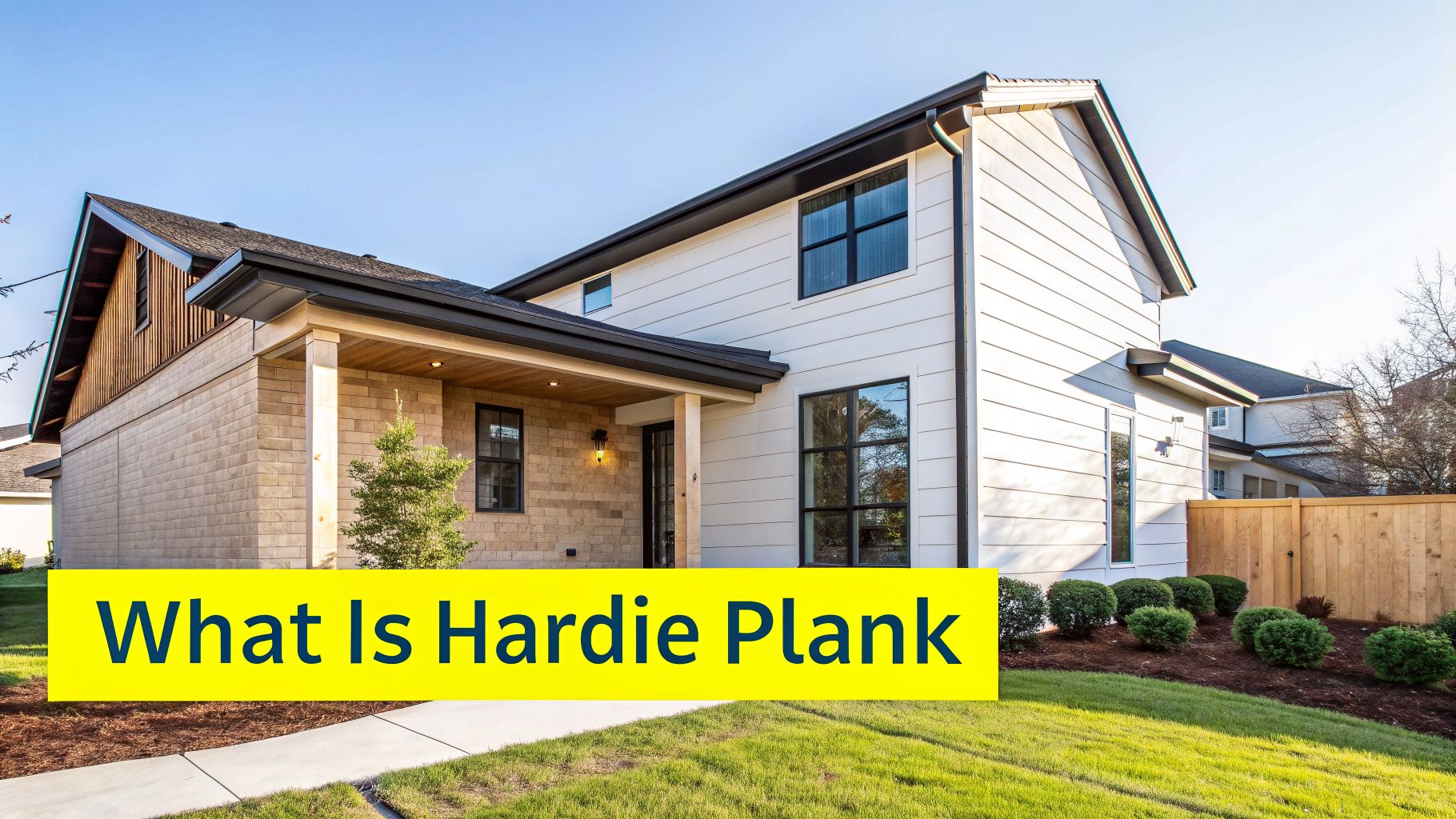
While many people use "Hardie Plank" to refer to any fiber cement siding, it's actually the specific product made by the James Hardie company. It's a bit like how everyone calls facial tissues "Kleenex." James Hardie didn't just invent the category; they perfected it, making their name the one everyone knows and trusts.
This siding has become a go-to choice for homeowners across Dallas-Fort Worth because it's practically built for our weather. The DFW climate isn't kind to home exteriors. We get scorching sun, suffocating humidity, and then out of nowhere, a violent hailstorm. Traditional wood siding warps and rots in these conditions, and vinyl can get brittle, crack from hail, or even melt in the summer heat.
A Material Built for Texas Weather
Hardie Plank was designed from the ground up to handle these exact problems. Its dense, solid composition makes it incredibly resistant to the biggest threats we face here in North Texas.
For a quick overview, here's a look at the essentials of what makes Hardie Plank so special.
Hardie Plank Siding at a Glance
| Characteristic | Description |
|---|---|
| Composition | A proprietary mix of Portland cement, sand, water, and cellulose fibers. |
| Aesthetic | Beautifully mimics the look of real wood siding without the maintenance downsides. |
| Durability | Extremely resistant to impact from hail, wind, and everyday life. |
| Weather Performance | Won't swell, buckle, or crack from DFW's humidity and temperature swings. |
| Pest & Fire Resistance | It’s non-combustible and offers no appeal to termites or other pests. |
This table shows why it's more than just a pretty face; it’s a genuinely robust building material.
The real value of Hardie Plank lies in its ability to maintain both its structural integrity and its beautiful appearance through decades of harsh weather. It’s an investment in resilience.
When you choose Hardie Plank, you're really choosing peace of mind. You get that premium, high-end look that makes your home stand out, all while knowing it's wrapped in a protective layer built to last. It’s a smart, practical choice that tackles the real-world challenges of owning a home in our region, making it one of the best upgrades you can make.
The Science Behind a Stronger Siding
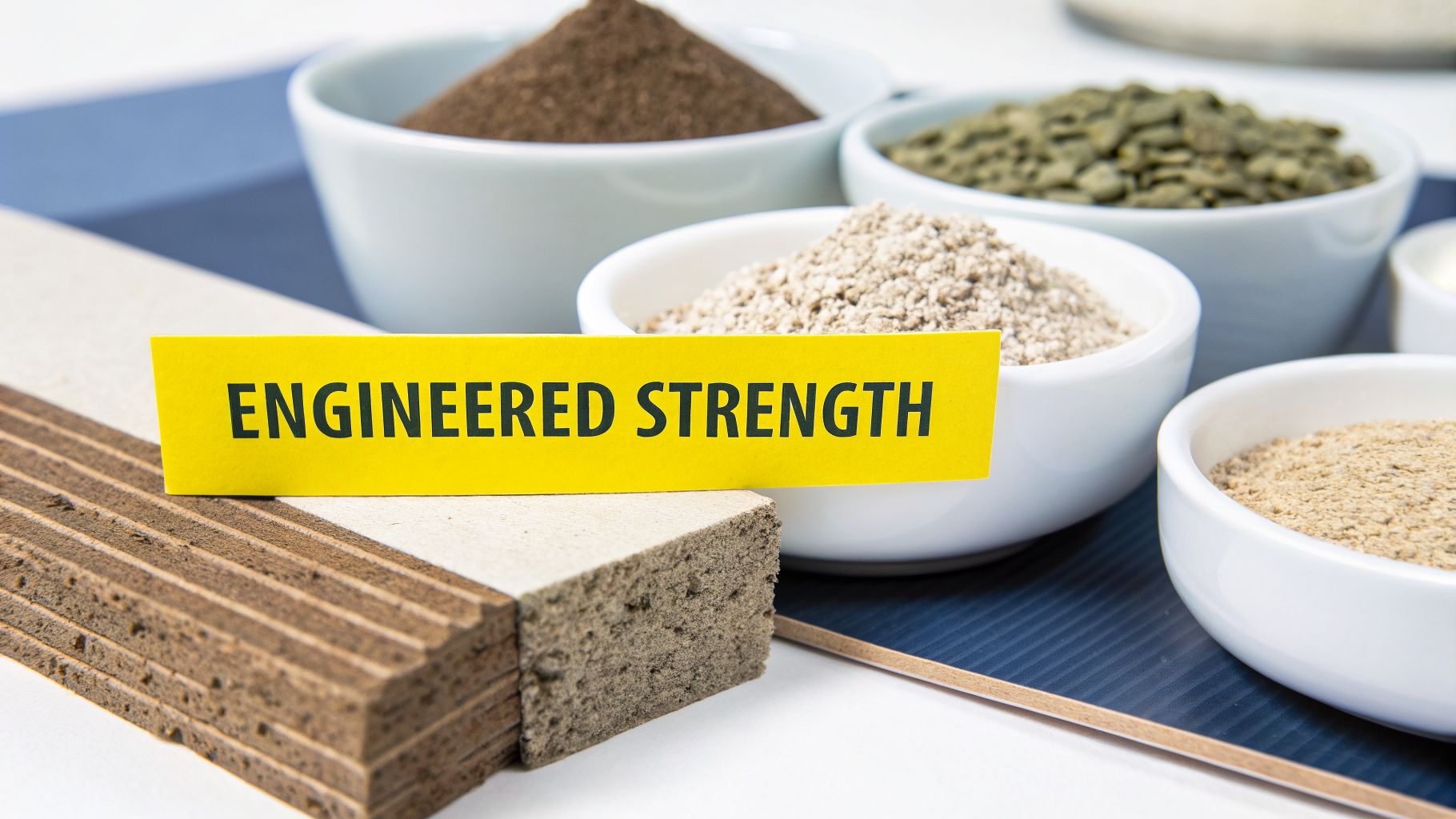
The incredible durability you hear about with HardiePlank isn't an accident. It comes down to some really smart material engineering. Every single board is made from a simple but powerful mix of ingredients, blended and cured in a way that makes it far tougher than old-school materials like wood.
You can think of it like a recipe for high-performance concrete, but for your home's exterior. It’s all about using the right components in the right amounts and then putting them through a special process that creates something much stronger than any single ingredient on its own.
A Recipe for Resilience
At its core, the strength of HardiePlank siding comes down to four main ingredients. Each one has a specific job to do, and together they create a board that stands up to impact, moisture, and pests like nothing else.
- Portland Cement: This is the backbone of the board. It provides the compressive strength and hardness that helps it shrug off everything from stray baseballs to intense Texas hailstorms.
- Ground Sand: Sand acts as a filler, giving the siding bulk and, more importantly, stability. It helps prevent the board from shrinking or cracking when faced with the wild temperature swings we get here in DFW.
- Cellulose Fibers: Sourced from wood pulp, these fibers act like microscopic rebar woven throughout the cement. They give the board just enough flexibility to handle stress without shattering.
- Water: This is what gets the whole process started. Water activates the cement, kicking off a chemical reaction that hardens the mixture and fuses all the ingredients into one solid, unyielding panel.
This finely tuned blend is why the final product is both incredibly strong and dimensionally stable. You can read more about just how long this durability lasts in our guide on how long Hardie Board lasts.
From Slurry to Super-Siding
The manufacturing process is what turns these raw materials from a wet, muddy mix into a finished siding board. It all starts when the ingredients are blended into a slurry, rolled into sheets, and pressed with realistic wood grain textures.
But the real game-changer is the curing. The boards are put into a special chamber called an autoclave, where they are cured with high-pressure steam. This forces the chemical bonds to form incredibly quickly, resulting in an exceptionally stable material that refuses to warp or swell.
This advanced curing process is what gives HardiePlank its signature stability. Unlike wood that swells and shrinks with every rainstorm and humid day, fiber cement stays put. That means paint jobs last longer, seams stay tight, and the boards on your wall stay perfectly straight for decades. It's this engineered strength that delivers true, lasting protection and curb appeal.
Real-World Benefits for Your North Texas Home
Knowing the science behind Hardie Plank is one thing, but what really matters is how it's going to perform on your home, right here in North Texas. The engineered strength of fiber cement isn't just a talking point—it translates into real-world protection that solves the exact problems we face in the Dallas-Fort Worth area.
The first thing you’ll notice is its sheer toughness. We all know how quickly a calm afternoon can turn into a violent storm that shreds weaker siding. Hardie Plank was built for that kind of chaos, offering incredible resistance to hail and high winds.
Built to Endure Texas Weather
For anyone living in DFW, hailstorms are a constant threat that can lead to some seriously expensive and stressful repairs. One good storm can leave vinyl siding looking like a golf ball, full of cracks, dents, and holes. Wood siding doesn't fare much better, as it can splinter and chip under that kind of impact.
Hardie Plank’s dense makeup, however, acts like a suit of armor for your house.
It stands up to impact far better than those other materials, which means you’re much less likely to face a massive replacement bill after a storm rolls through. This isn’t just about saving money; it’s about the peace of mind that comes from knowing your home will stay standing strong through our region’s worst weather.
This durability also applies to fire. James Hardie siding carries a Class A fire rating, which is the highest possible classification for any building material.
While no home is truly fireproof, Hardie Plank is non-combustible. It won’t ignite when hit with a direct flame or add any fuel to a fire. That’s a critical safety feature that provides priceless protection for your family and your property.
Immunity to Pests and Rot
Another huge headache for Texas homeowners is the never-ending fight against pests and moisture. Termites and carpenter ants cause millions of dollars in damage to homes every single year, literally eating away at your biggest investment.
Since Hardie Plank is made from cement, sand, and cellulose fibers, it has zero appeal for these destructive insects. Termites can’t eat it, and woodpeckers won’t waste their time trying to drill into it. This built-in pest resistance takes a massive worry off your plate.
On top of that, our humid climate is the perfect breeding ground for wood rot and mold. Hardie Plank was engineered specifically to fight back against moisture.
- No Swelling: Unlike wood, it doesn’t soak up water, so you won’t see it swell, buckle, or fall apart.
- Rot-Proof: The material itself is simply immune to rot, so it won’t break down over time from constant exposure to moisture.
- Paint Adhesion: Because it stays so stable and dry, it holds onto paint much longer, meaning you won’t have to deal with frequent and costly repainting jobs.
Beyond just durability, a home with a well-maintained Hardie Plank exterior can seriously increase its market value. When it comes time to sell, effective presentation is key, and curb appeal can be dramatically enhanced with professional real estate photography, including techniques like capturing beautiful twilight photos real estate. Hardie Plank truly gives you a complete package for a beautiful, long-lasting home.
Hardie Plank vs. The Competition: Vinyl and Wood Siding
When it's time to choose new siding, homeowners usually weigh three main options: fiber cement, vinyl, and wood. Each has its own camp of supporters, but here in the Dallas-Fort Worth area, our intense weather really separates the contenders from the pretenders. It's about looking past the initial price and figuring out what your siding will truly cost you over its entire lifetime.
Let's start with looks. There's no denying the timeless, natural charm of wood siding. But that beauty comes with a big catch—it demands constant upkeep. To keep wood from rotting, warping, or becoming a meal for termites in our humid Texas climate, you're looking at a cycle of staining, sealing, and painting.
Vinyl siding sits at the other end of the spectrum. It's known for being easy on the wallet and requiring very little maintenance, but it often falls short of capturing that premium, authentic wood look. It can sometimes look a bit… well, plastic.
This is where Hardie Plank carves out its own space. It does an incredible job of mimicking the deep, textured look of real wood, giving you that high-end curb appeal without the constant worry. Unlike wood, it's completely immune to rot and pests. And unlike vinyl, it has a thicker, more substantial feel that just looks and feels more permanent and upscale.
To make the comparison clearer, let's put the most popular siding options head-to-head.
Siding Showdown: Hardie Plank vs. Vinyl vs. Wood
| Feature | Hardie Plank (Fiber Cement) | Vinyl Siding | Wood Siding |
|---|---|---|---|
| Durability | Excellent; resists hail, wind, fire, and pests. Won't warp or rot. | Fair; can crack from hail or impact. Can warp or melt in extreme heat. | Poor; susceptible to rot, termites, woodpeckers, and moisture damage. |
| Aesthetics | Excellent; realistically mimics wood grain and texture with a premium look. | Fair to Good; can look artificial. Limited texture depth. | Excellent; offers classic, natural beauty but requires high upkeep. |
| Maintenance | Low; requires washing and repainting every 5-15 years. | Very Low; requires occasional washing. Cannot be repainted. | High; requires regular painting, staining, and sealing every 3-7 years. |
| Fire Resistance | Class A Fire Rating; non-combustible. | Poor; melts and can release toxic fumes when burned. | Poor; highly combustible unless treated with fire retardants. |
| Initial Cost | Mid to High | Low to Mid | High |
| Lifespan | 30-50+ years | 20-40 years | 20-40 years (with constant maintenance) |
As you can see, while each material has its place, Hardie Plank consistently delivers on the performance and longevity that DFW homes demand.
Durability Under the Texas Sun and Storms
When it comes to holding up against North Texas weather, the differences between these materials become stark. Our region is the ultimate proving ground for any home exterior.
- Vinyl Siding: While it's an affordable choice, vinyl is vulnerable. A bad hailstorm can leave it riddled with cracks, chips, or holes. The intense Texas sun is another enemy, causing it to warp, buckle, or even melt—especially darker colors or where reflections from energy-efficient windows concentrate heat.
- Wood Siding: Moisture is wood's biggest foe, and our humid climate provides plenty of it. This leads to swelling, splitting, and eventually, rot. Wood is also a magnet for termites and woodpeckers, which means more maintenance and potential repair bills down the road.
- Hardie Plank Siding: This is where fiber cement truly pulls away from the pack. Its dense, heavy-duty composition gives it superior resistance to hail, saving you from a massive headache after the next storm rolls through. It won’t warp or melt under the sun and is completely non-combustible, earning it the highest possible Class A fire rating.
This is why we see Hardie Plank as a fortress for your home.
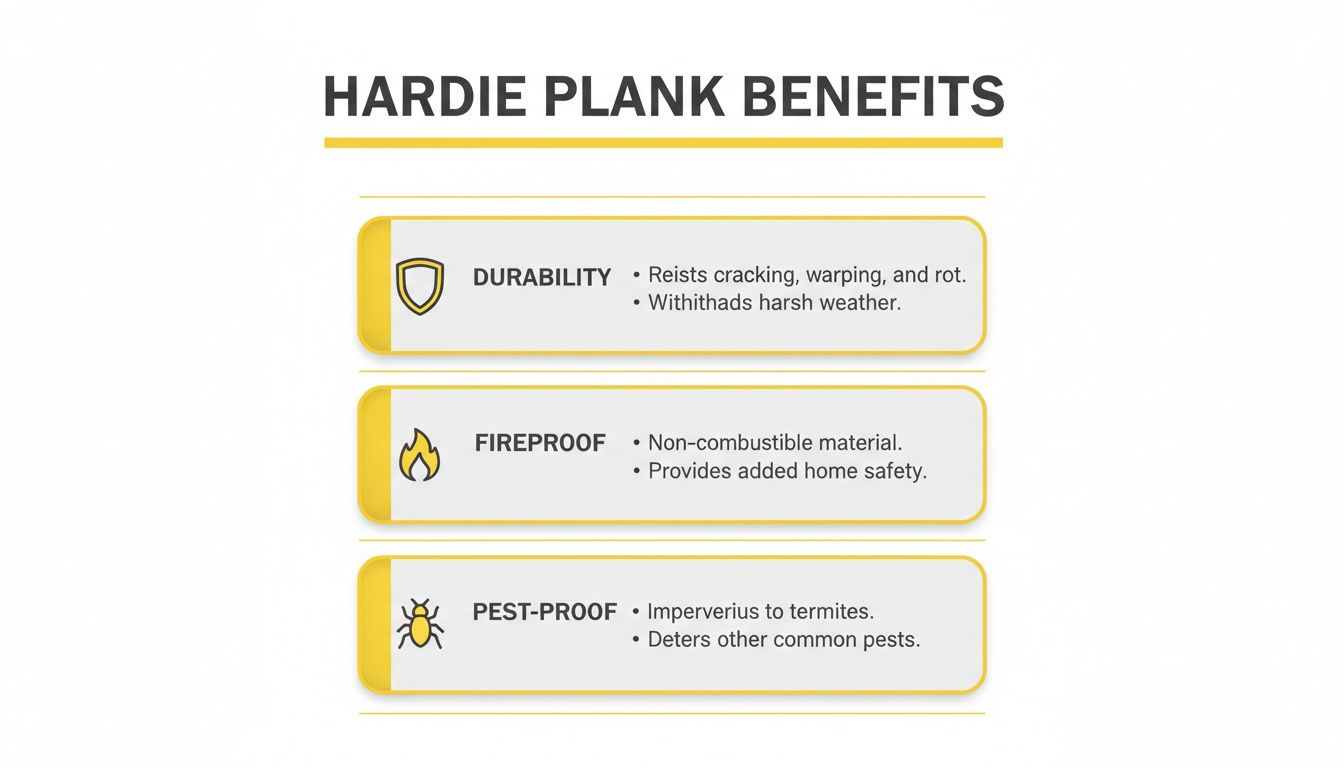
The image above perfectly captures how it's engineered to stand up against impact, fire, and pests—three of the biggest worries for any homeowner in our area.
Long-Term Value and Maintenance
The price tag at the start is just one piece of the puzzle. The true cost of your siding is revealed over years of ownership, maintenance, and potential repairs.
While vinyl usually has the lowest upfront cost, its shorter lifespan and vulnerability to storm damage can mean you're paying to replace it all over again sooner than you'd like. Wood is often the priciest to both install and maintain, with the costs of frequent painting and repairs adding up fast.
Hardie Plank siding typically lands somewhere between vinyl and wood on the initial invoice. However, its incredible durability and minimal maintenance needs often make it the smartest financial choice over the life of your home. You can dig deeper into this topic in our detailed comparison of James Hardie vs. vinyl siding.
In the end, Hardie Plank is more than just siding; it's an investment in peace of mind. It delivers lasting beauty and protection with far fewer headaches for decades to come.
Installation and Long-Term Siding Maintenance
Getting a premium material like Hardie Plank is really only half the battle. The other half—the part that truly unlocks its legendary durability and activates the 30-year warranty—is proper installation. Let's be clear: this is not a weekend DIY project.
Think of it like building a high-performance car engine. You can have the best parts in the world, but if they aren't assembled with expert precision, the engine is going to fail. It’s the exact same story with this siding. Improper installation is a fast track to moisture problems, poor performance, and a voided warranty.
Why Professional Installation Is Non-Negotiable
Hiring a contractor who is certified by James Hardie is absolutely crucial. These pros have been trained on the manufacturer’s exact specifications, so they know how to make sure every single board is correctly spaced, fastened, and sealed against the elements.
A certified installer also knows the specific requirements for our DFW climate, ensuring your siding is ready to handle everything from our scorching summers to sudden winter freezes.
The installation process is just as important as the product itself. Cutting corners on installation is the fastest way to turn a 30-year siding solution into a five-year problem.
When a pro handles the job, you can be confident that every detail is managed correctly, from preparing the wall sheathing to applying the perfect bead of sealant. To see what that process looks like up close, feel free to check out our comprehensive James Hardie siding installation guide.
Simple Steps for Decades of Beauty
One of the biggest draws of Hardie Plank is just how low-maintenance it is. Once it’s on your house, you can finally say goodbye to that endless cycle of scraping, sanding, and repainting that comes with traditional wood siding. Keeping it looking fresh and clean is surprisingly simple.
Here’s what a typical long-term maintenance schedule looks like:
- Semi-Annual Cleaning: All it takes is a gentle wash once or twice a year to get rid of any built-up dirt and grime. Just use a soft brush or cloth with a standard garden hose and some mild soap. You’ll want to avoid using a high-pressure power washer, as it can be too aggressive and damage the surface.
- Caulking Inspection: Every few years, it's a good idea to just walk around your home and take a look at the caulk lines around windows, doors, and corner trim. If you spot any cracking or separating, it's a quick and easy fix to reapply a bit of sealant to keep everything watertight.
- Repainting (If Needed): If your board was primed and painted on-site, it will eventually need a fresh coat of paint. The good news is that because the material is so stable, paint lasts much, much longer—often 10-15 years—before needing a refresh. And if you go with James Hardie’s ColorPlus® Technology, that factory-baked finish is actually warrantied for 15 years against chipping, peeling, and cracking.
Understanding the Cost of Hardie Plank in Dallas-Fort Worth
Let's get right to it—the first question on every homeowner's mind is usually about the price tag. When it comes to Hardie Plank siding, it’s true that the initial bill is higher than for materials like vinyl. But it’s crucial to see this as a long-term investment in your home's future, especially here in the Dallas-Fort Worth area.
There's no one-size-fits-all price for a Hardie Plank project. The final number on your quote depends on several key things.
What Goes Into the Final Cost?
The biggest drivers of cost are the size of your house and how complex its design is. A large, multi-story home with lots of intricate angles, gables, and window trim will naturally demand more material and a whole lot more labor than a simple, single-story ranch house.
Beyond your home's shape, the finish you choose has a big impact on the budget:
- Primed for Paint: This is your blank canvas. The siding arrives ready for any custom paint color you can dream of, which is applied right there on-site. This gives you total color freedom but means you'll also have the separate cost of a professional paint job.
- ColorPlus® Technology: This is James Hardie's own factory-applied, baked-on finish. While it adds to the upfront material cost, it comes with a tough 15-year warranty on the finish itself. It completely eliminates the need for that initial paint job, saving you time, money, and hassle from day one.
Think about the cost not just as a one-time payment, but as the total cost of ownership. The sheer durability of Hardie Plank cuts down on future repair bills from hail and dramatically lowers your maintenance spending for years.
Calculating the True Value
Here in the DFW market, you can generally expect the installed cost of Hardie Plank to run anywhere from $10 to $20+ per square foot. That range typically covers the materials, professional installation labor, and the removal and disposal of your old siding.
Sure, a cheaper option like vinyl might feel like a win for your wallet today. But its weakness against our Texas storms and its shorter lifespan can mean you're paying for a full replacement much sooner than you think. When you factor in fewer repairs and almost no upkeep, Hardie Plank often comes out as the smarter financial choice over its 30 to 50-year lifespan. It’s an investment in resilience that truly pays you back.
Frequently Asked Questions About Hardie Plank
Choosing a new siding for your home is a big decision, and you probably have a few questions rattling around. We get it. Here are some of the most common questions we hear from Dallas-Fort Worth homeowners, answered plainly and simply.
Does Hardie Plank Actually Increase Home Value?
Yes, and it's not just a small bump. The premium look, minimal upkeep, and rock-solid durability are major attractions for home shoppers. In fact, year after year, remodeling reports list fiber cement siding replacement as having one of the highest returns on investment you can make in your home.
When a potential buyer in the DFW market sees a home wrapped in Hardie Plank, it sends a clear signal: this is a quality house that won't come with a long list of future siding headaches. That peace of mind can absolutely translate to a higher selling price.
Can You Paint Hardie Plank Siding?
You certainly can, and you have two great ways to go about it. The first option is to get Hardie Plank that comes pre-primed from the factory. This gives you a perfect blank slate to apply any custom paint color you can dream of right on-site.
For the ultimate in color durability and a finish that lasts, you can also choose James Hardie’s ColorPlus Technology.
This isn't just a coat of paint. It's a proprietary finish applied in a controlled factory setting, baked-on in multiple layers for incredible strength. It comes with a 15-year warranty that covers peeling, chipping, and cracking, giving you vibrant color that's built to last from day one.
Is Hardie Plank an Eco-Friendly Siding Choice?
For a building material this tough, it’s surprisingly sustainable. It’s made from some pretty basic ingredients, including sand, cement, water, and renewable cellulose fibers. But its biggest environmental benefit is its incredible lifespan.
Because it lasts so long, you replace it far less often than other siding types. That means less material being manufactured and much less waste ending up in a landfill over the decades. While making cement does take energy, the sheer durability and inert nature of the final product make it a very responsible choice for your home's long-term health.
Ready to wrap your home in the ultimate protection against Texas weather? The experts at Moore Construction Co. are certified to install James Hardie products with the precision and care your investment deserves. Schedule your free, no-obligation estimate today


