


For any Dallas homeowner, seeing signs of water damage on your roof isn't just an annoyance—it's a serious threat to your home's stability, safety, and value. That small, innocent-looking drip is a quiet alarm bell. If you ignore it, you're looking at a fast track to major structural rot, dangerous mold, and repairs that can drain your bank account.
Why Your Roof Is Ground Zero for Water Damage
Think of your roof as the first line of defense, the armor protecting everything you own from the elements. Here in North Texas, that battle is non-stop. We've got intense hail storms that hammer shingles, powerful winds that rip and tear at the edges, and that relentless Texas sun that spends years baking roofing materials until they become brittle.
With that kind of constant assault, even the toughest, best-installed roof will eventually show signs of wear. All it takes is a single cracked shingle, a failing seal around a pipe, or a piece of flashing that’s been lifted by the wind. That tiny opening is all the invitation rainwater needs to get inside. And once it's in, water doesn't just sit still—it travels down rafters, soaks your insulation, and eventually makes its way into your ceilings and walls.
The Real Cost of a Leaky Roof
Putting off a roof leak is a gamble you just can't afford to take. The problem goes way beyond a simple stain on the ceiling.
- Structural Decay: Constant moisture is the enemy of wood. It will rot out your home's framing, sheathing, and rafters, weakening the very bones of the structure.
- Hazardous Mold Growth: Dark, damp spaces like your attic are the perfect breeding ground for mold and mildew. This isn't just ugly; it can trigger serious allergies and respiratory problems. Studies have shown mold can start growing in just 24-48 hours after water gets in.
- Compromised Insulation: When your insulation gets soaked, it's basically useless. It loses its ability to keep your home warm or cool, which means your HVAC system has to work overtime, and your energy bills start to climb.
- Diminished Property Value: Nothing scares off potential home buyers faster than signs of water damage. It's a huge red flag that can significantly torpedo your home's market value.
Don't just take our word for it. A study from the Insurance Information Institute found that water damage is the second most common home insurance claim, making up almost 30% of all claims. It’s a clear sign of just how widespread and expensive this problem really is.
Understanding what’s at stake is the first step. Recognizing the unique challenges our Dallas climate throws at your roof is key to preventing major headaches down the road. That’s why working with a local expert like Moore Construction Co. is so important. We know these regional threats inside and out, and we have the experience to fortify your home and keep it safe and dry for the long haul.
How to Spot the Signs of Roof Water Damage
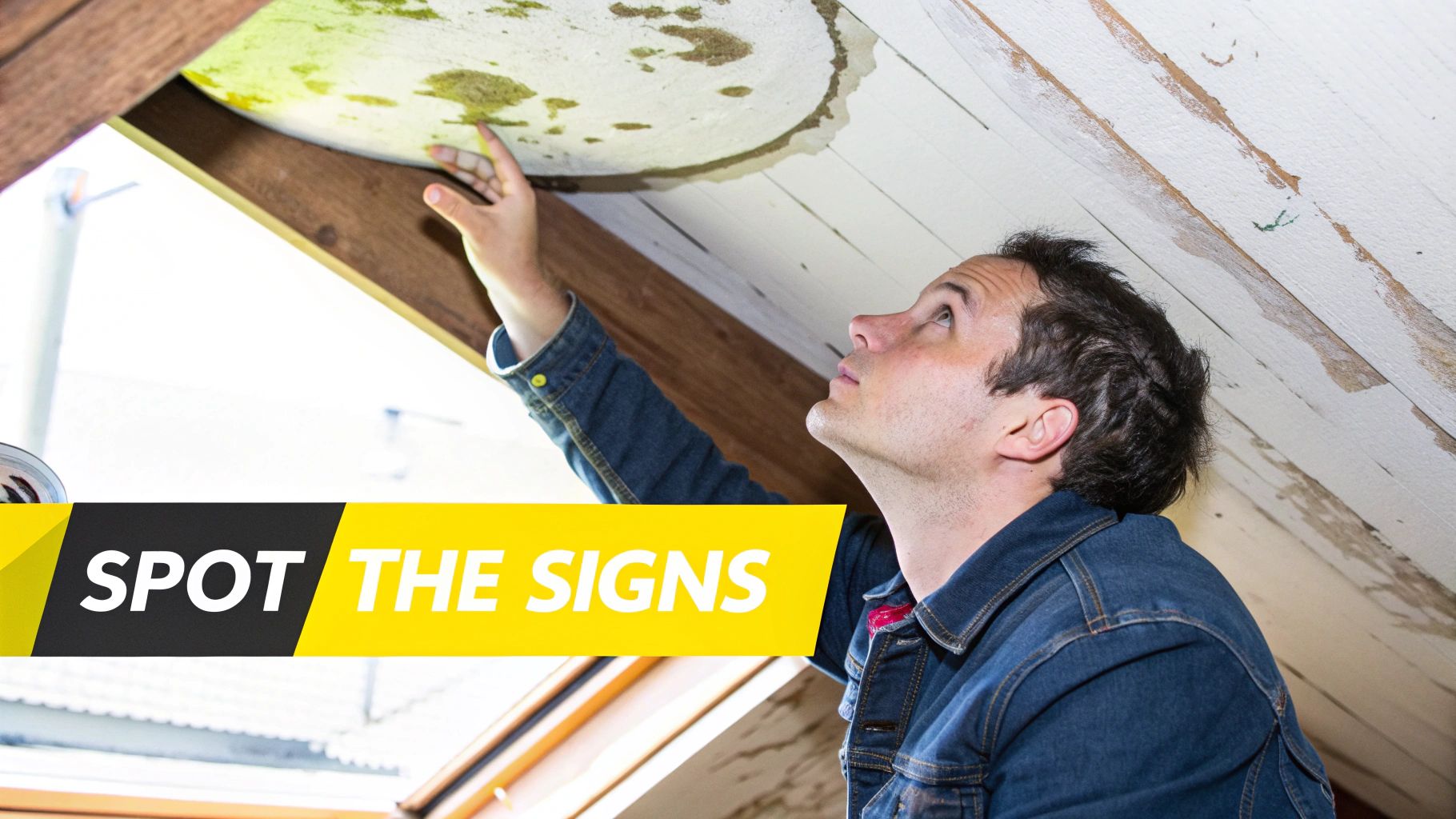
Catching water damage on your roof early is a lot like finding a small crack in a dam before it bursts. The first signs are usually subtle—quiet little warnings that something isn't right. If you learn to recognize these clues, you can jump on the problem before a minor headache turns into a major financial disaster.
Think of yourself as a home detective. Your investigation starts inside, often nowhere near the roof itself. Water is tricky and can travel in misleading ways, but the evidence is always there if you know what you’re looking for.
Interior Clues and Warning Signs
The most obvious red flags of a roof leak will pop up inside your home. These are your roof's way of crying for help, sending clear signals that its protective barrier has been compromised.
Start by looking up. Your ceilings, especially on the top floor, are the first place you’ll likely see trouble. Keep an eye out for any discoloration. This can look like anything from a faint, yellowish ring to a dark, spreading brown stain. A darker stain usually means you’re dealing with an older, more established leak.
Check your walls, too, paying close attention to the corners where they meet the ceiling. Do you see any paint that’s bubbling, peeling, or blistering? That happens when moisture gets behind the paint and breaks its bond with the drywall.
Another dead giveaway is a persistent musty smell, particularly in the attic or closets upstairs. That odor is the classic signature of mold and mildew, which can start growing in as little as 24-48 hours after water gets in. If your attic smells damp or like wet cardboard, it’s a huge red flag.
Pro Tip: Don't just scan for obvious drips. Water often travels along rafters and inside walls before it finally makes an appearance. A stain on a wall could be coming from a leak that started several feet away on your roof.
Exterior Evidence of Roof Damage
After you’ve searched for clues inside, it’s time to check the exterior of your home. You can actually spot a lot of potential entry points safely from the ground, especially with a good pair of binoculars. Please, never climb onto a roof you suspect is damaged—leave that to the professionals.
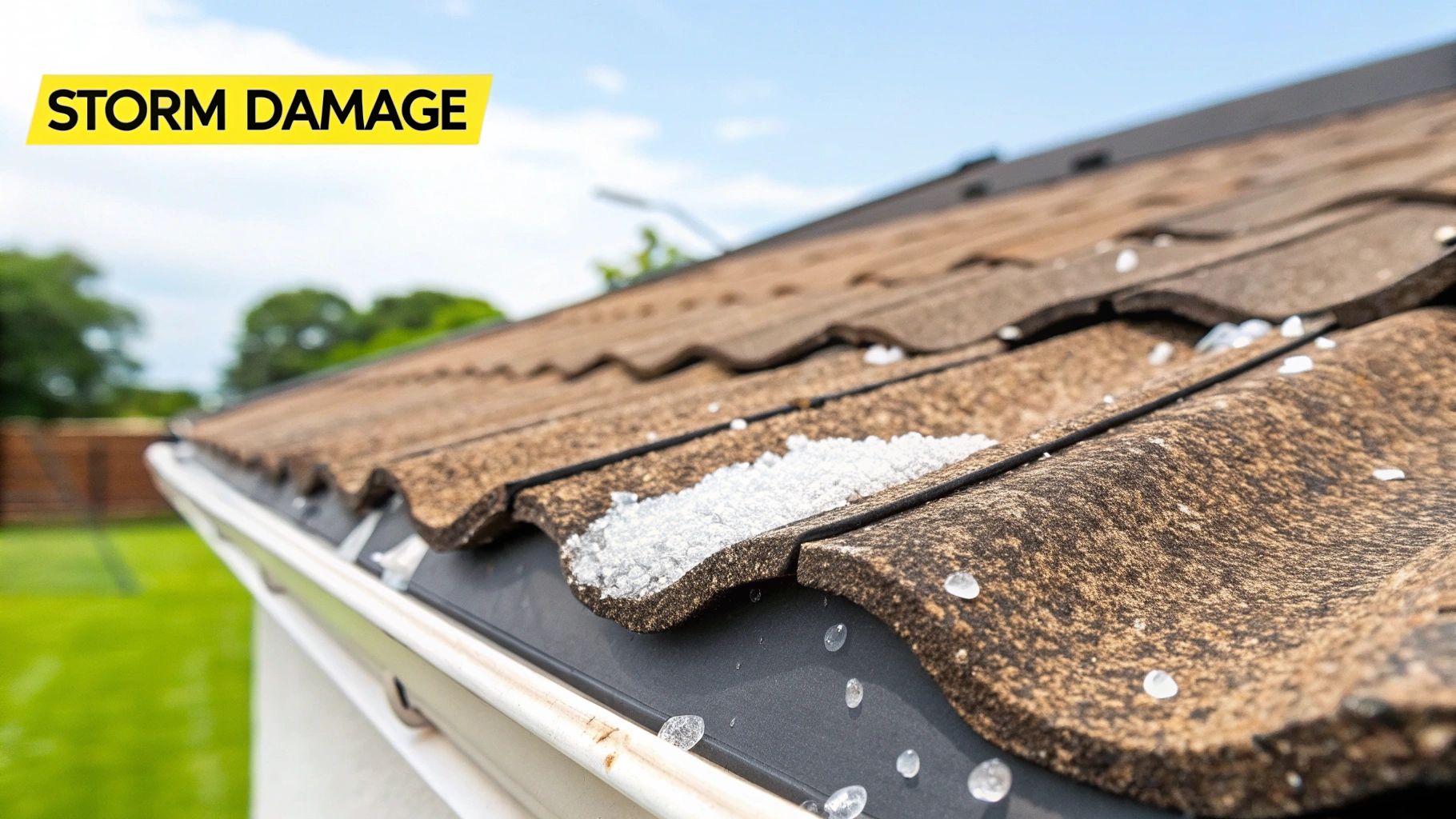
Start by looking at the shingles themselves. Are any of them cracked, curled up at the edges, or just plain missing? Each one is a direct invitation for rain to come in. After a big Dallas hailstorm, also check for dark, circular "bruises" on the shingles where hail has knocked off the protective granules.
Speaking of granules, take a peek inside your gutters and downspouts. Finding a pile of these little sand-like particles is a bad sign. It means your shingles are getting old and losing their protective layer, making them much more vulnerable to leaks.
Finally, inspect the spots where things poke through your roof—the chimney, skylights, and vents. The metal strips called flashing that seal these joints are notorious failure points. Look for flashing that seems rusted, bent, or has visible gaps in the sealant.
To help you stay on top of things, we put together a complete roof damage guide on how to spot problems early, which has even more detailed tips specifically for Dallas homeowners.
To make it even easier, here's a quick checklist you can use to scan your home for the most common trouble spots.
Quick Checklist for Spotting Roof Water Damage
| Location | Sign to Look For | What It Likely Means |
|---|---|---|
| Interior Ceilings | Yellowish rings, brown spots, or dark stains. | Water has soaked through the drywall from above. |
| Interior Walls | Bubbling, blistering, or peeling paint. | Moisture is trapped behind the paint layer. |
| Attic | Musty or damp smells; visible mold growth. | A leak is active, creating a humid environment. |
| Exterior Shingles | Cracked, curled, missing, or bruised shingles. | Your roof's primary defense has been compromised. |
| Gutters & Downspouts | Excessive amounts of shingle granules. | Shingles are aging and losing their protection. |
| Flashing | Rusted, bent, or gaps around chimneys/vents. | The seals around roof penetrations have failed. |
Recognizing these signs is the most important first step you can take. If you find any of these red flags, your next move should be to call a professional for a thorough inspection. They can pinpoint the source and tell you just how serious the water damage on your roof really is.
Common Causes of Roof Leaks in North Texas
Here in the Dallas-Fort Worth area, your roof isn't just sitting there—it's fighting a constant, multi-front battle. Understanding what causes most roof leaks in our region helps you see where your home is most vulnerable and why getting ahead of problems is so important. It’s rarely just one thing, but a combination of our wild weather, environmental stress, and sometimes human error that creates the perfect storm for water damage on your roof.
The biggest aggressor, without a doubt, is our infamous Texas weather. Powerful storms are just a part of life here, and they are incredibly hard on roofing systems. A roof that was a secure, watertight barrier yesterday can be seriously compromised in a single afternoon.
These weather events are also getting more intense. The U.S. saw 23 separate billion-dollar weather disasters in 2023, many involving the kind of severe storms that batter our roofs. Closer to home, events like the Central Tornado Outbreak of March 14-16, 2025, caused an estimated $11 billion in losses, shredding roofs and leaving countless homes exposed. You can learn more about these powerful storm trends and their impact on American homes.
The Impact of Hail and Wind
Hail is a roof’s worst enemy. Even small hailstones act like thousands of tiny hammers, smacking your shingles with surprising force. This constant impact can create tiny fractures or "bruises" that you'd never see from the ground, but they’re deep enough to let water seep through over time.
High winds are just as dangerous. They don't just rip shingles off; they can get underneath and lift the edges, breaking the sealant that holds them flat. Once that seal is gone, the shingle is vulnerable, and the next wind-driven rain can easily find its way underneath and into your attic.
Sun Exposure and Material Degradation
Beyond the sudden violence of storms, the relentless Texas sun is waging a slow, quiet war on your roof. That intense UV radiation gradually breaks down the asphalt in your shingles, making them brittle, weak, and less flexible.
Over the years, this constant sun exposure causes shingles to lose their protective granules—that sandy top layer—and eventually start to curl or crack. An old, sun-beaten roof is far more likely to fail during the next big storm, turning what might have been a minor issue into a major leak.
Your roof's lifespan is a countdown timer started by the sun. Each year of intense heat and UV exposure brings it one step closer to failure, making regular inspections essential for catching age-related weaknesses before they lead to water damage.
Other Common Culprits for Roof Leaks
While weather is the headliner, several other factors are notorious for causing roof failures and significant water damage on a roof.
- Improper Installation: A roof is only as good as the crew that installed it. Poorly installed flashing around chimneys, vents, and skylights is one of the most common sources of leaks we see.
- Clogged Gutters: When your gutters are full of leaves and gunk, rainwater has nowhere to go. It backs up, flows over the edge, and seeps under your shingles, eventually rotting the underlying wood decking.
- Damaged Flashing: Those metal strips that seal the joints and valleys on your roof are critical. If flashing rusts, cracks, or gets pulled loose by high winds, it creates a direct highway for water to get into your home.
Knowing these specific North Texas challenges is exactly why working with a local expert like Moore Construction Co. is so vital. We live here, we understand the unique pressures our climate puts on a roof, and we have the hands-on experience to provide a solution that lasts.
What to Do Immediately When Your Roof Is Leaking
That drip… drip… drip… sound inside your home is enough to send a jolt of stress through anyone. Discovering an active roof leak feels like a crisis, but what you do in the next few minutes is absolutely critical. Acting fast can be the difference between a simple repair and thousands of dollars in secondary damage.
This isn't the moment to start a risky DIY project on a wet roof; it's all about damage control. Your immediate goals are simple: protect your stuff, stop the water from spreading, and get a professional on the phone.
Step 1: Contain the Water and Protect Your Property
First things first, get something under that drip. A bucket, a trash can, even a storage bin will work. If the water is splashing, toss some old towels or a plastic tarp down to protect your floors.
Next, get your valuables out of the way—fast. Move furniture, electronics, rugs, and anything sentimental. Water can ruin personal items in a heartbeat, and a soaked ceiling can come down without any warning. You want to create a clear, safe zone around the leak.
Step 2: Relieve Ceiling Pressure Safely
If you see a sagging or bulging spot on your ceiling, that's a serious red flag. It means water is pooling up there, creating immense weight and pressure. A waterlogged ceiling is incredibly heavy and poses a real threat of collapsing, which could cause major damage or injury.
To prevent a sudden collapse, you need to release that pressure. Place a large bucket directly under the lowest point of the bulge. Then, take a screwdriver or something similar and carefully poke a small hole right in the center of the bubble. This lets the water drain in a controlled stream instead of coming down all at once.
Safety First: Whatever you do, do not climb onto a wet roof during a storm to try and find the leak. A slippery, unstable roof is a recipe for disaster. Keep your focus on managing the situation inside your home.
Step 3: Document Everything for Your Insurance Claim
Once you've got the immediate threat under control, pull out your phone and start taking pictures and videos. This is your evidence.
Be thorough and capture everything you can:
- The active drip itself.
- Your buckets catching the water (this shows the volume).
- The bulging ceiling before and after you poke the hole.
- Any damaged furniture, walls, flooring, or personal belongings.
- The initial water stains and, if it's safe to look, any visible signs of water in the attic.
This documentation is gold when it comes time to file an insurance claim. Having clear proof of the water damage on your roof and the resulting mess will make the whole process smoother and help you get the compensation you deserve. To get a better handle on the repair process, take a look at our guide on fixing roof leaks and everything you need to know.
Step 4: Call for Professional Emergency Help
With the water contained and the damage documented, it's time for the most important step: call a professional roofer. A team like Moore Construction Co. can get out quickly to perform an emergency tarping. This temporary fix is designed to stop any more water from getting in, even if it’s still raining, buying you precious time until a full assessment and permanent repair can be done.
Deciding Between Roof Repair and Full Replacement
Once you've got the buckets in place and the immediate crisis of a leak is under control, the big question looms: should you patch the problem or is it time for a full roof replacement? This decision is about more than just the upfront cost; it’s a critical choice for the long-term health of your entire home. Getting this right can save you a world of future headaches and repeat repair bills.
I like to compare it to fixing a flat tire. If you’ve got a single nail in a brand-new tire, a simple patch is a no-brainer. But if the treads are worn bald, the rubber is cracking, and you've already plugged it twice before, you know that buying a new set is the only truly safe and sensible option.
The same logic holds true for water damage on your roof. A targeted repair makes perfect sense for an isolated issue on a roof that's still got years of life left in it. But for an older roof or one showing signs of widespread problems, a full replacement is often the much smarter long-term investment.
When a Targeted Roof Repair Is the Right Move
A strategic, professional repair is often all you need when the damage is contained and your roof is in otherwise solid shape. Not every leak is a sign of total roof failure.
A repair is likely your best bet if:
- The Roof Is Young: If your asphalt shingle roof is less than 15-20 years old, it probably has plenty of good years ahead. A localized fix can extend its lifespan without the major expense of a replacement.
- Damage Is Isolated: The problem is confined to one specific spot, like a few shingles that got ripped off in a storm or some failed flashing around a single vent.
- The Underlayment Is Intact: A professional inspection confirms that the wood decking underneath the shingles is still dry, solid, and structurally sound.
This decision tree gives you a clear visual for what to do the moment you spot a leak, walking you from discovery to getting a pro on the phone.
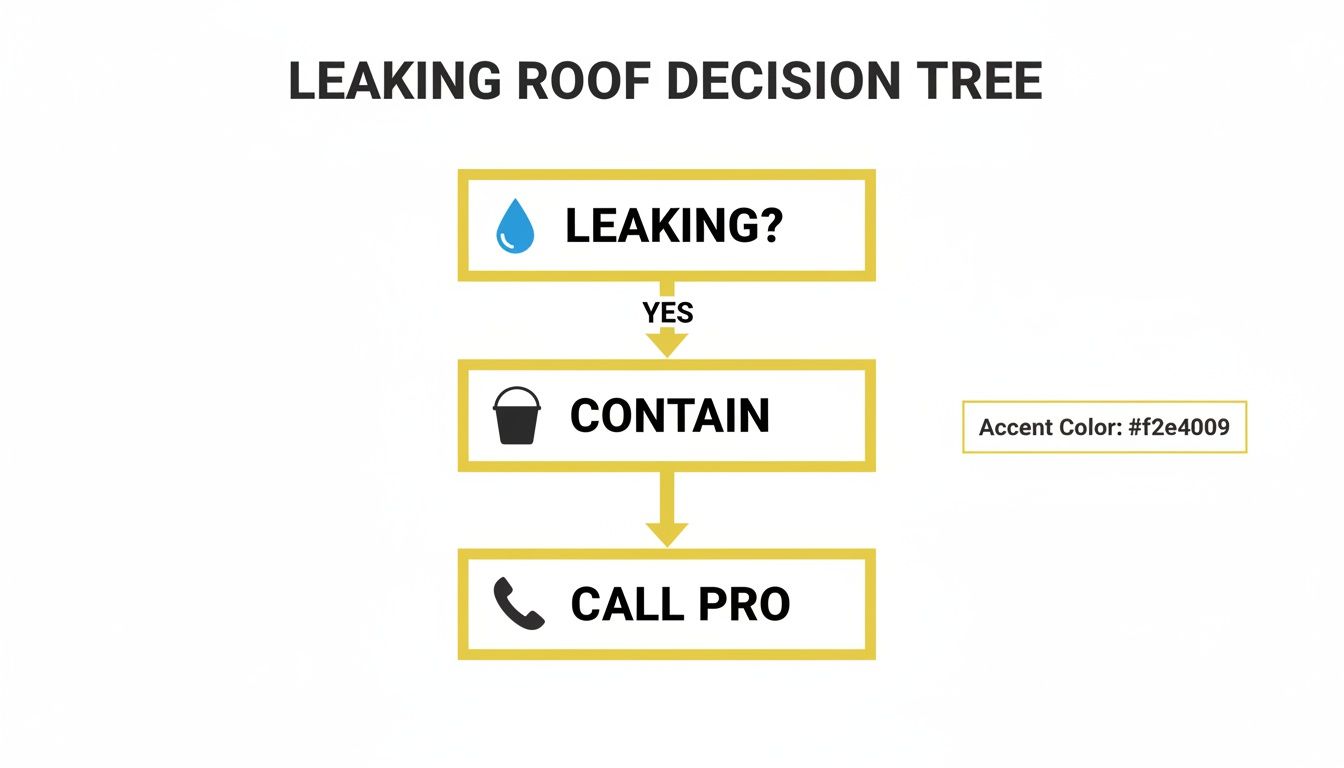
As the chart shows, after you contain the water, the very next step is to get an expert assessment. Only a pro can tell you the true scope of the damage.
When a Full Roof Replacement Is the Smarter Investment
Sometimes, a patch is just putting a bandage on a much bigger wound. In these cases, opting for a full replacement is actually the wiser financial move, protecting your home's overall integrity.
A total replacement is probably on the horizon if:
- Your Roof Is Old: An asphalt roof pushing past the 20-year mark is living on borrowed time. The materials have become brittle and are likely nearing systemic failure.
- Damage Is Widespread: You're seeing problems everywhere—curling shingles, bald patches from granule loss, or multiple damp spots in the attic. These are all signs the entire system is giving up.
- You Have Recurring Leaks: If you've already paid for one or two repairs and new leaks just keep popping up in different places, it’s a clear sign the underlying problem isn't being solved by spot-fixes.
When you're dealing with significant issues, the conversation about repair vs. replacement is one you should have with specialized roofing and siding contractors who can give you an honest evaluation.
A new roof isn't just an expense; it’s an upgrade. Modern materials offer superior durability, better energy efficiency that can lower your utility bills, and a significant boost to your home's curb appeal and overall value.
The financial toll of failing roofs is staggering. In the U.S. alone, the 426 billion-dollar weather disasters since 1980 have caused over $3.1 trillion in damages, with every storm's impact amplified by compromised roofs. These numbers underscore the importance of a sound roof in the Dallas-Fort Worth area, where Moore Construction Co. has spent over 20 years protecting homes from exactly these kinds of threats.
Proactive Maintenance to Prevent Future Water Damage
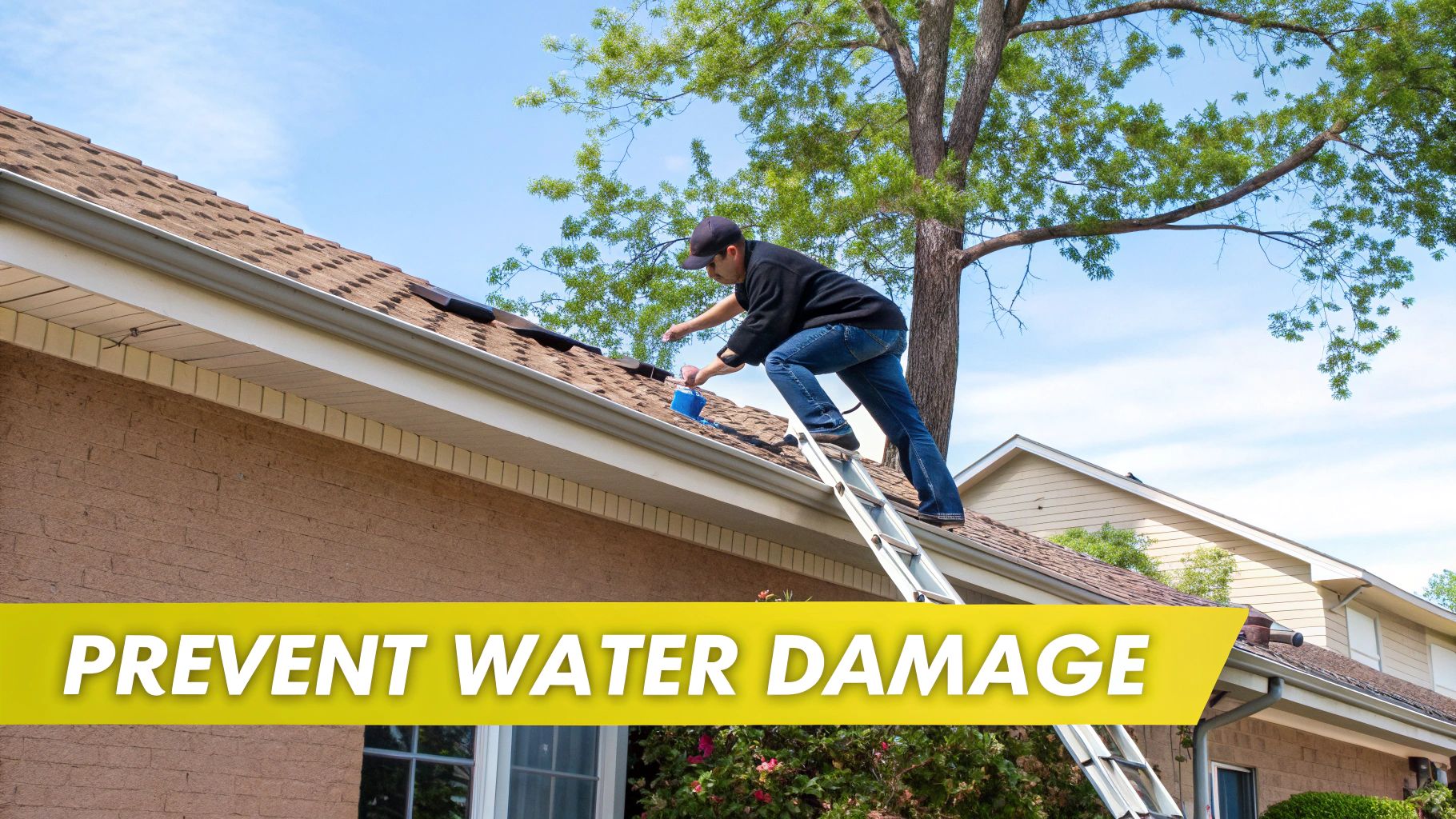
Once you've dealt with a leak, the last thing you ever want is a repeat performance. The truth is, the best way to handle water damage on your roof is to stop it before it even has a chance to start. Making the switch from reacting to problems to proactively caring for your roof is a game-changer for protecting your home and your wallet.
Think of it like taking care of your car. You wouldn't just drive it for years without an oil change or checking the tires, right? You know that a small, inexpensive task now can prevent a massive, costly breakdown down the road. Your roof operates on the same principle. A simple, consistent maintenance routine is your strongest defense against the wild weather we get here in North Texas.
Your Essential Maintenance Checklist
Building a proactive defense doesn't have to be complicated. It's all about consistency. By running through a few simple checks with the changing seasons, you can spot potential trouble long before it turns into a drip staining your living room ceiling.
Here are the three most critical tasks every DFW homeowner should have on their list:
- Clean Your Gutters Regularly: Clogged gutters are one of the top culprits behind roof leaks. When leaves and gunk pile up, rainwater has nowhere to go. It backs up against the edge of your roof, seeping under the shingles and causing rot in the decking and fascia boards. Plan to clean them out at least twice a year, especially after the big leaf drop in the fall.
- Trim Overhanging Tree Limbs: Those big branches hanging over your house are a double threat. First, they're constantly dropping leaves and twigs that clog your gutters. Second, during a bad storm, they can snap and cause serious impact damage. It's smart to keep those limbs trimmed back, giving your roof a safe buffer zone.
- Perform Ground-Level Visual Inspections: After a big storm or at least once a season, take a walk around your house and just look up. A pair of binoculars can really help you spot obvious signs of trouble like missing shingles, curled edges, or damaged flashing around vents and your chimney.
These simple habits empower you to catch problems early. For instance, if you start seeing a bunch of shingle granules in your downspout, that's an early warning sign that your roof is getting older and might need a professional look-see soon.
Your roof's underlayment is its hidden shield—a critical layer of protection that often goes unnoticed until it fails. Proactive care ensures this vital component remains intact. Check out our guide on how to protect your home with the proper roof underlayment to learn more.
The Power of a Professional Annual Inspection
While your own eyes are a great first line of defense, they can’t replace the trained eye of an expert. A professional annual inspection is easily the single best investment you can make in your roof’s health and longevity. A certified roofer from Moore Construction Co. can safely get up on your roof to spot the subtle weaknesses you’d never catch from the ground.
We’re trained to find those small issues—like failing sealant around a pipe boot or minor hail bruises—before they grow into major leaks. This preventive mindset is more important than ever. Climate-driven floods are hammering roofs across the globe, with yearly economic losses from water damage jumping from $12 billion to $20 billion. A small investment in proactive care helps you avoid becoming part of that statistic.
Partnering with Moore Construction Co. for regular maintenance isn't just about fixing things as they break. It’s about preserving the structural integrity and value of your home for the long haul, giving you priceless peace of mind.
Got Questions About Roof Water Damage? We've Got Answers.
When you find a leak, your mind starts racing with questions. It's totally normal, and here in the Dallas area, we've heard just about all of them. Let's walk through some of the biggest concerns homeowners have when dealing with water damage on your roof.
Will My Homeowners Insurance Cover Roof Water Damage?
This is the big one, and the honest answer is: it really depends on why the roof is leaking.
Most standard insurance policies are designed to cover sudden, accidental damage. Think of a classic Texas hailstorm that batters your shingles or a burst of high wind that peels a section of your roof back. These are the kinds of unexpected events insurance is for.
Where you'll run into trouble is with damage caused by neglect or old age. If that leak is coming from a 25-year-old roof that was due for replacement five years ago, your provider will likely see it as a maintenance issue and deny the claim. This is exactly why it's so important to snap photos of any damage right after a storm—it helps prove the cause.
And what if a tree comes down on your roof? That's a whole other situation, and knowing what your homeowners insurance for a tree falling on your house covers is crucial. Again, quick documentation and a professional assessment will be your best friends when filing that claim.
How Long Does Roof Water Damage Repair Take?
The repair timeline can be anything from a quick fix to a multi-day project. It all comes down to how bad the damage is.
If we're just talking about a simple, isolated issue—like replacing a few shingles torn off by the wind or resealing the flashing around a vent pipe—a skilled crew can often knock that out in a few hours.
But if the water has been seeping in for a while, soaking the underlying decking, ruining insulation, and staining your ceiling, it's a much bigger job. That could easily take several days, involving not just the roofers but potentially drywallers and painters for the interior restoration. Keep in mind, after a major Dallas-area storm, everyone is calling for repairs, so scheduling can also play a role.
What Is the Average Cost to Fix a Leaking Roof?
Trying to nail down an "average cost" is tough because every leak has its own personality. The price to fix water damage on a roof can swing from a few hundred bucks for a simple patch-up to thousands for a complex repair involving structural work.
Industry data shows the typical range for water damage restoration is between $1,381 and $6,350, but we’ve seen severe cases climb much higher.
Several things will affect your final bill:
- The leak's location. Is it easy to get to, or is it in a tricky spot?
- The extent of the damage. Are we just replacing shingles, or is the wood decking underneath rotted out?
- Interior repairs. How much work is needed to fix ceilings, walls, and insulation inside?
The only way to get a real number is to have a professional get up there and perform a thorough inspection. It’s the only way to be sure you're fixing the root problem, not just patching a symptom.
Can I Repair a Minor Roof Leak Myself?
We love the DIY spirit, but when it comes to your roof, we have to strongly advise against it. Climbing onto a roof is dangerous work, period. It's even riskier if the surface is wet or if the leak has weakened the structure you're standing on. One slip can lead to a life-altering injury.
Beyond the safety risk, an amateur repair can easily make things worse. You might fix the spot you think is leaking, only to find you’ve accidentally created a new path for water to get in. Plus, many DIY fixes can void your shingle manufacturer's warranty. Professional roofers have the right safety gear and, just as importantly, the experience to trace a leak to its actual source—which is often nowhere near the water stain you see on your ceiling.
When your roof is compromised, you don't need guesses—you need a local partner you can trust for straight answers and solid work. The team at Moore Construction Co. has been helping Dallas homeowners protect their biggest investment for over 20 years. For a free, no-pressure inspection and a clear plan to get your roof fixed right, get in touch with us today. https://mooreconstructionco.com


