


Your home's siding is its first line of defense, and here in Texas, that means it's up against some serious opponents. We're talking intense sun, torrential rains, and those notorious hailstorms that can pop up out of nowhere. Picking the right material isn't just about color and style; it's a real investment in your home's safety, energy bills, and overall value. For homeowners in the Dallas-Fort Worth area, the best types of siding for homes are the ones that can take a beating, like tough fiber cement and high-quality insulated vinyl. These materials are champs when it comes to resisting impact and handling our wild temperature swings.
Choosing the Right Siding for Your DFW Home
There's a lot of information out there, and it can get confusing fast. This guide is designed to give you a straightforward, practical look at the siding materials that actually hold up in our local climate. We want to help you choose siding that not only makes your house look great but also gives you confidence that it will perform for years to come.
Let's dive in and start comparing your options.

Why Siding Matters More in Texas
In the DFW metroplex, siding isn’t just a pretty face for your house—it’s armor. The right material stands between your home's structure and all the challenges our weather throws at it.
Your choice of siding has a direct impact on a few key things:
- Weather Protection: It has to stand up to everything. We're talking scorching 100°F+ summer days and the sudden, violent hailstorms that can absolutely shred weaker materials.
- Energy Efficiency: A properly insulated siding system does wonders for reducing heat gain. That means your home stays cooler in the summer, and you'll see the difference in your A/C costs.
- Curb Appeal and Value: Putting on new siding is one of the smartest home improvements you can make. It gives you one of the highest returns on investment by dramatically improving how your home looks and what it's worth.
Key Factors for Your Decision
Making the right call means finding a balance between a few important factors. As we go through the different types of siding for homes, you’ll want to keep these things in mind. Every material has its own mix of pros and cons, and the best one for you really comes down to your priorities.
Think of siding like choosing a coat. A light windbreaker is fine on a mild day, but you need a heavy-duty, waterproof parka for a blizzard. For a DFW home, you need that all-weather, impact-resistant parka.
While materials like vinyl, fiber cement, and wood are very popular, some homeowners want something truly distinctive and bulletproof. If you're looking for a premium, timeless appearance with unbeatable durability, you might even consider options like custom stone work for parts of your home's exterior.
To make things simpler, we'll include a quick comparison chart to help you weigh your options at a glance as we explore each material.
1. Vinyl Siding: The Go-To for Affordability and Easy Upkeep
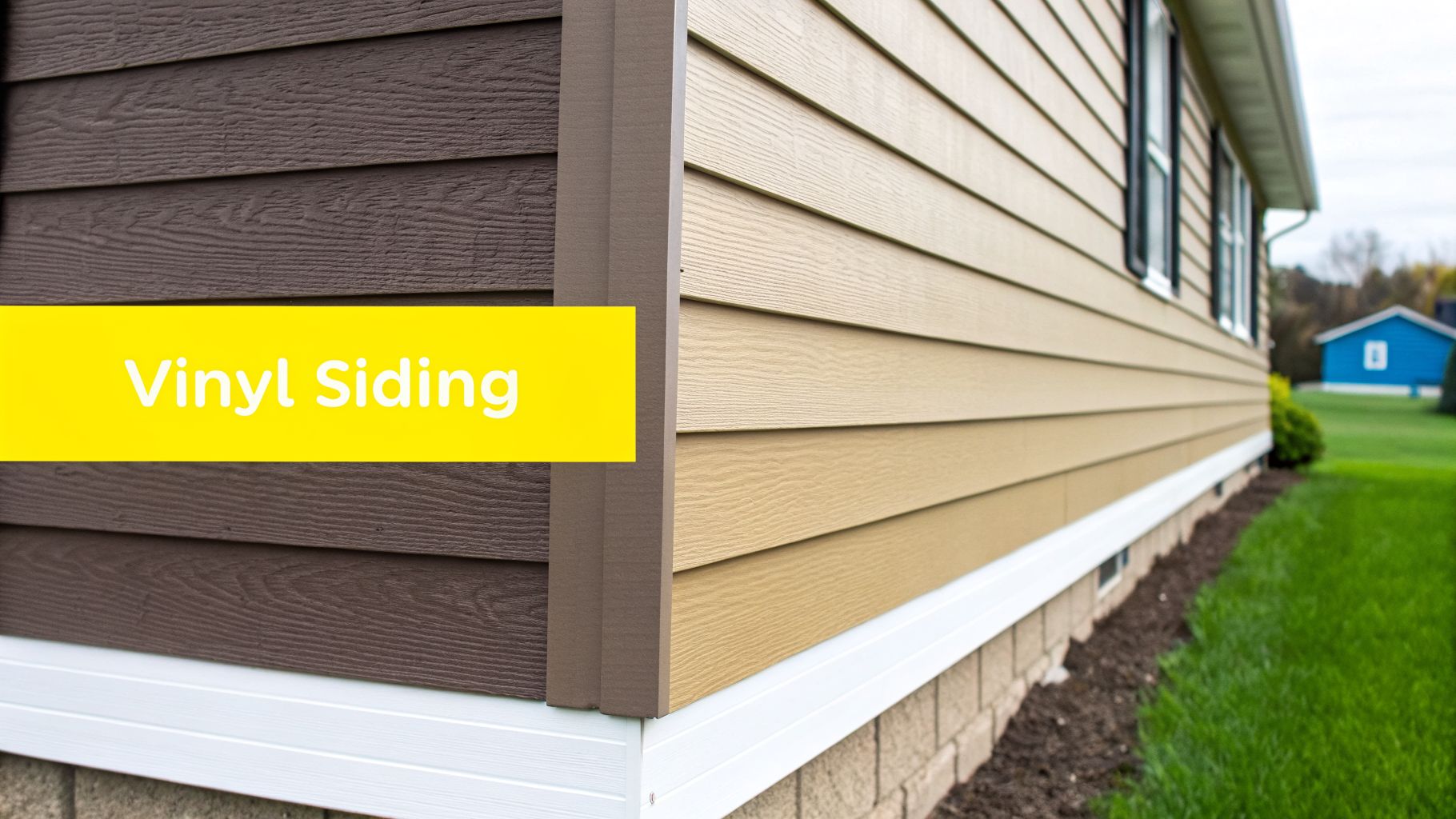
When your top priorities are finding a siding that’s easy on the wallet and doesn't demand a ton of your time, vinyl is almost always the first name that comes up. There's a good reason it’s one of the most common sights on homes across North Texas and the country.
Its popularity is pretty staggering. As of 2023, vinyl siding makes up a massive 54% of the entire U.S. siding market. With an installed cost of just $3 to $8 per square foot and a solid lifespan of 20-40 years, it’s easy to see why so many DFW homeowners find it to be the perfect fit.
How It Holds Up in the DFW Climate
One of the best things about vinyl is how it handles moisture. Here in North Texas, with our heavy rains and sticky humidity, materials like wood can rot and warp. Vinyl, on the other hand, is completely unfazed.
This also means it’s a terrible home for termites and carpenter ants, which is a huge plus in our area. Those pests can cause an incredible amount of damage to other types of siding, but they want nothing to do with vinyl.
And the maintenance? It couldn't be simpler. You’ll never have to paint or stain it because the color is baked right into the material. All it really needs is a good cleaning once a year with a power washer or just some soap and water to keep it looking brand new.
Vinyl siding is like the "set it and forget it" option in the world of home exteriors. Once it’s installed correctly, it asks for very little in return while protecting your home day in and day out.
From Basic Panels to Insulated Protection
Now, not all vinyl siding is the same. The standard version is a hollow-back panel. It’s lightweight and the most budget-friendly option out there. But for a climate like ours, with those scorching hot summers, insulated vinyl siding is a serious upgrade worth considering. This type has a rigid foam backing fused directly to the panel.
This added insulation brings a few key advantages:
- Better Energy Efficiency: The foam adds R-value, which is a measure of insulation. It helps block heat from getting into your house, keeping it cooler in the summer and potentially lowering those energy bills.
- Tougher Against Damage: That rigid backing makes the panels much more durable. They can stand up better to impacts from hail or an errant baseball, meaning fewer cracks and dents.
- A More Premium Look: Insulated panels lie much flatter against the wall. This gets rid of any waviness and gives the siding a more solid, substantial appearance that looks a lot more like real wood.
Style Without the Steep Price
If you think vinyl siding is just plain white panels, think again. The options available today are incredible. You can find a huge range of colors and styles to match any home, from historic to modern.
Whether you love the classic look of traditional clapboard, the clean lines of vertical board and batten, or even the rustic charm of cedar shakes, there’s a vinyl product that mimics it beautifully. Many even have realistic wood-grain textures that give your home character without the cost and headaches of maintaining real wood.
For a more detailed breakdown of what to expect financially, be sure to check out our guide on the cost to replace vinyl siding.
Fiber Cement Siding: The Gold Standard for DFW Durability
When your top priorities are serious resilience and a classic look, fiber cement siding is really in a league of its own. It's the go-to material for homeowners and builders who aren't willing to compromise, especially in a tough climate like ours in Dallas-Fort Worth.
If you think of vinyl siding as a practical, everyday sedan, then fiber cement is the rugged, all-terrain SUV of the siding world. It's engineered from the ground up to handle extreme conditions while looking fantastic.
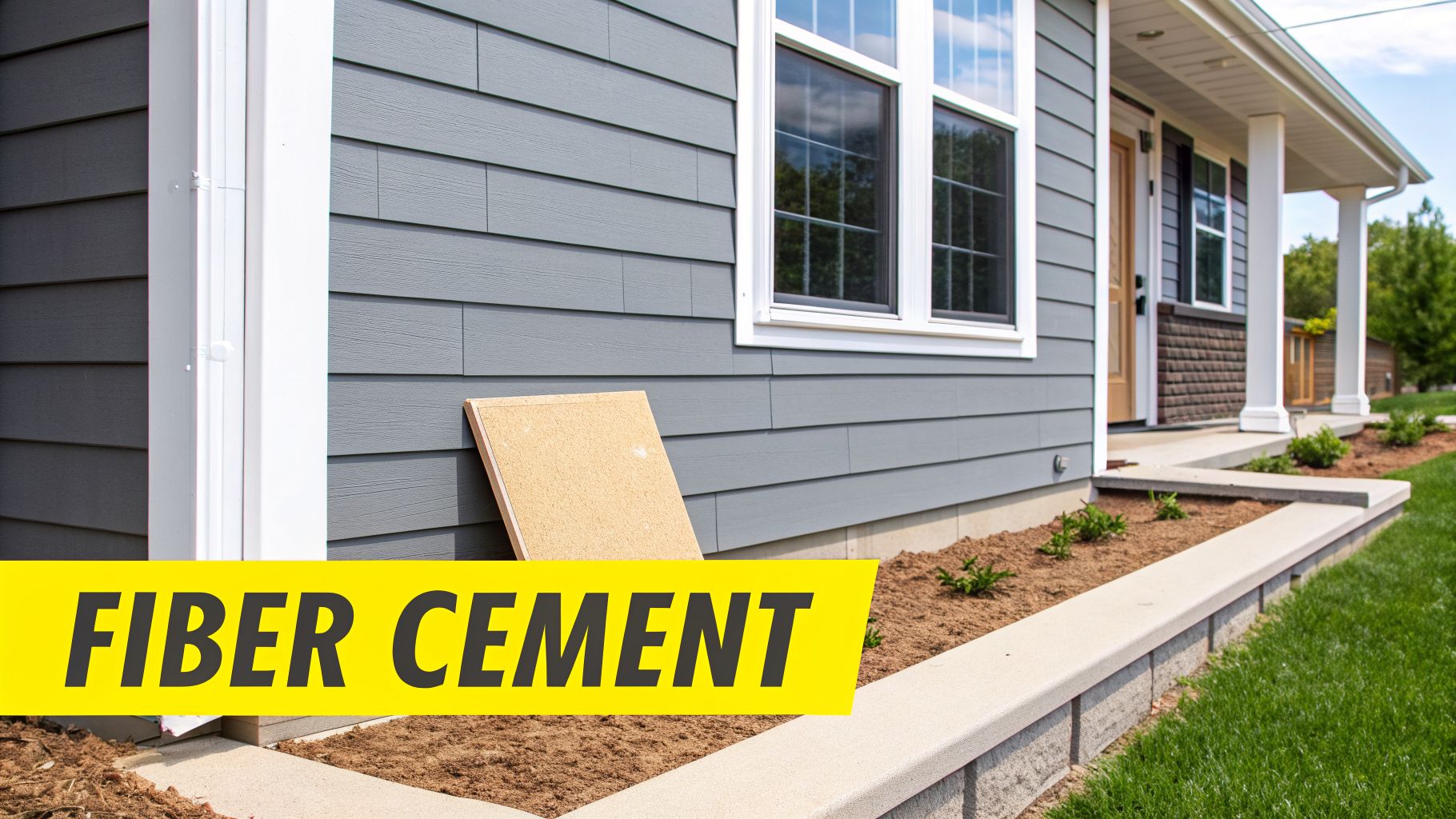
So what is it? Fiber cement is a tough composite material made from cement, sand, and cellulose fibers. This special blend creates a siding that is incredibly strong and stable. For anyone who’s had to deal with the aftermath of a DFW hailstorm, that level of durability is often the number one reason to choose it.
Built for the Texas Gauntlet
The Dallas-Fort Worth climate can feel like a trial by fire, flood, and ice for any home’s exterior. Fiber cement siding is one of the few materials truly built to handle everything our local weather throws at it.
The benefits are pretty clear:
- Impact Resistance: This is where fiber cement really proves its worth. Its dense structure offers amazing resistance to impacts from hail and flying debris, dramatically cutting down on the dents and cracks that can damage other materials.
- Fire Resistance: Made mostly of cement, fiber cement siding is non-combustible. It won’t ignite when hit with a direct flame, which adds a critical layer of safety and a whole lot of peace of mind.
- Moisture and Rot Proof: Unlike wood, fiber cement doesn't soak up moisture. That means it’s completely immune to the rot, warping, and swelling that plagues other materials in our humid Texas summers.
- Pest Proof: Termites, carpenter ants, and other wood-boring insects simply aren't interested in fiber cement. Because it isn't organic, they can't eat it, protecting your home’s structure from pests.
Championed by industry leader James Hardie, fiber cement is often called the ultimate investment for DFW homes. It's not just siding; it’s like engineered armor for your house that can last upwards of 50 years with proper care.
Unmatched Aesthetic Versatility
While its toughness is well-known, you don’t have to sacrifice style. Fiber cement's design flexibility is just as impressive, as it can be made to look almost identical to any other siding material. This gives you the freedom to get the exact look you want without giving up on best-in-class protection.
You can choose from a huge range of styles, including:
- Classic wood lap siding: Get that timeless clapboard or cedar look without any of the constant maintenance.
- Modern architectural panels: Create a sleek, contemporary home with large, smooth panels for a clean, minimalist style.
- Authentic stucco texture: Achieve a beautiful, textured finish that’s far more durable and crack-resistant than traditional stucco.
On top of that, manufacturers like James Hardie offer their products with factory-applied, baked-on color, like their ColorPlus® Technology. This process creates a vibrant, even finish that's incredibly resistant to fading from our intense Texas sun. That means a lot less repainting over the life of your home, saving you both time and money.
While the initial cost for fiber cement is higher than for vinyl, its incredible lifespan and low upkeep make it a smarter investment in the long run.
Want to get into the details? You can explore our complete guide on why you should choose fiber cement siding for your home.
Wood Siding for Timeless Character and Natural Charm
There’s just something about real wood siding. For homeowners who want an authentic, classic look, nothing else quite compares. The rich textures of materials like cedar and redwood give a home a warmth and character that synthetic products can only try to imitate.
But let's be honest—that incredible charm comes with a catch. Wood is what we call a "high-character, high-commitment" siding choice. It requires real, consistent care to keep it looking great and protecting your home from the elements.
The Commitment to Natural Beauty
Here in Dallas-Fort Worth, wood siding has to stand up to a lot: intense sun, high humidity, and plenty of pests. To keep it from failing, homeowners have to be ready for a regular maintenance schedule.
This is what that upkeep looks like:
- Regular Staining or Painting: You’ll need to do this every 3 to 7 years. It’s the only way to shield the wood from UV rays that will turn it gray and weathered.
- Sealing: A good sealant is non-negotiable. It creates a barrier against moisture, which is your biggest enemy when it comes to preventing rot, mold, and warping during our humid Texas seasons.
- Pest Inspections: Wood is food for termites and other insects. An annual inspection is a small price to pay to catch a major problem before it starts.
While it's more work, the result is an authentic, elegant look that gets better with age. The appeal of wood is a big reason why the siding industry is set to grow from a $12.8 billion market to over $18.3 billion by 2028. You can even explore the latest siding industry report to see the trends for yourself.
Engineered Wood: A Modern Alternative
So, what if you love the look of wood but just don't have the time for all that maintenance? This is where engineered wood siding comes in. Think of it as the perfect middle ground, blending the look of real wood with some seriously impressive modern technology.
Engineered wood is made by taking real wood strands and fibers and bonding them together with resins under intense heat and pressure. This process creates a final product that’s much more stable and durable than natural wood. It’s specifically designed to resist moisture, rot, and termites right from the start.
Engineered wood gives you the best of both worlds. You get that coveted, classic wood aesthetic but with way better durability and much lower maintenance—a perfect fit for today's busy homeowner.
Because it usually comes pre-primed or even pre-finished from the factory, installation is faster and it holds paint much longer than natural wood can. You’re trading a little bit of that one-of-a-kind natural variation for superior, long-lasting performance.
If you're weighing your options, our guide on the pros and cons of wood siding installation is a great place to dig deeper. It will help you compare the timeless appeal of real wood against the smart performance of engineered options so you can make the right call for your home.
How to Choose the Best Siding for Your Home
Picking the right siding for your house can feel like a massive decision, but you're now armed with all the key information. The next step is turning that knowledge into a choice you feel great about. Think of this as your final checklist to find the perfect fit for your home, your budget, and the lifestyle you want.
Choosing siding is about so much more than just picking a pretty color. It’s really a balancing act between the upfront cost and long-term value, how much maintenance you’re willing to put in, and what material truly fits your home’s character.
Prioritize for the DFW Climate
For any of us living in the Dallas-Fort Worth area, the weather is a factor you just can’t ignore. Our intense heat, sticky humidity, and infamous hailstorms mean some siding features are far more important here than anywhere else. Your final decision should absolutely be guided by how well a material can handle our unique brand of weather.
Start by asking yourself these critical questions:
- How important is hail resistance? If your neighborhood is a magnet for severe storms, the superior impact resistance of fiber cement siding might be well worth the higher initial cost compared to a standard vinyl.
- What about sun damage? That Texas sun is no joke and can cause serious fading and brittleness over time. A material with a factory-baked finish, like James Hardie's ColorPlus® Technology, is going to hold its color much, much longer than siding that gets painted after it’s installed.
- How will it handle moisture? With our humidity, you want a material that won’t rot or soak up water. Siding like vinyl and fiber cement gives you peace of mind and helps you avoid nasty long-term problems.
Balancing Cost, Maintenance, and Style
Once you’ve got the climate figured out, it's time to find that sweet spot between your budget and your personal taste. It helps to think about both the initial cost and the lifetime value. A cheaper siding might save you money today, but it could end up costing you more down the road in repairs, repainting, and headaches.
Choosing siding is a long-term commitment. The best decision is one that aligns with not only your budget but also your tolerance for future maintenance and your vision for your home's appearance.
Take natural wood, for example. It has a classic charm that’s hard to beat, but it demands a serious commitment to upkeep. This quick guide shows a simple way to think about choosing between natural and engineered wood.
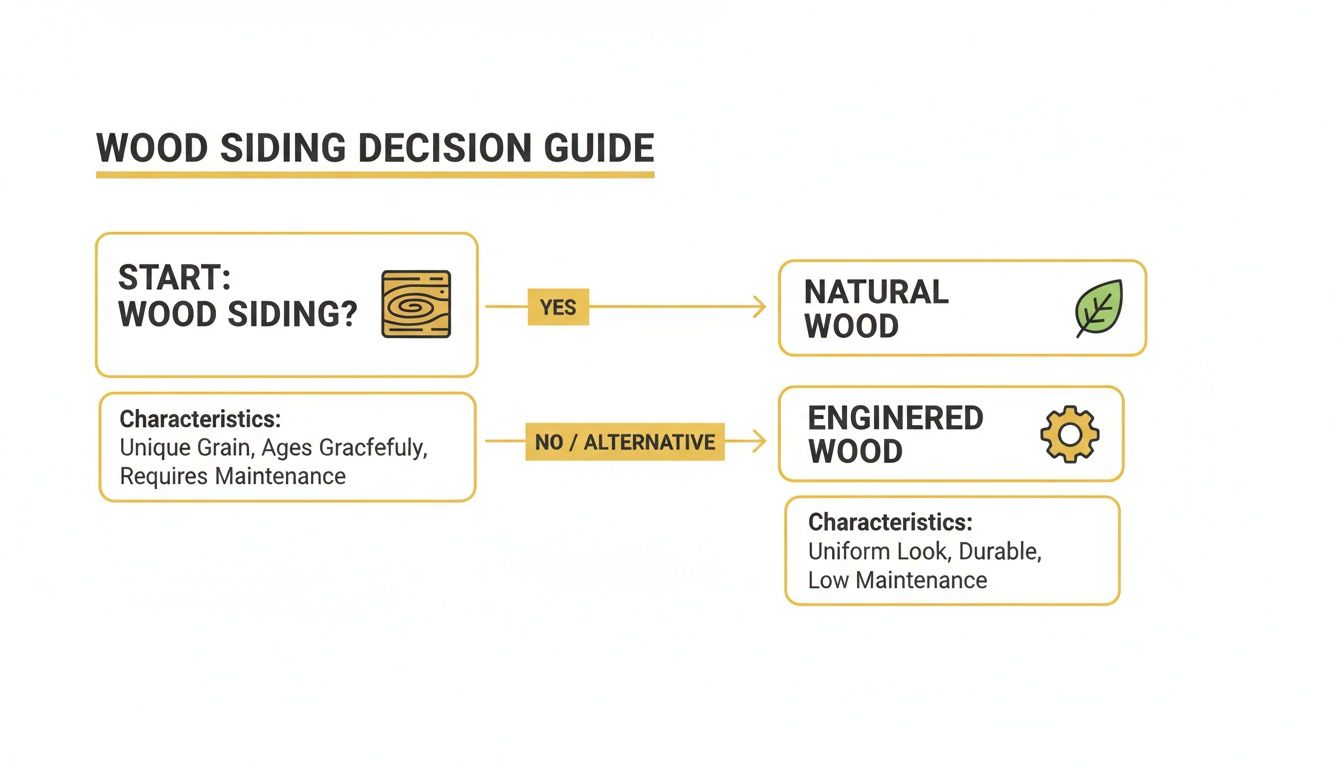
As you can see, while real wood offers that authentic, timeless beauty, engineered wood gives you a more practical option with better durability and a lot less maintenance. It really highlights the common trade-off between classic aesthetics and modern performance.
Making Your Final Decision
To help bring it all together, let’s make this simple. We've created a decision matrix to show you how each material stacks up in the categories that matter most to DFW homeowners. This at-a-glance comparison will help you see the trade-offs and zero in on the best choice for you.
Siding Decision Matrix for DFW Homeowners
Use this matrix to compare the top siding options across five critical categories to determine the best fit for your home, budget, and lifestyle.
| Siding Material | Upfront Cost | DFW Durability (Hail/Heat) | Maintenance Needs | Aesthetic Versatility |
|---|---|---|---|---|
| Fiber Cement | High | Excellent (Hail & Heat Resistant) | Low (Repaint every 10-15 years) | High (Mimics wood, stone) |
| Vinyl | Low to Mid | Good (Can crack in extreme hail) | Very Low (Occasional washing) | Mid (Many colors & styles) |
| Natural Wood | High | Fair (Prone to rot, warping, pests) | High (Needs regular staining/sealing) | Excellent (Classic, rich) |
| Engineered Wood | Mid to High | Very Good (Resists hail, pests) | Low to Mid (Repaint 10-15 years) | High (Mimics natural wood) |
| Metal | Mid to High | Excellent (Dents with hail) | Low (Fade-resistant finishes) | Mid (Modern, industrial) |
By working through these steps—prioritizing for our climate, weighing your budget against maintenance, and defining your style—you can go from feeling overwhelmed to feeling confident. You’ll have a clear picture of why one siding material is the right investment for your home.
Ensuring Flawless Siding Installation
Picking out the perfect siding for your house is a huge first step, but even the highest-quality types of siding for homes will fail if they aren't installed by a pro. The quality of the installation is what really determines whether your siding looks great, performs well, and protects your home for decades to come.
Think of it this way: the siding panels are the five-star ingredients, but the contractor is the master chef. It's their skill that turns those ingredients into a masterpiece.
A sloppy installation can cause a whole host of problems that are much worse than just looking a little off. Gaps, improper nailing, and poor alignment are basically open invitations for water to sneak in behind the panels. Before you know it, you could be dealing with rot and mold growing inside your walls. Not only does this damage your home's structure, but it also instantly voids the manufacturer's warranty, leaving you to pay for all the repairs yourself.
The Moore Construction Co. Process
With over 20 years of experience serving the DFW area, we’ve fine-tuned an installation process that's all about precision and keeping you in the loop. Our approach guarantees your new siding can handle everything our unique Texas climate throws at it, from blistering summer heat to destructive hailstorms. It all starts with a thorough inspection of your property.
We don't just show up and start hammering. Our team meticulously examines your home's exterior to find any hidden issues, like soft spots in the sheathing or existing moisture damage. This lets us fix the root problems before we cover them up, giving your new siding the solid, sound foundation it needs to last.
Partnering with a seasoned professional is your best insurance policy. It guarantees that the crucial, often-unseen details are handled correctly, protecting your home and your investment for years to come.
Details That Make All the Difference
A flawless installation is really all about the little details—the things you’ll never see once the job is done. These critical steps are what create a complete weather-resistant barrier that protects the very core of your home.
We believe three key areas are completely non-negotiable for an installation that's built to last:
- Protective House Wrap: Before a single piece of siding goes on the wall, we install a high-quality house wrap. This material acts as a crucial secondary barrier, stopping rain from getting in while still allowing moisture vapor from inside the house to escape. It's a must-have for preventing moisture-related problems.
- Precision Flashing: Flashing is a thin, waterproof material we install around windows, doors, and where the roof meets a wall. These are the spots where homes are most likely to leak. We install it with surgical precision to channel water away from these vulnerable points, preventing expensive water damage down the road.
- Proper Fastening Techniques: Siding has to be fastened securely, but not so tightly that it can't expand and contract as the temperature changes. We use the exact fasteners specified by the manufacturer and pay close attention to correct spacing and depth. This simple step is what prevents your siding from buckling, warping, or blowing off in high winds.
At Moore Construction Co., we bring the same level of care to every single job, whether it's vinyl, wood, or James Hardie fiber cement. Our commitment to getting these details right means your home’s new exterior won’t just look incredible—it will perform flawlessly, protecting your family and your home's value for decades.
Frequently Asked Questions We Hear About Siding
Even with all the options laid out, you probably still have a few questions swirling around. That's completely normal. Here are some of the most common questions we get from DFW homeowners, with straightforward answers to help you make your decision.
How Do I Know When It’s Time to Replace My Siding?
Your house will usually give you some pretty clear clues. Go take a walk around your home and look for widespread cracking, chipping, or panels that are dented up. If you see wood siding that’s starting to rot or vinyl panels that are warped and pulling away from the wall, it’s a big red flag.
Other signs can be more subtle. Is your paint constantly bubbling or peeling, no matter how many times you fix it? Does mildew come right back after you’ve cleaned it off? You might even notice your energy bills creeping up for no reason, which can mean your siding isn't insulating like it used to. And of course, if a big hailstorm just rolled through, it’s always smart to get a professional inspection.
Will New Siding Increase My Home's Value?
It absolutely will. Year after year, siding replacement is one of the best exterior projects you can do for your home’s return on investment. New siding gives your curb appeal a massive facelift, and that's the first thing that catches a potential buyer's eye. It’s no surprise that a 2023 survey found 63% of people who tried a major DIY home project regretted it—professional work on big jobs like this really shows.
High-quality materials like fiber cement or premium insulated vinyl not only look fantastic but also improve energy efficiency. In the Texas heat, that’s a huge selling point for anyone looking to buy. A fresh, solid exterior tells everyone that your home is well-cared for and protected from the elements.
How Does the DFW Climate Affect My Siding Choice?
The Dallas-Fort Worth climate is incredibly hard on the outside of a house. That intense Texas sun and constant UV exposure can fade and crack lower-quality siding, making it brittle over time. And the humidity we deal with is the number one enemy of wood, leading to rot and decay if it's not perfectly maintained.
But the real game-changer here is hail. North Texas gets frequent and often severe hailstorms, which makes impact resistance a must-have feature for your siding. This is exactly why we so strongly recommend durable materials built to take a beating. Investing in siding that can handle our local weather isn’t just an upgrade; it’s a necessity to avoid constant repairs.
Can I Just Install Siding Myself to Save a Few Bucks?
We get it—the thought of saving money with a DIY project is always tempting. But siding installation is one of those jobs where experience truly matters. It’s not just about nailing up panels; it’s a science that requires special tools and a deep understanding of how to create a weatherproof barrier for your entire home.
Small mistakes can cause huge headaches down the road. A panel that’s fastened too tightly, a window that’s not flashed correctly, or a tiny gap between boards can let water sneak in. Before you know it, you’ve got hidden mold and structural rot. Worse yet, a DIY job will almost certainly void the manufacturer's warranty, leaving you on the hook for all future repairs. Hiring an experienced crew ensures it’s done right the first time, protecting your home and your investment for years to come.
Ready to transform your home’s exterior with siding that’s built to last in the DFW climate? The experts at Moore Construction Co. have over 20 years of experience installing high-performance siding systems. Schedule your free, no-obligation estimate today!


