


Your roof is more than just a layer of shingles; it's the primary shield protecting your home, your family, and your most valuable assets from the elements. While a sudden, catastrophic leak is an undeniable signal for action, most roof failures begin with subtle warnings that are easy to overlook. Ignoring these early indicators can lead to costly structural damage, mold infestations, and compromised insulation, turning a manageable replacement into an expensive, whole-home restoration project. Recognizing the early signs you need a new roof is a critical skill for any homeowner, especially in the Dallas-Fort Worth area where severe weather can accelerate wear and tear.
This guide moves beyond the obvious problems to help you decode your roof's hidden language. We will detail the specific, often-missed clues that signal your roof is approaching the end of its functional life. From the texture of your shingles to the integrity of your attic, you will learn how to perform a confident self-assessment. Understanding these eight key indicators will empower you to act proactively, saving you money, preventing severe damage, and ensuring your home remains secure. Let’s explore the critical warnings your roof is sending you right now.
1. Sign 1: Missing, Cracked, or Curling Shingles
Your shingles serve as the primary armor for your home, and any sign of weakness is a clear signal that your roof's integrity may be at risk. Missing, cracked, or curling shingles are more than just a cosmetic issue; they are direct visual evidence that your roof is failing to protect your property from the elements. This is one of the most straightforward signs you need a new roof, as it indicates the end of the material's effective lifespan.
In the Dallas-Fort Worth area, intense UV radiation and dramatic temperature shifts accelerate this deterioration. Shingles can become brittle, leading to cracks under the stress of thermal expansion and contraction or during a hailstorm. Missing shingles often get torn off by high winds, leaving the underlayment and roof deck completely exposed to rain.
Identifying Shingle Damage
Catching shingle damage early requires a proactive approach. Here’s what to look for and how to document it:
- Curling: Shingles that curl at the edges, either upward (clawing) or downward (cupping), are a common sign of advanced age and heat exposure. Once they begin to curl, they are far more susceptible to being lifted and torn off by wind. For a deeper understanding of this specific problem, you can learn more about what causes curling shingles and what to do about it.
- Cracking: Look for random cracks, often appearing as spiderwebs across the shingle's surface. These fractures break the watertight seal and create pathways for moisture to seep underneath.
- Missing Shingles: The most obvious sign is a gap where a shingle should be. This is an urgent issue, as even a single missing shingle can lead to a significant leak during the next DFW downpour.
Pro Tip: After any major storm, perform a quick visual inspection from the ground using binoculars. This is a safe way to spot obvious damage without climbing onto the roof. Document any issues with dated photos, which will be invaluable for insurance claims. Don't wait; water can penetrate your roof structure within hours of shingle loss.
2. Water Stains and Leaks in Attic or Ceiling
The appearance of water stains on your ceilings or walls is an undeniable warning sign that your roof’s defense has been breached. These stains, which often appear as brown, yellow, or gray discolorations, indicate that water has penetrated your roof system, soaked through the decking and insulation, and finally reached your home's interior. This is one of the most serious signs you need a new roof, as interior moisture damage can escalate quickly.
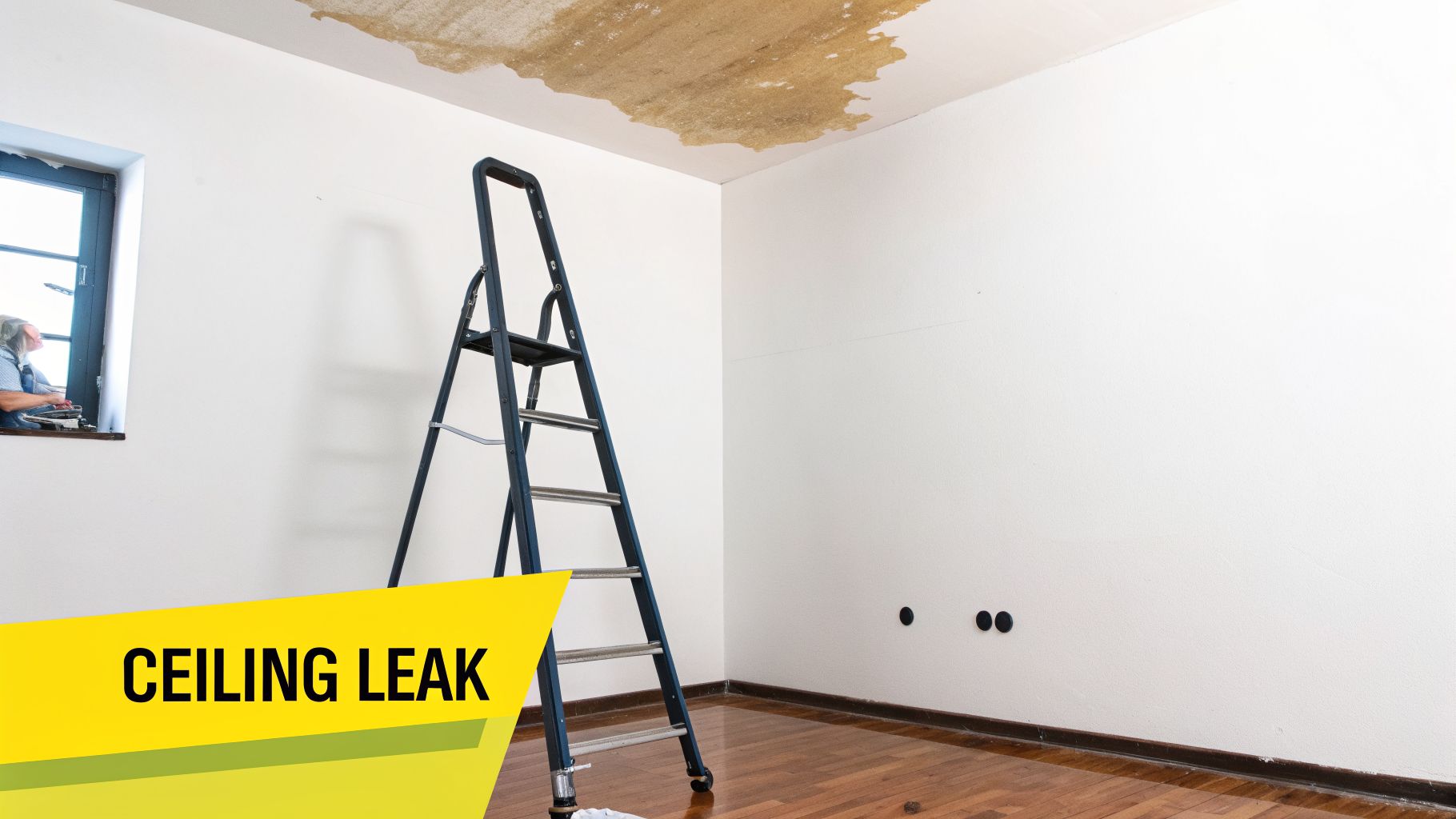
In the Dallas-Fort Worth area, the combination of heavy spring thunderstorms and high humidity creates a perfect environment for this type of damage to worsen. A small, unchecked leak can rapidly lead to widespread mold growth, ruin expensive insulation, and even compromise the structural integrity of your home’s framing. Because leaks can take time to become visible, a stain often points to a problem that has been developing for months.
Identifying Interior Water Damage
Discovering a leak requires careful observation inside your home, especially after significant rainfall. Here’s how to spot and manage the evidence:
- Ceiling and Wall Stains: Look for any discoloration, bubbling paint, or peeling wallpaper on the top floor of your home. Stains that appear in corners or around fixtures like lights and ceiling fans are common.
- Attic Inspection: Using a flashlight, safely inspect your attic for damp insulation, dark stains on the underside of the roof decking, or a musty odor. Pay close attention to areas around chimneys, vents, and valleys.
- Active Drips: An active drip during a rainstorm is an emergency. It confirms a direct and ongoing path for water intrusion that requires immediate professional attention. For a more detailed guide, you can learn more about fixing roof leaks and what you need to know.
Pro Tip: Don't ignore a small stain, assuming it's an old problem. In Texas humidity, even minor moisture can foster mold growth within 24-48 hours. Use a pencil to lightly outline the stain's perimeter and write the date next to it. If it grows after the next rain, you have confirmed an active leak that needs to be addressed immediately.
3. Sagging or Uneven Roof Deck
A sagging or visibly uneven roof deck is one of the most serious signs you need a new roof, indicating a deep-seated structural compromise. Unlike surface-level shingle damage, a sagging roof points to a failing support system beneath the surface. This dangerous condition often results from prolonged water damage that has rotted the decking, trusses, or rafters, or from the sheer weight of accumulated wet debris or snow.
In the Dallas-Fort Worth area, the combination of intense rainstorms and high humidity creates a perfect environment for wood rot and structural decay, especially in older homes where maintenance may have been deferred. A sagging roof is not just a cosmetic problem; it represents an immediate safety hazard that can escalate quickly, potentially leading to a catastrophic collapse.
Identifying Structural Sagging
Detecting a sagging roof requires looking beyond the shingles to the roof's actual shape and structure. Here’s what to check for:
- Visible Dips or "Swayback": From the ground, look at the ridgeline and planes of your roof. They should be perfectly straight. Any noticeable dips, curves, or waves are clear indicators of a structural problem.
- Attic Inspection: Safely enter your attic with a good flashlight. Look for cracked or strained rafters, water-damaged or spongy-feeling decking, and any light seeping through from the outside.
- Interior Signs: Check ceilings on your top floor for new or spreading cracks, as this can be a sign that the roof structure above is shifting or failing.
Pro Tip: Use a long, straight object like a yardstick or level held up against your ceiling in the attic to check for bowing or sagging between the rafters. Document any dips with photos from multiple angles, as this visual evidence is critical for both contractors and insurance adjusters to understand the severity of the issue. A sagging roof requires immediate professional assessment from a company with structural repair experience.
4. Granule Loss and Bald Spots on Shingles
Those tiny, sand-like granules on your asphalt shingles are not just for color; they form a critical protective layer against UV radiation and weather. When you find an excessive amount of these granules in your gutters or see bald spots on your roof, it's a significant sign that your roof's aging process is accelerating. This granule loss exposes the underlying asphalt to the elements, leading to rapid deterioration and compromising your home’s defense system.
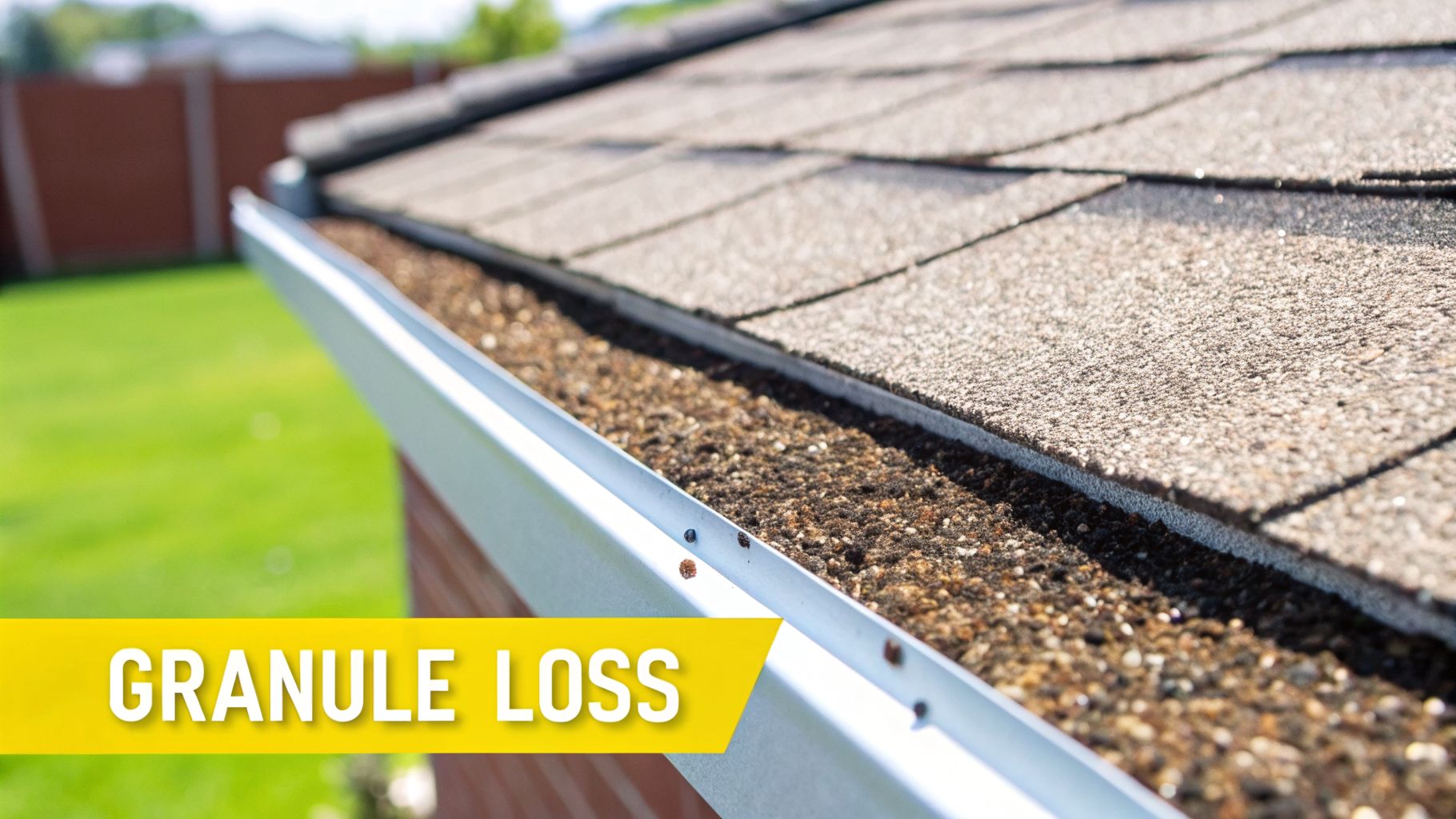
In the Dallas-Fort Worth metroplex, the intense Texas sun is a primary culprit, baking the shingles and causing the granules to loosen over time. Hailstorms are another major factor, as the impact from hailstones can effectively "blast" the granules off the shingles, creating weak points that can lead to leaks. Once this protective top layer is gone, the shingle becomes brittle and far more susceptible to cracking and water penetration.
Identifying Granule Loss
Tracking granule loss is a key part of monitoring your roof's health. It’s a subtle but serious issue that requires a bit of detective work. Here’s what to look for:
- Granules in Gutters: When cleaning your gutters, look for an accumulation of black, sand-like material. While a small amount is normal for new roofs, a large or sudden increase in granules signals advanced wear.
- Bald Spots: Use binoculars from the ground to look for dark, smooth, or "bald" patches on your shingles. These areas have lost their protective coating and are now vulnerable.
- Inconsistent Color: As granules wear away, you may notice that your roof's color looks uneven or patchy. This indicates widespread deterioration.
Pro Tip: Take photos of your gutters after cleaning them each year. This creates a visual record that helps you track the rate of granule loss over time. If you notice a dramatic increase after a storm or over a single season, it’s a strong indication that you need a professional inspection to assess the remaining life of your roof.
5. Damaged, Loose, or Missing Flashing
While shingles form the main shield of your roof, flashing is the critical component that seals the most vulnerable joints. Flashing consists of thin pieces of metal, usually galvanized steel or aluminum, installed around penetrations like chimneys, vents, and skylights to direct water away. When this material is damaged, loose, or missing entirely, it creates a direct entry point for moisture, making it one of the most common causes of roof leaks in Dallas-Fort Worth homes.
The intense Texas sun and frequent temperature fluctuations cause the metal and surrounding materials to expand and contract, which can loosen seals over time. Storms with high winds or hail can also bend, dent, or tear flashing away. Because these failures occur at critical junctures, even a small breach can lead to significant interior water damage, rot, and mold growth. This makes compromised flashing a clear sign you need a new roof or at least immediate, professional repairs.
Identifying Flashing Failure
Since flashing issues can be subtle, knowing what to look for is key to preventing major damage. Here’s a quick guide to inspecting these critical areas:
- Corrosion and Rust: Check for visible rust spots or corrosion on the metal surfaces, especially around chimneys and roof valleys. This indicates the metal is breaking down and losing its ability to repel water.
- Gaps and Loose Seals: Look for gaps between the flashing and the roof materials or chimney. The sealant used to create a watertight bond can crack and deteriorate, allowing water to seep underneath.
- Bent or Damaged Metal: After a storm, look for any metal pieces that appear bent, dented, or lifted. This damage compromises the carefully designed channels meant to guide water off your roof. You can learn more about common roof flashing problems and their solutions to better understand the risks.
Pro Tip: One of the earliest indicators of flashing failure is a new water stain on an interior ceiling or wall, particularly near a fireplace, vent pipe, or skylight. If you see this, don't ignore it. It’s a direct warning that a crucial part of your roof's waterproofing system has failed.
6. Moss, Algae, or Lichen Growth
The appearance of moss, algae, or lichen on your roof is a strong indicator of persistent moisture, a condition that can seriously compromise your roofing system. While often dismissed as a simple cosmetic issue, this organic growth signals deeper problems with moisture retention, poor drainage, or inadequate sunlight. These organisms trap water against your shingles, accelerating their breakdown and potentially leading to premature failure.
In the humid DFW climate, especially on north-facing roof slopes or in shaded areas, this growth can flourish. Moss can physically lift the edges of shingles, creating channels for water to seep underneath and reach the roof deck. Algae, often appearing as black streaks (Gloeocapsa magma), feeds on the limestone filler in asphalt shingles, weakening their structure over time. This is a clear sign you need a new roof on the horizon, as it shows the current system can no longer effectively manage environmental moisture.
Addressing Organic Growth
Effectively managing this issue involves more than just cleaning; it requires addressing the root cause. Here’s how to assess the problem and take action:
- Identify the Growth: If you're spotting unsightly green or black patches, you might be wondering exactly what is growing on your roof and if it's causing damage. Moss is typically green and spongy, while algae often presents as dark streaks or stains.
- Check for Contributing Factors: Look for overhanging tree branches that block sunlight and drop debris. Clogged gutters can also cause water to back up, creating a damp environment perfect for growth.
- Assess Underlying Damage: Significant, widespread growth often indicates the shingles have been damp for an extended period. This can mean the granules have eroded and the shingles themselves are nearing the end of their lifespan.
Pro Tip: Never use a high-pressure washer to clean your roof. This can strip away the protective granules from your shingles, causing more harm than the organic growth itself. Instead, opt for a low-pressure chemical treatment designed for roofs. If growth is extensive, consult a professional to determine if the roof's integrity is compromised and replacement is the more cost-effective solution.
7. Roof Age Exceeding Manufacturer Lifespan
Just like any other major home component, your roof has a finite lifespan. While it might not show dramatic signs of failure like missing shingles, its age alone can be one of the most critical indicators that a replacement is necessary. Most common asphalt shingle roofs are designed to last 20-25 years; once yours reaches this age, the risk of failure increases exponentially, making it a clear sign you need a new roof.
In the Dallas-Fort Worth metroplex, the harsh climate often shortens this expected lifespan. Intense summer heat, severe hailstorms, and high humidity work together to degrade roofing materials faster than in milder climates. An aging roof can develop multiple subtle issues at once, making a series of small, costly repairs far less effective than a full replacement.
Understanding the Impact of Roof Age
An old roof isn't just a potential leak; it's a financial and logistical liability. Here’s how to assess and manage this risk:
- Determine Your Roof's Age: Check your home purchase records or the report from your last home inspection. If this information isn't available, a professional roofer can provide a reliable age assessment. Many homes built in DFW during the 1990s and early 2000s are now prime candidates for their first full roof replacement.
- Insurance Complications: Many insurance carriers will not renew a policy or will limit coverage for roofs older than 20-25 years. They view an aged roof as an unacceptable risk, regardless of its apparent condition.
- Real Estate Transactions: During a home sale, appraisers and lenders in markets like Fort Worth and Dallas often flag roofs over 20 years old as requiring replacement before a loan is approved or a sale can close.
Pro Tip: Don't wait for your roof to fail. Plan for a replacement 1-2 years before it reaches its manufacturer-rated lifespan. Budgeting for this inevitable expense ahead of time prevents the stress and higher costs of an emergency replacement after a storm or major leak. Keep all records of installation and maintenance for future insurance or warranty needs.
8. Storm Damage: Hail Impact and Wind Damage
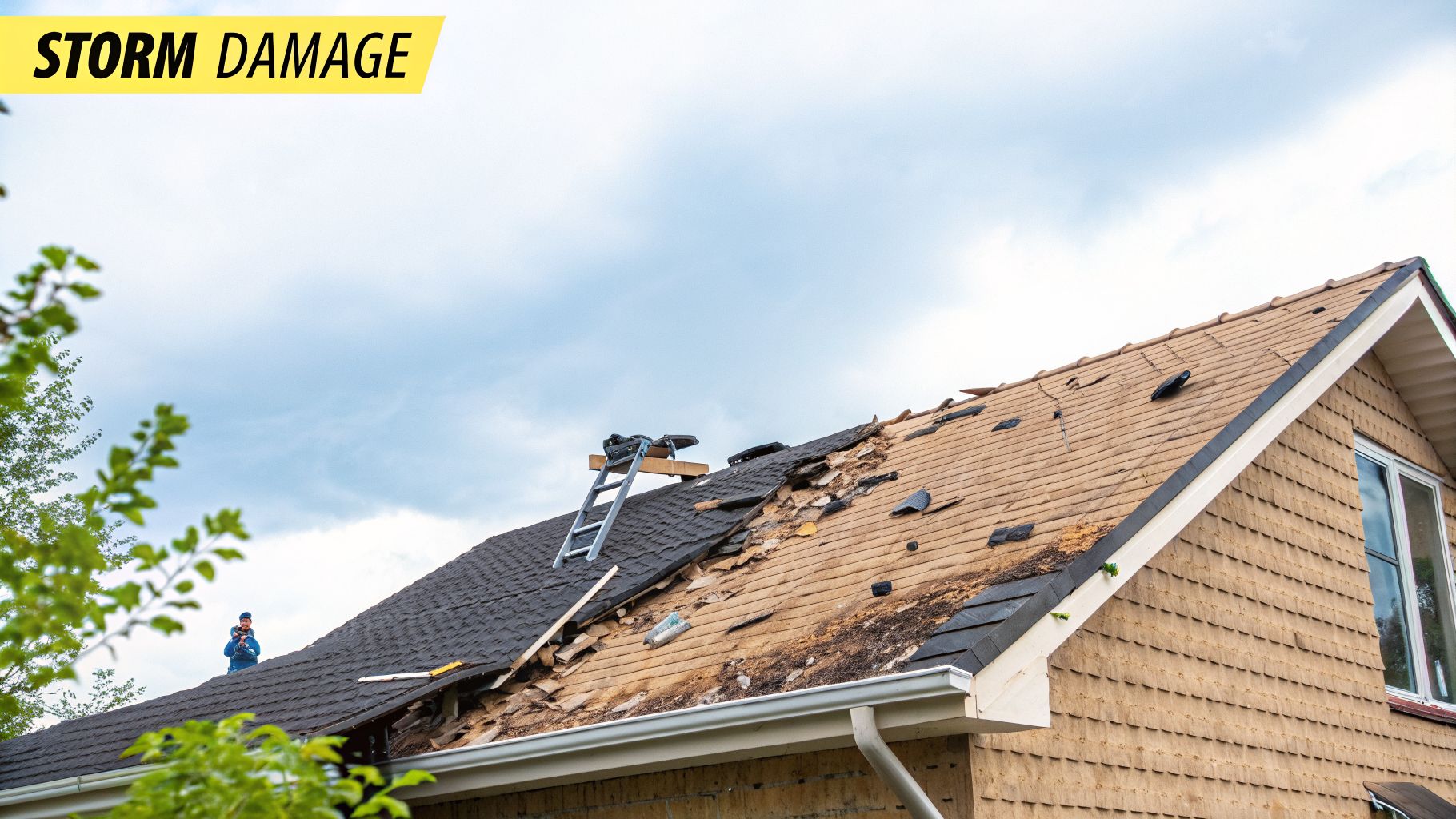
In the Dallas-Fort Worth area, severe storms are a common reality, and the damage they inflict is a primary reason homeowners need a new roof. Hail and high winds can cause significant harm that compromises your roof’s ability to protect your home. Hail impacts can bruise, crack, or puncture shingles, while intense winds can lift, curl, or completely tear them away, exposing the vulnerable underlayment.
Storm damage isn't always obvious from the ground. Subtle bruising from hail or slightly lifted shingle seals from wind might not be visible to the untrained eye, yet they can lead to major leaks down the road. Given DFW's location in "hail alley," where storms can occur multiple times in a single season, cumulative damage is a serious concern. This makes prompt and thorough post-storm inspections essential.
Identifying Storm Damage
After a major weather event, taking immediate action is critical to protect your property and support a potential insurance claim. Here's what to look for and how to respond:
- Hail Damage: Look for dark, circular bruises or dimples on asphalt shingles where granules have been knocked off. On metal roofs, you will see dents. These impact points weaken the shingle and accelerate its deterioration.
- Wind Damage: Check for missing shingles, especially along the roof's edges and peak. Also, look for shingles that appear lifted or creased horizontally where the wind has bent them backward, breaking their adhesive seal.
- Debris: Significant amounts of shingle granules in your gutters or on the ground after a storm are a clear indicator of impact damage or advanced wear.
Pro Tip: Your safety comes first. After a storm, use binoculars to inspect your roof from the ground. Photograph any visible damage immediately, noting the date and time. Contact a trusted local roofing contractor like Moore Construction Co. to perform a free, professional inspection. Their expertise is vital for documenting damage accurately for your insurance company.
8-Point Comparison: Signs You Need a New Roof
| Issue | 🔄 Implementation complexity | ⚡ Resource requirements | 📊 Expected outcomes / impact | 💡 Ideal use cases | ⭐ Key advantages |
|---|---|---|---|---|---|
| Missing, Cracked, or Curling Shingles | Low–Medium: spot repairs are straightforward; widespread needs more work | Minimal–Moderate: replacement shingles, basic roofing tools; pro for safety & warranty | Restores water-shedding; prevents leaks and interior damage when addressed promptly | Localized storm or age-related shingle damage | Quick, cost-effective if localized; easy to detect (⭐⭐⭐) |
| Water Stains and Leaks in Attic or Ceiling | Medium: diagnostic work to find leak path; may require interior repairs | Moderate–High: roof patching, interior drywall/insulation repair, possible mold remediation | Stops ongoing water intrusion; prevents structural decay and mold growth if fixed | Visible interior stains or musty attic odors after rain | Clear evidence of failure; helps target repairs and insurance claims (⭐⭐⭐⭐) |
| Sagging or Uneven Roof Deck | High: structural assessment and corrective carpentry required | High: structural engineer, carpentry, likely full roof replacement and labor | Restores structural safety; prevents collapse and extensive secondary damage | Noticeable roof dip or wavy interior ceilings — immediate attention required | Addresses root cause and restores safety/value (⭐⭐⭐⭐⭐) |
| Granule Loss and Bald Spots on Shingles | Low–Medium: inspection and monitoring; replacement if loss is widespread | Low–Moderate: gutter cleaning, visual inspections; possible full roof replacement | Indicates advancing roof age; forecasting for replacement and preventing leaks | Roofs 10+ years old, after hail, or when granules collect in gutters | Measurable indicator for planning replacement; easy to document (⭐⭐⭐) |
| Damaged, Loose, or Missing Flashing | Medium: targeted metal work; may require partial shingle removal | Low–Moderate: metal flashing, sealants, skilled roofer | Eliminates common leak sources at penetrations; extends roof life with minimal disruption | Leaks near chimneys, vents, skylights, or after storms | Cost-effective targeted repair; prevents interior damage (⭐⭐⭐⭐) |
| Moss, Algae, or Lichen Growth | Low–Medium: cleaning plus addressing ventilation/drainage issues | Low: chemical cleaning or manual removal, vent improvements, gutter maintenance | Improves appearance and reduces trapped moisture; slows shingle degradation if underlying cause fixed | Shaded, humid roof sections or homes near trees | Preventive indicator of ventilation problems; non-structural remediation (⭐⭐) |
| Roof Age Exceeding Manufacturer Lifespan | Low (assessment) → High (replacement planning) | High: full roof replacement cost, possibly improved materials/warranty | Planned replacement reduces emergency failures, improves resale and insurability | Roofs at or beyond 20–25 years, lender/insurer requirements | Objective benchmark for proactive replacement and coverage (⭐⭐⭐⭐) |
| Storm Damage: Hail Impact and Wind Damage | Medium: inspection for subtle/hidden damage; repairs vary by extent | Moderate–High: repair or replace shingles, possible decking work; insurance coordination | Often insurance-covered repairs or replacement; prevents leak progression | After hail, high-wind events, or visible impact patterns | Documentable cause for insurance; prompts timely professional intervention (⭐⭐⭐⭐) |
Your Next Steps: From Inspection to Installation
Recognizing the subtle and overt signs you need a new roof is the crucial first step in protecting your home’s structural integrity and your family's safety. Throughout this guide, we've examined the key indicators, from the obvious missing shingles and interior water stains to the less apparent granule loss in your gutters and spikes in your energy bills. Each sign tells a piece of a larger story about your roof's current health and its ability to shield your most valuable asset from the harsh Texas weather.
The most important takeaway is that your roof is a complex system, and ignoring one problem can lead to a cascade of expensive, disruptive failures. A few curled shingles might seem like a minor cosmetic issue, but they can be a precursor to widespread water intrusion. Similarly, a small, dark spot on your ceiling isn't just a paint problem; it's evidence that a breach has already occurred somewhere above. Being proactive, not reactive, is the key to managing your roof effectively and avoiding emergency situations.
Turning Knowledge into Action
With this understanding, your path forward becomes clear. The immediate priority is to confirm your suspicions with a professional assessment. While a personal visual check from the ground provides valuable clues, a comprehensive, on-roof inspection by a trained expert is non-negotiable. They can identify damage invisible from a distance, assess the condition of underlayment and decking, and provide a clear diagnosis. For a thorough and efficient assessment, consider how modern technologies like specialized Drone Roofing Inspection Software can provide a detailed, high-resolution view of your roof's condition without the risks of foot traffic on potentially compromised shingles.
From there, you can confidently weigh the options:
- Targeted Repairs: If the damage is isolated and the rest of your roof is in good condition, a professional repair may be a cost-effective solution.
- Full Replacement: If the roof is past its lifespan, has extensive damage, or has undergone multiple previous repairs, a full replacement is the most sensible long-term investment.
Ultimately, addressing these warning signs is about more than just fixing a roof; it's about preserving your home's value, improving its energy efficiency, and securing peace of mind. A sound, professionally installed roof is a fundamental component of a safe and comfortable home, ensuring you are prepared for whatever the next DFW storm season brings.
Don't let a roofing issue turn into a household disaster. If you've noticed any of the signs discussed in this article, take the definitive next step by scheduling a free, no-obligation inspection with Moore Construction Co. Our experienced team will provide an honest, detailed assessment of your roof's condition and guide you toward the best solution for your home and budget.


