


When a hailstorm rolls through, the quiet that follows can be filled with a lot of questions. The biggest one? "How much is this going to cost me?" Getting a handle on the potential repair bill is the first step to getting your home—and your life—back to normal.
The typical roof hail damage repair cost can fall anywhere between $1,500 and $8,000, with a national average hovering around $4,250. Here in the Dallas-Fort Worth area, that number can shift depending on the storm's punch. Thankfully, minor touch-ups might only set you back a few hundred dollars.
Decoding Your Hail Damage Repair Estimate

Think of a repair estimate as more than just a price tag. It’s the roadmap for fixing your roof, telling the whole story of what was damaged and how it's going to be restored.
Getting to that final number is a bit like baking a cake. You have the cost of your ingredients (materials), the complexity of the recipe (your roof's design), and the skill of the baker (labor). Cutting corners on any one of those can leave you with a mess. We’ll break down each of these factors so you can understand exactly what you’re paying for.
National Averages vs. DFW Realities
While it’s good to know the national numbers, what really matters is what it costs here. The Dallas-Fort Worth Metroplex is right in the heart of "Hail Alley," meaning we see more frequent and intense storms. That reality absolutely plays a role in local repair costs, from labor rates to material availability.
To give you a clearer idea of what you might be facing, here are a few common repair scenarios we see all the time in DFW.
- Minor Repairs: This usually means replacing a few shingles that took a direct hit or sealing up some small punctures. It’s all about stopping leaks before they start, without needing a huge overhaul.
- Moderate Damage: Here, we're talking about bigger patches of damage. This could involve replacing entire sections of shingles and fixing the flashing around chimneys, vents, and valleys.
- Severe Damage: When hail leaves its mark across your entire roof, a full replacement often becomes the smarter, more cost-effective choice. This is pretty common after storms drop golf ball-sized hail or larger.
A professional inspection is the only way to know for sure what you're dealing with. Damage that looks small from your driveway can hide much bigger problems that threaten your roof's entire structure.
Estimated Hail Damage Repair Costs by Damage Level (DFW Averages)
To help you budget, we've put together a quick table showing what homeowners in the DFW area can generally expect to pay for hail damage repairs on a standard asphalt shingle roof.
| Damage Severity | Description | Estimated Cost Range (DFW) |
|---|---|---|
| Minor | Replacing a small number of shingles (under 25), sealing minor punctures, or fixing localized flashing. | $400 – $1,200 |
| Moderate | Replacing larger sections of the roof (up to 300 sq. ft.), significant flashing repair, or vent replacement. | $1,200 – $4,000 |
| Severe | Widespread damage often leading to a partial or full replacement being more economical. | $4,000 – $8,000+ |
Remember, these figures are a starting point. Your roof's specific material, size, and pitch will ultimately determine the final cost.
Setting a Realistic Budget
It helps to see the full spectrum. Across the country, most homeowners spend between $1,500 and $8,000 on hail repairs. Some tiny fixes can be as low as $375, but widespread damage requiring a ton of work and materials can easily push costs past $7,500.
If you'd like to dive deeper into the different materials that make up your roof, you might find our guide on everything you need to know about roof shingles helpful. In the sections ahead, we’ll get into the nitty-gritty of what drives these costs up or down, empowering you to read any quote like a pro.
What Drives the Final Cost of Your Repair Bill
Ever look at two different estimates for the same roof repair and wonder why the numbers are so far apart? It’s not just random guessing. A professional quote is a careful breakdown of several key factors, and knowing what they are puts you in the driver's seat. It helps you understand exactly where every dollar is going.
Think of it like buying a truck. You're not just paying for "a truck"—the final price tag depends on the engine, the trim package, the tires, and the skill of the team that built it. Your roof repair is the same; its unique characteristics all play a part in the final cost.
Your Roof's Size and Complexity
This one’s the most straightforward. We measure roofs in "squares," which is just industry-speak for a 100-square-foot area. A larger roof naturally needs more materials and more man-hours to fix, so a sprawling 3,000-square-foot roof will have a higher starting cost than a compact 1,500-square-foot one.
But size is only part of the story. Your roof's pitch, or its steepness, is a huge deal.
- Low-Pitch Roofs: These are much easier and safer for our crews to walk on, which means the work gets done faster.
- Steep-Pitch Roofs: A steep roof is a different beast altogether. It demands extra safety gear like harnesses and roof jacks. This slows things down and adds to the labor cost because of the increased risk and difficulty.
A roof with a lot of angles—think multiple gables, valleys, and dormers—is like a complex puzzle. It takes more precise cuts, extra flashing, and way more time to make sure every single corner is sealed up tight against the weather.
The Roofing Material Shielding Your Home
The material on your roof is one of the biggest line items on any repair bill. Every material has a different price for the product itself, and they each demand different skills and tools for a proper installation.
The material isn't just about curb appeal; it's about how it performs, how long it lasts, and the expertise needed to repair it. Spending more on a tougher material now could save you big on future hail damage claims.
Here's a quick rundown of the common materials we see all over the Dallas-Fort Worth area:
- Asphalt Shingles: This is what most people have, and for good reason—they're the most affordable. They're also relatively simple to repair, which helps keep the labor bill in check.
- Metal Roofing: Standing seam or corrugated metal roofs are tough as nails, but they're also pricier. Fixing dents or swapping out a damaged panel takes special tools and know-how.
- Wood Shakes: They give a home that beautiful, rustic look, but they cost more and need to be installed just right to avoid moisture problems down the road.
- Clay or Slate Tiles: These are the luxury, long-haul materials. They're the most expensive to buy and to fix. The tiles are heavy, can be fragile to work with, and demand a true craftsman to get the job done right.
The Severity of the Hail Damage
Not all hailstorms are created equal. A storm that drops pea-sized hail might just scuff up your shingles a bit, leading to a fairly minor repair.
But a storm with golf-ball-sized hail is another story entirely. That can leave deep divots, crack shingles, and even damage the wood decking underneath. That means a much more involved—and expensive—repair. When the damage is that widespread and severe, a full roof replacement often makes more financial sense than trying to patch dozens of individual spots.
Labor Rates and Local Permit Fees
Finally, a couple of practical items finish out your estimate: labor and permits. Here in the DFW area, labor costs are shaped by demand, the number of skilled crews available (especially after a big storm hits), and the roofer’s own insurance and warranties. Any reputable contractor invests in trained, insured pros, and that's reflected in the labor rate.
On top of that, most cities and towns require a building permit for any significant roofing work. This isn't just red tape; it's a process that ensures your repair meets local safety and quality codes. The fee for pulling that permit is a non-negotiable part of any legitimate roofing job and will be included in your contractor’s estimate.
How to Navigate Your Insurance Claim for Hail Damage
For a lot of homeowners, the stress of dealing with an insurance claim is worse than the storm that caused the problem in the first place. It can feel like a maze of phone calls, endless paperwork, and terms you’ve never heard before. But with the right approach, you can turn this overwhelming process into a clear path toward getting your roof fixed right.
Think of your insurance claim as telling a story—the story of what just happened to your home. Your job is to give the insurance company clear, solid evidence so they understand exactly what needs to be repaired. The more organized you are from the start, the smoother everything will go.
Your First Steps After the Storm
Before you even think about calling your insurance agent, your top priority is one thing: documentation. This is the single most important step you can take to build a strong claim.
- Safety First: Only get on your roof if it’s safe. If it's steep, wet from the storm, or you feel even a little uneasy, stay on the ground and wait for a professional.
- Take Detailed Photos: Walk around your property and snap pictures of any damage you can see on your roof, gutters, siding, and windows. A great tip is to place a coin or a small ruler next to the hail impacts to give them a sense of scale.
- Note the Details: Grab a notepad or use your phone to jot down the date and approximate time the hailstorm rolled through. This is a key piece of information for your claim.
These first few actions are the foundation of your entire claim. They provide the proof your insurance adjuster will need to see.
Filing the Claim and Meeting the Adjuster
Once you have your initial photos and notes, it's time to get the ball rolling. Call your insurance provider as soon as you can to report the damage. They'll give you a claim number and assign an adjuster to your case.
The insurance adjuster's job is to look at the damage from the insurer's point of view and figure out the cost of covered repairs. They'll set up a time to visit your home and do their own inspection. This meeting is crucial, and it’s where having a professional roofer on your side can make a massive difference.
Think of it like this: having your roofer present during the adjuster's inspection is like having an expert translator with you in a foreign country. They speak the same technical language and can point out subtle but serious damage that might otherwise get overlooked.
A good roofer can advocate for you, making sure the adjuster’s assessment is complete and covers all the work needed to restore your roof properly. They can talk about local material costs, labor needs, and building codes to ensure nothing gets left out of the settlement.
This infographic breaks down what goes into the final cost of a roof repair—the very things at the center of any insurance negotiation.
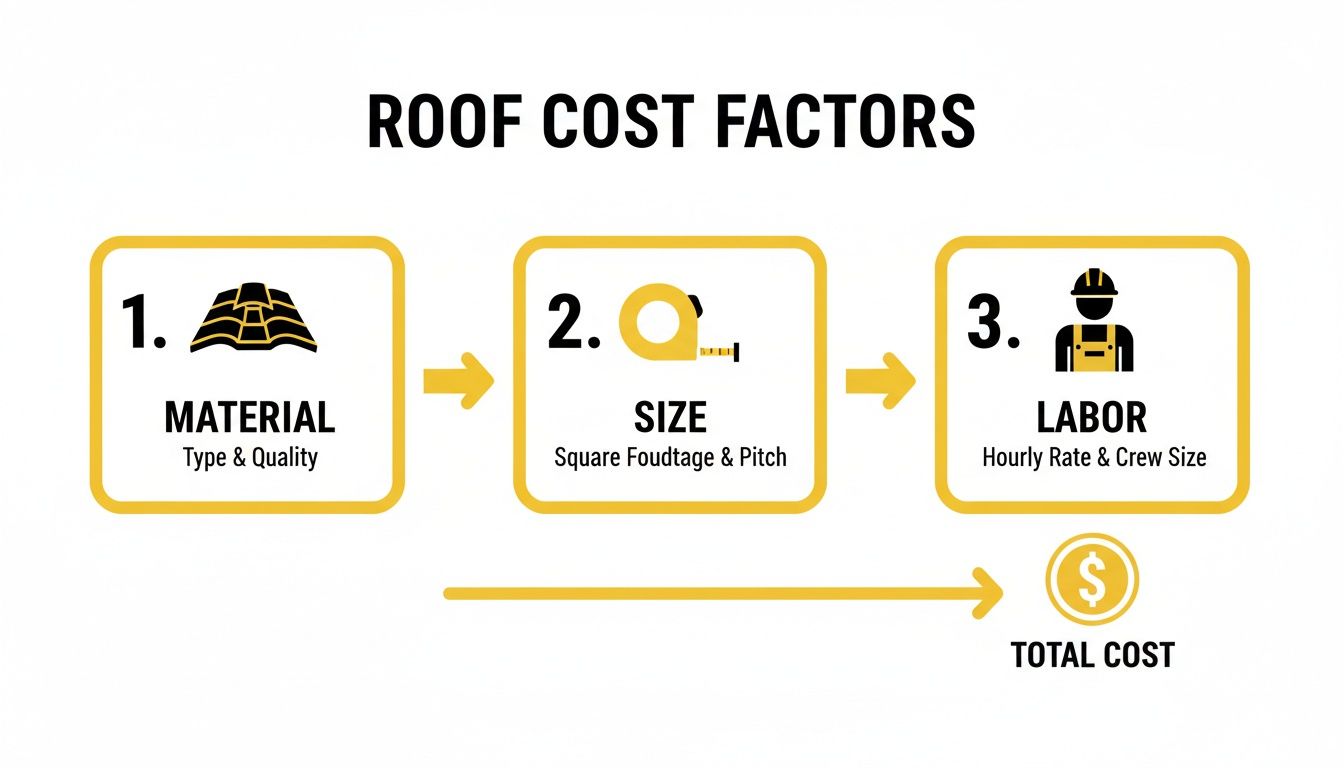
Knowing how the materials, roof size, and labor costs all fit together helps you understand the settlement offer your insurance company comes back with.
Understanding Your Settlement and Next Steps
After the inspection, the adjuster will put together a report, often called a "scope of work," that details the damages and the estimated repair costs. This document will lay out your settlement offer, which usually has two main parts:
- Actual Cash Value (ACV): This is the first check you'll get. It represents what your damaged roof is worth today, after factoring in depreciation for its age and normal wear and tear.
- Recoverable Depreciation: If you have a Replacement Cost Value (RCV) policy, this is the second payment you can get after the work is done. It’s the money held back to cover the difference between the ACV and the full cost of a brand-new roof.
Go over this paperwork carefully with your contractor. They can confirm if the scope of work is complete and if the cost estimate is realistic for the DFW area. If anything is missing, your contractor can help you communicate with the insurer to request a supplement.
For a deeper dive, this guide to home insurance claims is a great resource. Having a pro guide you through this final stage is the best way to make sure you get the fair settlement you need to protect your home.
Deciding Between Roof Repair and Full Replacement
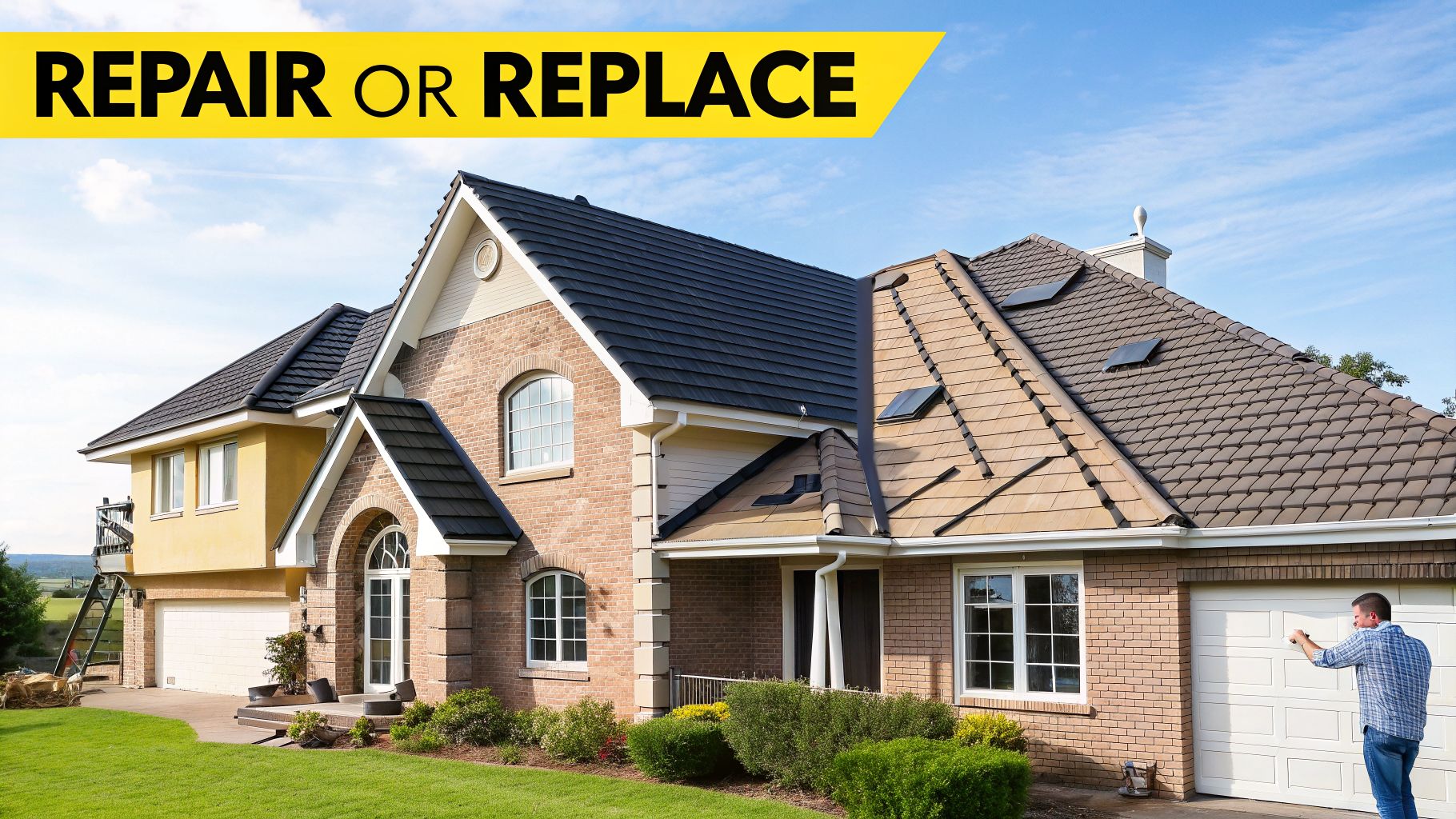
After a hailstorm rolls through, you’re left with more than just a messy yard. You've got a major decision on your hands: can you get away with a simple repair, or is it time to bite the bullet and go for a full roof replacement? This is a critical fork in the road, and the choice you make can save you thousands of dollars and a whole lot of future headaches. It’s about more than just the immediate roof hail damage repair cost; it's about the long-term health of your home.
Making this call isn't something you should leave to a coin toss. A few key factors come into play, and getting a handle on them will help you make a smart, informed decision that protects your biggest investment. A professional inspection is always the best first step, but knowing what we're looking for will empower you to have a much better conversation with your contractor.
The Age and Condition of Your Roof
Let's start with the most important question: how old was your roof before the hail started falling? This is one of the biggest factors in the repair vs. replacement debate.
Think of it like the tires on your truck. If you have brand-new tires and run over a single nail, patching it is a no-brainer. It's a smart, cost-effective fix. But what if those tires are already ten years old with bald treads? That one nail is just the final straw. Patching it doesn’t change the fact that the tires are old, worn out, and unreliable.
An aging roof that has already baked under years of Texas sun is in the exact same boat.
A roof's age is more than just a number—it’s a measure of its remaining ability to protect your home. An older roof is significantly more vulnerable to hail, and simply repairing it can be like putting a small bandage on a much larger problem.
This isn't just a hunch; the numbers back it up. Researchers have found that older roofs—those with less than four years of useful life left—sustain a staggering 50% more damage during severe weather compared to roofs with at least eight years of life remaining. Considering about 29% of homes with asphalt shingles fall into that "older roof" category, it’s a widespread risk.
Evaluating the Extent of the Damage
Next, you need a clear-eyed look at how widespread the damage really is. Did the storm only hammer one side of your roof, or are the impacts scattered all over?
Isolated Damage: If you've just got a few cracked or dented shingles in one concentrated area, a targeted repair is often the way to go. A skilled crew can easily replace the damaged section, restoring your roof's integrity without the expense of a total overhaul.
Widespread Damage: On the other hand, if you walk around your home and see dings and dents on every single slope, patching becomes a fool's errand. Trying to fix dozens of individual spots is inefficient and often leaves your roof with a "checkerboard" look that kills your home's curb appeal. In these situations, a full replacement is almost always the right call.
You can learn to spot the clues that point to bigger problems in our guide on the signs you need a new roof. It'll help you see what we see during an inspection.
The Long-Term Financial Picture
Finally, you have to look past the initial estimate and think about the long-term finances. A simple repair might seem like the cheap option today, but it could easily cost you more down the road if your roof is already on its last legs.
Committing to a full replacement now—especially when your insurance company is helping foot the bill after a storm—can be one of the smartest investments you make. It completely resets the clock on your roof's lifespan, can improve your home's energy efficiency, and gives your property value a nice boost. Choosing the right path ensures your home is buttoned up and protected for years to come.
Why North Texas Is a Hail Damage Hotspot
If you’ve lived in Dallas-Fort Worth for any length of time, you know the spring drill. One minute it’s sunny, the next the sky turns a sickly green and every weather app on your phone starts screaming. It's not just your imagination—our little corner of Texas has a unique recipe for severe weather, especially the kind that shreds roofs with hail.
This entire region is the heart of what meteorologists aptly call "Hail Alley." Think of it as a massive atmospheric collision zone. Warm, humid air barrels up from the Gulf of Mexico and smashes head-on into cool, dry air sliding down from the Rocky Mountains. That clash creates an incredible amount of instability, turning a run-of-the-mill thunderstorm into a supercell factory capable of spitting out destructive, golf-ball-sized (or larger) hailstones.
Understanding this climate reality is the first step to understanding the real cost of roof hail damage repair. The sheer frequency of these storms means our roofs take a beating far more often than in other parts of the country. That constant threat ripples through everything from local insurance rates to how quickly you can get a qualified roofer out to your house after a storm blows through.
The Financial Reality of Living in Hail Alley
The ever-present threat of hail has a massive effect on the roofing industry and, more importantly, your wallet. Across the nation, the price tag for roof repairs and replacements has climbed to nearly $31 billion in 2024. The two biggest culprits? Wind and hail. Together, they’re responsible for more than half of all residential insurance claims.
What’s really eye-opening is the surge in claims from storms that aren't even big enough to be named catastrophes. From 2022 to 2024, these smaller wind and hail events jumped from making up just 17% to a full 25% of all roof claims. This shows just how relentless the damage from everyday storms has become. You can dig into more of the data on how roofing costs are climbing nationwide.
In a high-risk area like DFW, your roof isn't just a passive part of your house; it's an active line of defense. Investing in durable, hail-resistant materials isn't an over-the-top upgrade—it's a smart, strategic decision to protect your home.
Why Your Choice of Roofer Matters More Here
Because our weather is so intense, having a local, trustworthy roofer isn't just a nice-to-have; it's an absolute necessity. A seasoned DFW contractor knows exactly what our climate throws at a roof.
They’re the ones who can recommend the right materials to stand up to our storms and have the hands-on experience to perform repairs that meet all the specific local building codes. In a place where hail is a regular event, picking the right roofer and the right materials isn't just about fixing today's damage—it’s about preparing your home for whatever the next storm brings.
Your Next Steps After a Hailstorm
Okay, you now have a solid grasp of what drives the roof hail damage repair cost. But knowledge is only half the battle. Now, it’s time to put that knowledge into action. The minutes and hours after a storm hits can feel pretty chaotic, but having a simple game plan helps you take back control and protect your home.
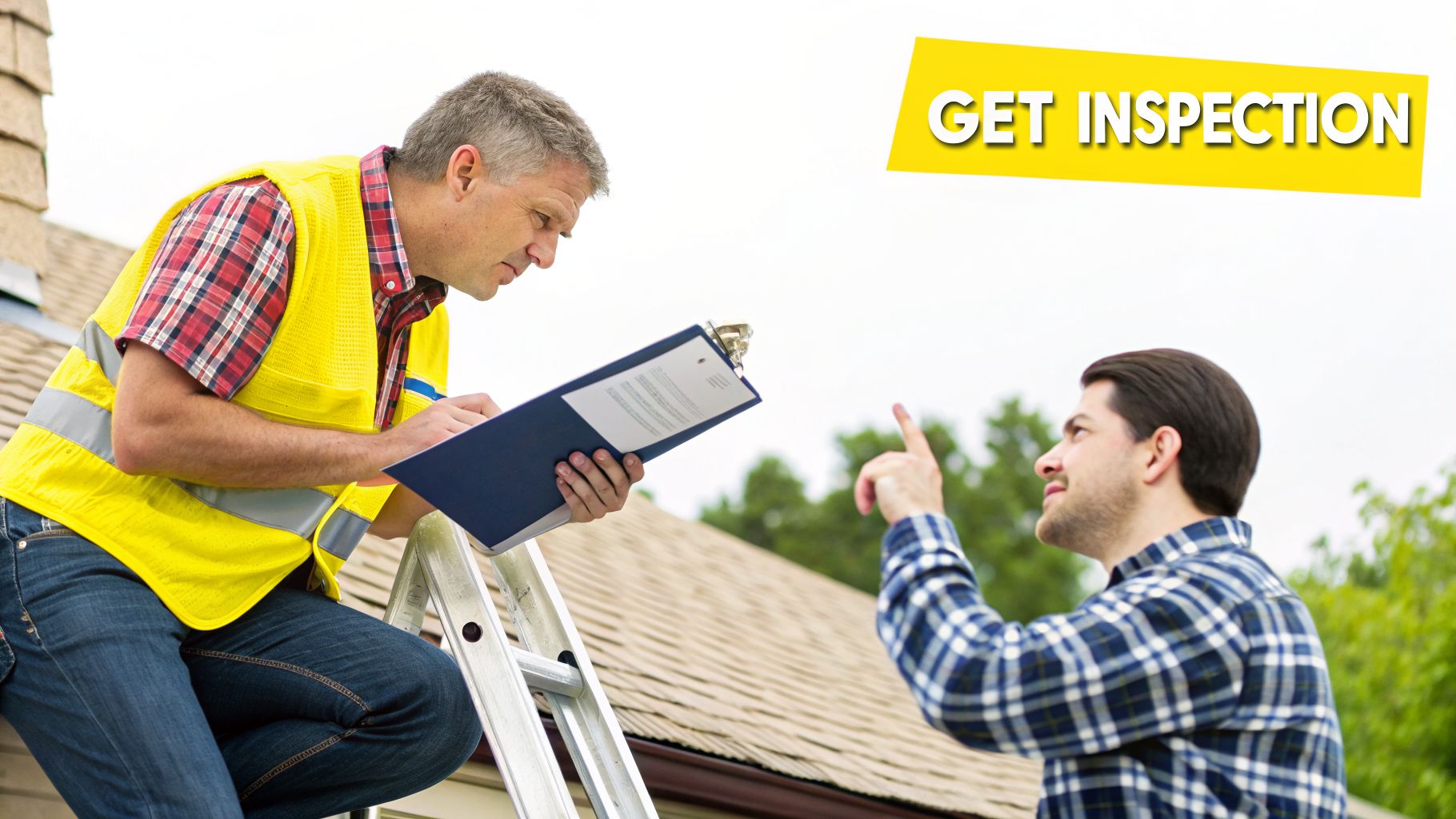
Here's the single most important thing you can do right away: schedule a professional roof inspection. What you can spot from the ground—or even what you think looks fine—is just a tiny piece of the puzzle. A roofer with a trained eye can spot the subtle stuff that most people miss, like bruised shingles or damage to the underlayment that could cause major leaks later on.
Creating Your Post-Storm Action Plan
To move forward with confidence, just follow these three key steps. This simple approach will help stop any further damage, give your insurance claim the best chance of success, and get you on the quickest path to a fully restored roof.
Do a Safe, Initial Walk-Around: Once the storm has passed and it's safe to go outside, take a walk around your property. Get your phone out and take pictures of everything—dented gutters, torn window screens, and any obvious marks on your roof. This initial batch of evidence is crucial for your insurance claim.
Schedule a Professional Inspection: This is the one step you can't skip. A qualified DFW roofing contractor provides the expert evaluation that insurance companies respect. Their detailed damage report will become the bedrock of your claim and repair plan.
Contact Your Insurance Provider: Once you have that professional assessment in your hands, you can file your claim with total confidence. You won't be guessing; you'll have a clear, documented list of every issue, which makes the whole process run so much smoother.
A no-obligation inspection does more than just find damage—it gives you hard data. Think of this professional report as your most powerful tool for talking with your insurance company and making sure you get a fair settlement.
This professional assessment is the key that unlocks everything else, whether that's filing an insurance claim or figuring out the budget for out-of-pocket repairs. By following a clear plan, you're taking the right steps toward restoring safety and security after a storm-damaged roof.
Get Your Free Damage Assessment Today
Don’t let hidden hail damage fester and turn into a massive headache down the road. The team at Moore Construction Co. is ready to give you a thorough, completely free roof inspection for the clarity and peace of mind you deserve.
We'll pinpoint any and all issues, give you a detailed report you can use, and help you understand all your options—with absolutely no strings attached. Contact us today to schedule your complimentary inspection and take the first real step toward securing your home.
After a hailstorm, it's natural to have a lot of questions swirling around. Even after you get a handle on the costs and the repair process, some specific "what-if" scenarios can keep you up at night. We get it. That’s why we’ve put together some quick, clear answers to the most common questions we hear from homeowners right here in Dallas-Fort Worth.
Think of this as your go-to guide for those nagging concerns. Our goal is to clear up any lingering doubts so you can move forward with confidence.
Can Hail Damage Void My Roof's Warranty?
This is a big one, and it catches a lot of homeowners by surprise. The short answer is yes, it can.
Most warranties from shingle manufacturers cover defects in the product itself—things like premature cracking or granule loss due to a manufacturing flaw. They do not cover damage from "acts of God," and hailstorms fall squarely into that category.
So, if a hailstorm blasts through and damages your roof, you can't file a warranty claim to get it fixed. This is exactly what your homeowner's insurance is for. Your policy is designed to step in and cover damage from this type of event.
Do I Have to Pay My Deductible for a Hail Claim?
Yes, absolutely. Your homeowner's insurance deductible is the portion of the repair cost you're responsible for paying out-of-pocket before your insurance coverage kicks in. It's a fundamental part of your policy.
For example, if the total approved repair cost is $10,000 and your policy has a $2,000 deductible, you’ll pay the first $2,000. Your insurance company then covers the remaining $8,000.
Be extremely wary of any roofer who offers to waive, absorb, or cover your deductible. Not only is this a huge red flag about their business practices, but it's also considered insurance fraud and is illegal in Texas.
Your deductible is a non-negotiable part of your insurance contract. A reputable, trustworthy contractor will always require you to pay it directly. This keeps the whole process transparent, honest, and completely legal.
How Long Do I Have to File a Hail Damage Claim?
Time is definitely a factor here. Most insurance policies have a "statute of limitations" for filing a claim, which is typically one year from the date the storm occurred.
However, this window can vary between policies, so it's critical to check your specific policy documents or just give your agent a call to confirm your deadline.
Waiting too long is a surefire way to risk having your claim denied. The best move is always to get a professional inspection as soon as you even suspect there might be damage. Acting quickly not only keeps you within your filing window but also prevents small, hidden issues from turning into major problems like active leaks down the road.
Don't let unanswered questions stand in the way of protecting your home. The experienced team at Moore Construction Co. is here to give you the clarity you need with a free, no-obligation roof inspection. We'll get up on your roof, assess the damage, answer every question you have, and lay out a clear plan to restore your home's first line of defense. Schedule your free estimate and professional roof inspection today.


