


Your roof is your home's first line of defense against the relentless Texas weather, from scorching sun and torrential downpours to the notorious hail storms that frequent the Dallas-Fort Worth area. Damage isn't always as dramatic as a gaping hole. Often, it begins with subtle clues that are easy to overlook until they escalate into costly, catastrophic failures. Ignoring these early roof damage signs is a gamble no homeowner can afford to take. A small issue left unaddressed can quickly lead to widespread water damage, mold growth, and compromised structural integrity, turning a minor repair into a major and expensive renovation.
This guide is your direct checklist, created to empower you to identify the 10 most critical indicators of roof trouble, both inside and outside your home. We will break down exactly what each sign means, its severity level, and provide actionable steps you can take to assess the situation yourself. You will learn to spot everything from missing shingles and granule loss to hidden attic moisture and deteriorating fascia boards.
By learning to recognize these signals, you can proactively protect your investment, prevent expensive interior damage, and know exactly when it’s time to call in a professional for a definitive assessment. In areas like DFW where severe weather is a given, this knowledge is not just useful, it's essential for responsible homeownership. Let’s decode what your roof is trying to tell you before a small warning becomes a significant disaster.
1. Missing or Damaged Shingles
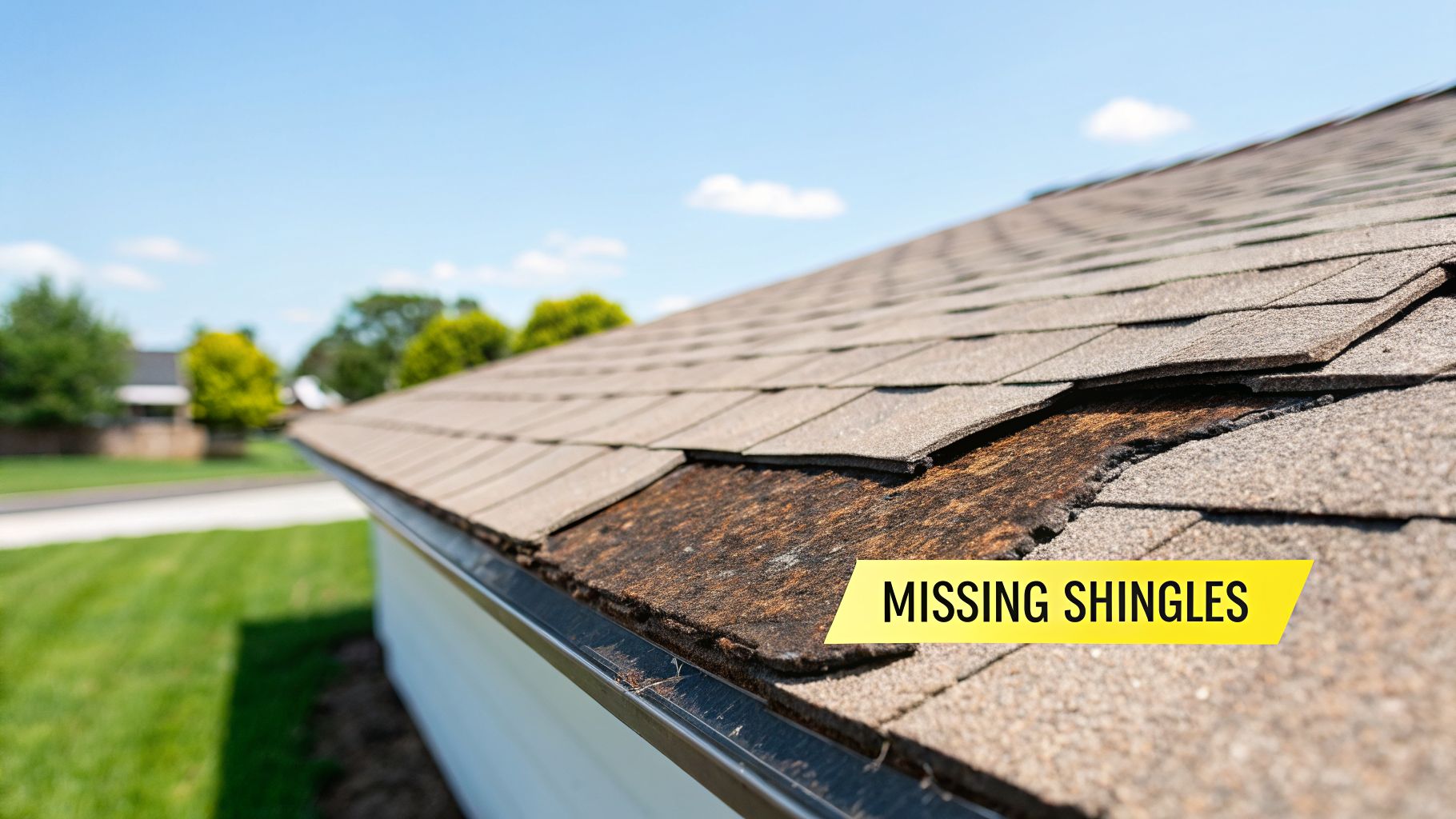
The most obvious and critical of all roof damage signs are shingles that are missing, cracked, buckled, or curled. Your shingles are the first line of defense against the elements. When they are compromised, the sensitive underlayment and roof decking beneath are exposed to moisture, UV radiation, and physical impact, which can quickly lead to leaks and structural problems. In the Dallas-Fort Worth area, this type of damage is frequently the direct result of severe weather, from high-speed winds tearing shingles from the roof to hail storms that shatter or dislodge them.
What to Look For
Spotting this damage can sometimes be done from the ground. Look for patches of a different color on your roof, which indicate missing shingle granules or entire shingles. You might also find shingles or shingle fragments in your yard or gutters after a storm. Age is another significant factor; shingles nearing the end of their 15-20 year lifespan often lose their flexibility, causing them to crack or curl at the edges. This age-related decay is a common issue for many homes in established DFW neighborhoods. If you notice edges turning up, you can get more details on what causes this specific problem and what it means by reviewing the common reasons for curling shingles on a roof.
Pro Tip: A single missing shingle can be a quick fix, but it's often a symptom of a larger, systemic issue like improper fastening during installation or widespread wind damage. Always assess the entire roof slope, not just one spot.
Actionable Steps for Homeowners
If you suspect or confirm you have damaged shingles, it's crucial to act swiftly to prevent water intrusion.
- Document Everything: Immediately take clear photos or videos of the damage from a safe vantage point. This documentation is essential for insurance claims.
- Schedule a Professional Inspection: After any major DFW storm, especially one involving hail, contact a professional. Moore Construction offers a free, no-obligation inspection to accurately assess the scope of damage, which is often more extensive than what's visible from the ground.
- Consider Upgrades: If a replacement is necessary, ask about impact-resistant shingles. For Texas homeowners, they provide superior protection against future hail and may even qualify you for insurance premium discounts.
2. Granule Loss and Bald Spots
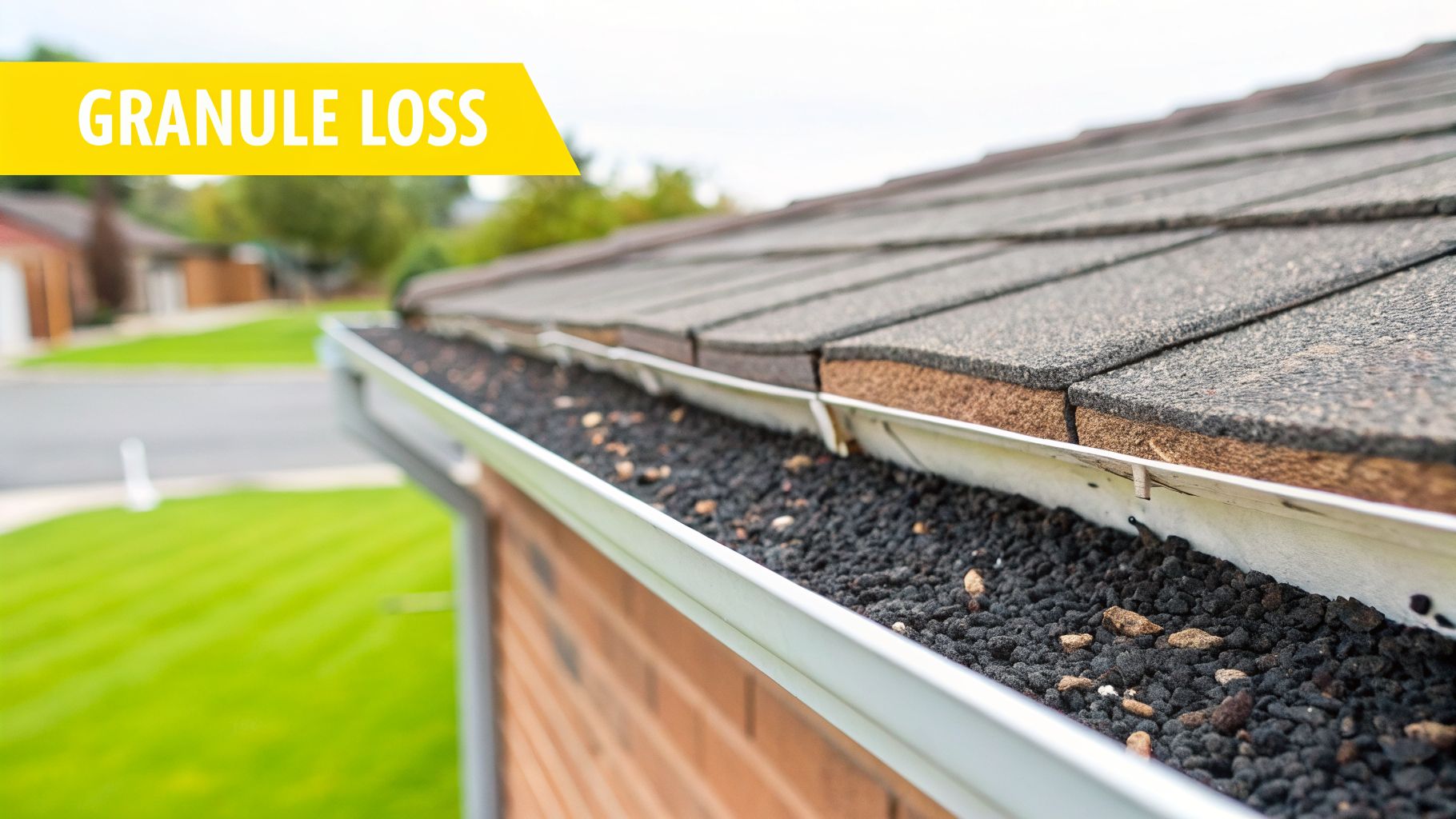
Those tiny, sand-like granules coating your asphalt shingles are far more than just a decorative touch; they are the shingle's primary shield against harsh UV rays and severe weather. When these granules wear away, a condition known as granule loss, it exposes the underlying asphalt to the elements, drastically accelerating the aging process and making the shingle brittle. In Texas, where intense sun and severe hailstorms are common, granule loss is one of the most critical roof damage signs, indicating your roof's protective layer is failing.
What to Look For
The most telling sign of granule loss is finding a significant accumulation of granules in your gutters and at the base of your downspouts. While a minor amount of shedding is normal for new roofs, finding handfuls of granules, especially after a hailstorm in the Dallas area, points to direct impact damage. You can also spot this problem from the ground using binoculars; look for "bald spots" or areas where the shingle's color appears darker and uneven. Roofs over 15 years old are particularly susceptible, as are those installed between 2015 and 2017, a period known for some defective shingle batches that experienced premature granule loss.
Pro Tip: Do not pressure wash your asphalt shingle roof. The high-pressure stream will strip away granules, voiding warranties and significantly shortening your roof's lifespan. Gentle cleaning methods are always the correct approach.
Actionable Steps for Homeowners
If you find an alarming amount of granules, your roof is signaling it needs attention before leaks begin.
- Check and Document: Regularly check your gutters and downspout splash blocks. If you see a large accumulation, take photos to document the volume and location. This is valuable evidence for potential warranty or insurance claims.
- Get a Professional Opinion: Granule loss can be uniform due to age or concentrated from hail impacts. A professional roofer can distinguish between the two. Moore Construction can assess the extent of the loss and determine if it's a sign of systemic failure or isolated storm damage during a free inspection.
- Collect a Sample: If you're concerned about the rate of loss, collect a small baggie of the granules from your gutter. This sample can help a roofing expert identify the shingle type and age, aiding in their assessment.
3. Sagging or Dipping Roof Deck
A sagging or dipping roofline is one of the most serious roof damage signs, signaling a critical failure in your roof's structural support. Unlike cosmetic issues, a sagging deck points to deep-seated problems like rotted sheathing, weakened rafters, or inadequate structural support that can no longer bear the roof's weight. This compromise in structural integrity is an urgent safety concern. In the DFW area, this can result from the cumulative weight of old roofing layers, persistent moisture from undetected leaks, or even inadequate attic ventilation that traps heat and moisture, slowly deteriorating the wood decking.
What to Look For
You can often spot a sagging roof from the street by looking for a distinct swayback, dip, or curve along the ridgeline or planes of the roof. Internally, corresponding signs might include sagging ceiling drywall, water stains in the attic, or a soft, spongy feel when walking on the roof (which should absolutely be avoided). While rare Texas winter storms can cause sagging from heavy snow or ice loads, it is more commonly a progressive issue. If you notice any visible depressions, it's a clear indicator that the underlying structure is failing. You can get more details on what causes this dangerous problem by exploring the common reasons for a sagging roof and how to fix them.
Pro Tip: Never walk on a roof that you suspect is sagging. The compromised decking may not support your weight, creating a severe fall hazard. All inspections should be conducted from the ground, a ladder at the roof's edge, or inside the attic.
Actionable Steps for Homeowners
A sagging roof is not a DIY fix; it requires immediate professional intervention to prevent a potential collapse.
- Prioritize Safety: Keep everyone off the roof. If the sagging is severe or you hear creaking sounds, it may be wise to vacate the area directly below it inside the house.
- Schedule an Emergency Inspection: Contact a qualified roofing contractor immediately. This issue requires a comprehensive evaluation that may involve a structural engineer to assess the rafters, joists, and decking.
- Document From a Safe Distance: Take clear photos of the sagging areas from the ground and any related interior damage (like ceiling cracks or stains) for your insurance claim.
- Prepare for a Major Repair: A sagging deck almost always necessitates a full roof replacement, including the replacement of damaged sheathing and reinforcement or replacement of underlying structural supports.
4. Roof Leaks and Water Stains
Perhaps the most alarming of all roof damage signs are those that appear inside your home. Brown, yellow, or dark stains on ceilings and walls are undeniable proof of water intrusion. These leaks often originate from damaged shingles, failing flashing around chimneys or vents, or even clogged gutters. In the DFW metroplex, where sudden, heavy downpours are common, even a minor roofing issue can quickly lead to significant interior damage, including saturated insulation, rotted wood framing, and dangerous mold growth.
What to Look For
Interior water damage is a serious warning that should never be ignored. Look for discolored rings or streaks on your ceiling, bubbling or peeling paint, and damp spots on your walls, particularly after a heavy rainstorm. If you discover roof leaks and water stains, understanding how to stop roof leaks is your immediate concern. The attic is a crucial inspection point; during daylight hours, look for any visible light peeking through the roof deck or wet spots on the insulation and wood beams. Tracking down the source is vital, as water often travels along rafters before dripping down, meaning the interior stain may not be directly below the roof’s entry point.
Pro Tip: Don't just paint over a water stain. It's a symptom, not the problem. Covering it up allows moisture to remain trapped, promoting mold and structural decay that becomes far more expensive to fix later.
Actionable Steps for Homeowners
A visible leak demands a rapid response to protect your home’s structure and your family's health.
- Trace the Source: If it's safe to do so, check your attic for the leak's origin. Place a bucket under active drips to contain the water and mark the area with chalk to track its spread.
- Document and Report: Take detailed photos of the interior stains and any visible damage in the attic. This evidence is critical when filing an insurance claim.
- Call a Leak Detection Expert: Locating the precise entry point on the roof can be tricky. A professional roofer like Moore Construction has the tools and expertise to perform tests and accurately find the source. You can find out more about professional roof leak repair services and what the process involves.
- Assess for Mold: Before any interior repairs begin, have the damp drywall, insulation, and wood assessed by a professional to ensure no mold is present. Addressing this early prevents a larger health hazard down the road.
5. Damaged or Missing Flashing and Deteriorated Sealant
Roof flashing is the metal material installed around penetrations like chimneys, vent pipes, and skylights to direct water away from these vulnerable seams. Along with the sealant used to create a watertight bond, it is a critical component of your roofing system. When flashing is damaged, rusted, or missing, or the sealant cracks and deteriorates, it creates a direct pathway for water to enter your home, making it a primary cause of targeted leaks. The extreme temperature fluctuations and intense UV exposure common in Texas can significantly accelerate the breakdown of both metal flashing and the sealants used to secure it.
What to Look For
These specific roof damage signs are concentrated around anything that protrudes from your roof. Visually inspect the metal strips around your chimney, vents, and skylights for signs of rust, corrosion, or noticeable gaps. You may see that the flashing has pulled away from the structure it’s protecting. Also, check the sealant itself; if it appears dried out, cracked, or shrunken, its seal has been compromised. In many Dallas homes that are 8-10 years old, cracked sealant around a chimney is an almost guaranteed leak waiting to happen, even if the shingles themselves are in good condition.
Pro Tip: Never trust a "repair" that consists only of applying a new layer of caulk or tar over old, failed sealant. For a lasting fix, the old material must be completely removed, the surface cleaned, and new, high-quality roofing sealant applied. For damaged flashing, replacement is the only proper solution.
Actionable Steps for Homeowners
Addressing flashing and sealant issues promptly is key to preventing serious, often hidden, water damage.
- Routine Penetration Checks: During your regular maintenance, pay close attention to all roof penetrations. Look for any signs of separation, cracking, or rust, especially after a season of extreme heat or cold.
- Schedule a Professional Sealant Assessment: Contact a roofer to inspect and, if necessary, replace old sealant. For most DFW homes, sealants around pipes and vents should be professionally evaluated every 3-5 years to prevent failures.
- Document and Photograph: If you see clear signs of failing flashing or sealant, take detailed photos. This documentation is valuable for your records and for showing a roofing professional the exact areas of concern. At Moore Construction, we use these initial findings to guide our comprehensive free inspection.
6. Clogged or Damaged Gutters and Downspouts
While not part of the roof itself, your gutter system is a critical component of your home's water management system, and its failure is a direct threat to your roof's integrity. Gutters and downspouts are designed to channel rainwater away from your roof, fascia, and foundation. When they become clogged or damaged, water backs up, pools on the roof edge, and overflows, creating a cascade of potential roof damage signs and structural issues. In tree-lined Dallas-Fort Worth neighborhoods, this is a constant battle against leaves, twigs, and storm debris.

What to Look For
During a rainstorm, look for waterfalls coming over the sides of your gutters or water stains on the siding and fascia directly below them; these are clear indicators of a clog. From the ground on a dry day, you can often spot sagging gutters pulling away from the house, visible debris like leaves and twigs sticking out, or peeling paint on the fascia boards behind them. In older DFW homes, you may see rust spots or separated gutter seams, which signal that the system is failing and needs replacement. Remember to check that downspouts are properly discharging water at least 4-6 feet away from your foundation.
Pro Tip: Water overflowing from clogged gutters can saturate the wooden fascia and soffit boards, causing them to rot. This rot can then spread to the roof decking at the eaves, creating a serious structural problem that starts far from the roof's peak.
Actionable Steps for Homeowners
A functional gutter system is non-negotiable for protecting your entire home, from the roof down to the foundation.
- Perform Regular Cleaning: Clean your gutters at least twice a year, especially in the late spring and late fall. For DFW homes surrounded by trees, more frequent cleanings may be necessary to prevent clogs.
- Inspect and Secure: While cleaning, check for loose or bent hangers and fasteners. Also, inspect for rust, cracks, and holes that could cause leaks. Secure any loose sections and seal minor leaks with gutter sealant as a temporary fix.
- Schedule a Professional Assessment: If you notice significant sagging, widespread rust, or damage from a storm, it's time for a professional. Moore Construction can inspect your gutter system as part of a comprehensive roof and exterior evaluation, identifying if a simple repair will suffice or if a full replacement with a modern, seamless system is the better long-term solution.
7. Visible Mold, Moss, or Algae Growth
Dark streaks, fuzzy green patches, or slimy spots on your roof are more than just an aesthetic issue; they are clear signs of organic growth. Mold, moss, and algae thrive in shaded, damp environments, indicating persistent moisture on your roof's surface. While some growth, like algae, is often cosmetic, it can accelerate shingle deterioration by trapping moisture against the granules. More aggressive organisms like moss can lift and curl shingle edges, creating pathways for water to seep underneath and damage the decking.
What to Look For
This type of roof damage sign is often easy to spot from the ground. Look for long, dark streaks running down your roof, which are typically Gloeocapsa magma algae. This is extremely common in humid Fort Worth summers. Moss appears as green, fuzzy clumps, frequently found on shaded, north-facing roof slopes in Dallas neighborhoods with heavy tree canopies. The presence of black mold, especially near vents, can suggest a more serious issue with poor attic ventilation trapping warm, moist air. When you spot visible growth, it's wise to investigate further, as understanding these 8 Unmistakable Signs of Mold in House You Can't Ignore can help you determine if the problem extends beyond your roof.
Pro Tip: Never use a pressure washer to clean your roof. The high-powered stream can blast away the protective granules from asphalt shingles, drastically shortening your roof's lifespan and voiding most warranties.
Actionable Steps for Homeowners
Addressing organic growth involves cleaning the surface and fixing the underlying cause to prevent its return.
- Address the Root Cause: Trim overhanging tree branches to allow more sunlight to reach and dry your roof. Ensure your gutters are clean and draining properly to prevent water from backing up onto the shingles.
- Schedule a Professional Cleaning: For existing growth, a professional roof cleaning service can use a soft-wash system with specialized, low-pressure solutions to safely kill and remove mold, moss, and algae without damaging the shingles.
- Assess Attic Ventilation: If you suspect mold is linked to an interior moisture issue, have a roofing professional inspect your attic's intake and exhaust vents. Proper airflow is critical for keeping the roof deck dry from the inside out.
- Plan for Long-Term Prevention: When it’s time for a roof replacement, ask about algae-resistant (AR) shingles. These are manufactured with copper granules that help prevent the growth of algae, keeping your roof looking cleaner for longer.
8. Improperly Installed or Exposed Nails
Often overlooked, the small details of fastener installation are critical to your roof’s integrity. Improperly installed, exposed, or "popped" nails are subtle but dangerous roof damage signs. Each misplaced nail creates a direct path for water to penetrate the shingle, reach the underlayment, and eventually rot the roof decking. This issue frequently points to poor workmanship from low-cost contractors or ill-advised DIY repairs, leading to systemic fastening failures across the entire roof system. In the Dallas-Fort Worth area, the intense heat can cause shingles to expand and contract, exacerbating these "nail pops" and turning tiny mistakes into significant leak points.
What to Look For
While on the roof (or using binoculars from the ground), look for nails that are not driven flush with the shingle surface. You might see nails that are "proud" (sticking up), driven sideways, or completely exposed on the shingle face. These are often called "shiners." You may also notice rust stains running down from a nail head, which is a clear sign of prolonged moisture exposure. These problems can appear just a year or two after a budget installation as the roof settles and endures its first few DFW storm seasons. Following standards set by the National Roofing Contractors Association (NRCA) is key to avoiding these failures.
Pro Tip: Exposed nails are a classic corner-cutting tactic. A roofer might use them to secure a cap shingle instead of the proper sealant, saving a few minutes but creating a guaranteed leak. Never underestimate how much damage one improperly driven nail can cause.
Actionable Steps for Homeowners
Addressing fastener issues is non-negotiable to protect your home's structural health.
- Document the Details: Get close-up photos of any popped, rusted, or exposed nails you find. This documentation is vital for holding the original installer accountable or for making a warranty claim.
- Avoid DIY Nail Repairs: Simply hammering a nail back down or covering it with caulk is a temporary, ineffective fix. A professional must assess why the nail failed, replace it correctly, and properly seal the area to prevent future leaks.
- Request a Workmanship Warranty: When hiring a contractor like Moore Construction, always ensure your agreement includes a robust workmanship warranty. This protects you from installation errors, including improper nailing, that lead to premature roof failure.
9. Deteriorated or Missing Soffit and Fascia
The soffit and fascia are the finishing touches on your roof's edge, but their role is far from just cosmetic. Fascia is the long board that runs along the lower edge of the roof, supporting the bottom row of shingles and the gutters. The soffit is the exposed surface beneath the roof's overhang. Together, they protect the underlying roof structure and attic from pests, weather, and moisture. When you see rotted, cracked, or missing sections, it's a critical roof damage sign that leaves your home vulnerable. In Texas's humid climate, water damage from overflowing gutters or ice dams can quickly lead to wood rot in these areas, creating an open invitation for squirrels, birds, and insects.
What to Look For
You can often spot soffit and fascia issues during a simple walk-around of your home. Look for peeling paint, dark stains, or visible cracks. You might notice your gutters pulling away from the house, which often indicates the fascia board behind them is rotting and can no longer hold the fasteners. In established Dallas neighborhoods with mature trees, you may even find holes pecked by woodpeckers or evidence of insect boring. Gently poking the wood with a screwdriver is a good test; if the wood feels soft or crumbles, rot has already set in. This type of decay is a clear signal that water is getting where it shouldn’t be, and immediate attention is needed.
Pro Tip: Deteriorated fascia and soffit are often symptoms of another problem, usually clogged or improperly installed gutters. Simply replacing the boards without addressing the root cause of the water damage means you will face the same issue again in a few years.
Actionable Steps for Homeowners
Protecting your roof's edge and attic is essential, so don't delay if you notice this type of damage.
- Inspect and Document: Take clear photos of any peeling paint, soft spots, visible holes, or insect activity. Note the location and extent of the damage.
- Address the Water Source: Before any repairs, ensure your gutters are clean and functioning correctly. If the damage is extensive, it may point to a larger roof leak that requires a professional assessment.
- Explore Durable Materials: If replacement is necessary, consider upgrading from traditional wood. Materials like fiber cement (James Hardie) or vinyl offer superior resistance to rot, insects, and moisture, making them an excellent long-term investment for DFW homeowners. Ask a contractor about the pros and cons of each option for your home.
10. Poor Roof Ventilation and Attic Moisture
One of the most insidious roof damage signs isn't visible on the exterior at all. Poor attic ventilation traps excessive heat and moisture, creating a hostile environment that silently degrades your roof from the inside out. This trapped, super-heated air can warp roof decking, cook your shingles from beneath, and create a breeding ground for mold and mildew that destroys insulation and structural wood. Proper ventilation is critical in the Dallas-Fort Worth climate, where intense summer heat and humidity can accelerate this damage, leading to premature roof failure.
What to Look For
Signs of poor ventilation often manifest inside the home first. A stuffy, overly hot upper floor or attic is a primary red flag. During your attic inspection, look for damp or compacted insulation, dark stains on the underside of the roof decking indicating moisture or mold, or even frost on the nails in the winter. From the outside, you might notice ice dams forming along the eaves in colder months. In many older DFW homes, inadequate ventilation systems, like having only gable vents without corresponding soffit intake, fail to create the necessary airflow to protect the roofing system.
Pro Tip: A properly ventilated attic should be within 10-20 degrees of the outside temperature. If your attic feels like a sauna on a summer day, it’s a clear indication that your ventilation system is not working correctly and is actively damaging your roof.
Actionable Steps for Homeowners
Addressing poor ventilation is key to maximizing your roof's lifespan and improving your home's energy efficiency.
- Assess Your Current System: Check that your soffit vents are not blocked by insulation, paint, or debris. Air must be able to enter at the lowest point of your roof to create a natural convective loop.
- Schedule a Professional Ventilation Audit: A roofing expert can calculate the exact amount of ventilation your attic needs based on its square footage (the general rule is 1 sq. ft. of net-free vent area per 150-300 sq. ft. of attic floor space). They can determine if your intake and exhaust vents are balanced.
- Plan Upgrades During Replacement: The best time to correct ventilation issues is during a roof replacement. This allows for the proper installation of a continuous ridge vent system, combined with soffit vents, which is the most effective method for creating consistent, balanced airflow across the entire roof deck.
Top 10 Roof Damage Signs Comparison
| Issue | 🔄 Complexity (process/complexity) | ⚡ Resources & Speed (resource needs / efficiency) | 📊 Expected outcomes (results / impact) | 💡 Ideal use cases / tips (use cases & brief tip) | ⭐ Key advantages (effectiveness / quality) |
|---|---|---|---|---|---|
| Missing or Damaged Shingles | Low–Medium — straightforward patching or section replacement | Low–Medium resources; quick local repairs possible with contractor | Restores water barrier; prevents immediate water intrusion | After wind/hail events or visible gaps — inspect promptly and document for insurance | Easily visible; often repairable without full replacement; insurance-covered in storm cases |
| Granule Loss and Bald Spots | Low detection, Medium–High remediation (often roof replacement) | Low for inspection; Medium–High for replacement; slower long-term fix | Indicates accelerated aging; reduced UV protection and shorter remaining life | Check gutters regularly; plan replacement when granule loss is widespread | Easy to confirm via gutter granules; reliable indicator of roof end-of-life |
| Sagging or Dipping Roof Deck | High — structural assessment and major repair often required | High resources (structural work, possible engineer); lengthy remediation | Restores structural integrity; prevents collapse and serious interior damage | Urgent evaluation for any visible sag or attic soft spots — do not walk the roof | Clear safety indicator; demands immediate professional/structural response |
| Roof Leaks and Water Stains | Medium–High — source finding can be complex | Variable resources; quick temporary stops possible but full fix may be moderate | Stops active water entry; prevents mold, rot, and costly interior repairs | Investigate attic during rain, mark stains, call pros for leak detection | Visible interior evidence prompts prompt action; often covered by insurance |
| Damaged or Missing Flashing & Sealant | Medium — focused repairs often effective if properly installed | Low–Medium resources; resealing or flashing replacement usually efficient | Seals penetrations, prevents localized leaks, extends roof life | Inspect penetrations annually; reseal every 3–5 years with quality products | Identifiable and cost-effective fixes when performed by skilled contractors |
| Clogged or Damaged Gutters & Downspouts | Low — routine maintenance task, repairable | Low resources for cleaning; Medium for replacement; fast to remediate | Prevents roof backup, fascia damage, and foundation issues | Clean gutters 2x/yr in DFW; install guards and extend downspouts away from foundation | Preventive, inexpensive relative to downstream water damage |
| Visible Mold, Moss, or Algae Growth | Low–Medium — cleaning plus addressing moisture sources | Low–Medium resources; cleaning is quick but recurrence mitigation takes work | Improves appearance; reduces moisture retention and shingle degradation | Avoid pressure washing; use soft-clean and improve ventilation/sunlight | Signals moisture/ventilation issues; treatable and preventable with maintenance |
| Improperly Installed or Exposed Nails | Low — targeted fastening corrections | Low resources and quick fixes if isolated; may escalate if systemic | Eliminates potential leak points; improves fastening integrity | Inspect new installs; seal or re-drive exposed nails; use pros for corrections | Easy to spot and often inexpensive to correct early |
| Deteriorated or Missing Soffit & Fascia | Medium — trim replacement and possible underlying repairs | Medium resources; material choice affects cost and longevity | Restores edge protection, ventilation, and curb appeal; prevents rot | Replace with fiber cement/vinyl when rot present; address gutter causes first | Improves durability and aesthetics; prevents farther structural decay |
| Poor Roof Ventilation & Attic Moisture | Medium–High — proper design and balanced installation required | Medium resources; may require venting and insulation adjustments; moderate timeline | Extends roof and insulation life; reduces energy use and mold risk | Implement balanced soffit + ridge venting; clear blocked vents; follow code ratios | Long-term protection and energy savings when properly designed and installed |
Your Next Step: From Inspection to Action
You are now equipped with the critical knowledge to identify the most common and often subtle roof damage signs. From the obvious red flags like missing shingles and interior water stains to the more insidious issues like granule loss and poor attic ventilation, you have a solid foundation for assessing your home’s primary line of defense. Understanding these signs is the essential first step, transforming you from a passive homeowner into a proactive guardian of your property.
This article has detailed ten key indicators of a compromised roof. We have explored the visible exterior damage that anyone can spot from the ground, such as sagging rooflines and clogged gutters, and delved into the interior clues like ceiling discoloration that signal deeper problems. The goal was not to make you a professional roofer but to empower you with the awareness needed to act before minor issues escalate into catastrophic failures. Recognizing these problems early is the single most effective way to save money, prevent extensive property damage, and protect your family’s safety.
From Knowledge to Decisive Action
Simply knowing about a potential problem is not enough. The true value lies in translating that knowledge into decisive, timely action. While the DIY inspection checklist provided in this article is a fantastic starting point for any homeowner, it has its limitations. From the safety of the ground, it’s impossible to get a close-up view of flashing seals, the true extent of hail impact on shingles, or the condition of hidden roof components.
This is where professional expertise becomes non-negotiable, particularly here in North Texas. The Dallas-Fort Worth area is notorious for its severe weather, especially hailstorms that can inflict significant, yet not always immediately obvious, damage.
Key Insight: Hail damage often creates micro-fractures in shingles that aren't visible from the ground. These seemingly minor impacts compromise the shingle's integrity, leading to accelerated granule loss, water infiltration, and premature roof failure months or even years after the storm.
Attempting to climb onto your roof to perform a closer inspection yourself is not only dangerous but can also lead to unintended consequences. Walking on a potentially weakened structure poses a serious fall risk. Furthermore, you could inadvertently cause more damage or even void your roof’s warranty. A professional inspector is trained to navigate a roof safely and identify issues that an untrained eye would easily miss, all while documenting the findings in a way that is useful for insurance claims.
Protecting Your Biggest Investment
Your home is likely the most significant investment you will ever make. Its roof is the shield that protects everything and everyone within it. Ignoring the early roof damage signs is a gamble with high stakes. What begins as a small, manageable repair can quickly spiral into a major project involving structural repairs, mold remediation, and extensive interior restoration.
The most prudent and effective next step is to schedule a professional, no-cost evaluation. An expert assessment provides you with a clear, unbiased understanding of your roof’s current condition. You will receive a detailed report outlining any existing damage, its severity, and a recommended course of action. This information is a powerful tool, giving you the clarity needed to make informed decisions about repairs or replacement, budget for future needs, and, if necessary, initiate an insurance claim with solid evidence.
Don't wait for a small leak to become a ceiling collapse. By taking proactive steps today, you ensure the long-term health of your roof, maintain your home's value, and secure priceless peace of mind. You have already taken the first step by educating yourself; now it is time to complete the process.
Ready to get a definitive, expert opinion on your roof's condition? The team at Moore Construction Co. specializes in identifying all forms of roof damage and providing honest, transparent solutions for homeowners across the DFW area. Schedule your completely free, no-obligation inspection with Moore Construction Co. today to protect your home and make confident decisions.


