


So, you're thinking about adding a metal carport to your Dallas-Fort Worth home. It's a smart move. But the first question on everyone's mind is always the same: "What's this actually going to cost me?"
In the DFW area, a typical metal carport installation will run you somewhere between $2,700 and $7,800. Of course, that’s a pretty wide range. A simple, one-car shelter will be on the lower end, while a big, fully enclosed two-car unit with all the bells and whistles will naturally cost more.
Decoding Your DFW Metal carport Investment
Figuring out the real price of a metal carport is a bit like buying a new truck. You see that attractive starting price for the base model, but the final number changes once you start adding the options you really want—the better engine, the tow package, the premium interior. It's the exact same idea here. The carport kit itself is just the beginning.
Your total investment isn't just for the steel structure. It includes the skilled labor to put it all together, the solid foundation it needs to stand on, and any other upgrades you decide on.
Let's break it down:
- The "Base Model" Price: This is your fundamental carport kit—the steel frame and the roof panels.
- The "Performance Package": This covers the professional installation. It's what ensures your carport is built right and can handle the wild weather we get here in North Texas.
- The "Luxury Upgrades": These are your add-ons. Think concrete slabs, side walls, garage doors, or even running electricity for lights and tools. These are the features that boost the carport's usability and value.
Estimated DFW Metal Carport Installation Costs at a Glance
To give you a clearer starting point for your budget, here's a quick look at what you can generally expect to pay for common carport sizes, all-in, right here in the DFW market.
| Carport Size | Typical Dimensions | Estimated Installed Cost Range |
|---|---|---|
| Single-Car Carport | 12' x 20' | $2,700 – $4,800 |
| Double-Car Carport | 20' x 20' | $3,200 – $8,000 |
| RV Carport (Tall) | 18' x 35' | $5,500 – $11,000+ |
| Triple-Wide Carport | 24' x 40' | $7,000 – $15,000+ |
Disclaimer: These are general estimates for 2025. Your final cost will depend on specific materials, site conditions, and any custom features you choose.
This table helps set a realistic baseline. For instance, a standard 12×20 single-car carport might run between $2,700 and $4,800 once it's fully installed and ready to use. A beefier 20×20 double-car model can range from $3,200 to $8,000. If you want to dive deeper into national averages and how they compare, resources like HomeAdvisor provide detailed cost breakdowns.
A carport is only as strong as the ground it stands on. The foundation is a critical part of your budget that ensures the longevity and stability of your investment, protecting it from shifting soil and strong winds common in North Texas.
As you map out your project, never underestimate the importance of a solid base. Getting familiar with what goes into high-quality, durable concrete foundations is a key step in making sure your new carport lasts for decades to come.
How Carport Size and Style Drive Your Final Price
When you start looking at metal carports, two things will have the biggest impact on your final quote: the structure’s size and its roof style. It’s a lot like ordering a pizza. A small, simple cheese pizza is easy on the wallet. But if you upgrade to an extra-large with all the best toppings, the price tag goes up. The same logic holds true for your carport.
The footprint of your carport is the single biggest variable. The more ground you need to cover, the more steel, panels, and labor it takes, which scales the cost right along with it. A modest single-car unit just for your daily driver is going to be far more affordable than a huge structure designed to house an RV, a boat, and maybe a small workshop area.
Sizing Up Your Space and Your Budget
When picking a size, you need to think about your needs right now and what you might need down the road. A classic mistake is building for today without considering tomorrow. You might only have one sedan at the moment, but are you going to need space for a teenager's car in a few years? Maybe you've got your eye on a small camper? It's always cheaper to build the right size from the get-go than to try and add on later.
Let's look at how the costs scale with size. A standard 12×20 single-car carport is a really popular and economical choice. If you jump up to a 20×20 double-car model, you’re nearly doubling the square footage, and the price will reflect that. For those with bigger toys, an 18×36 RV cover needs a taller, wider frame, pushing the cost up even more.
This graphic gives you a quick visual of how carport projects generally break down into different cost brackets.
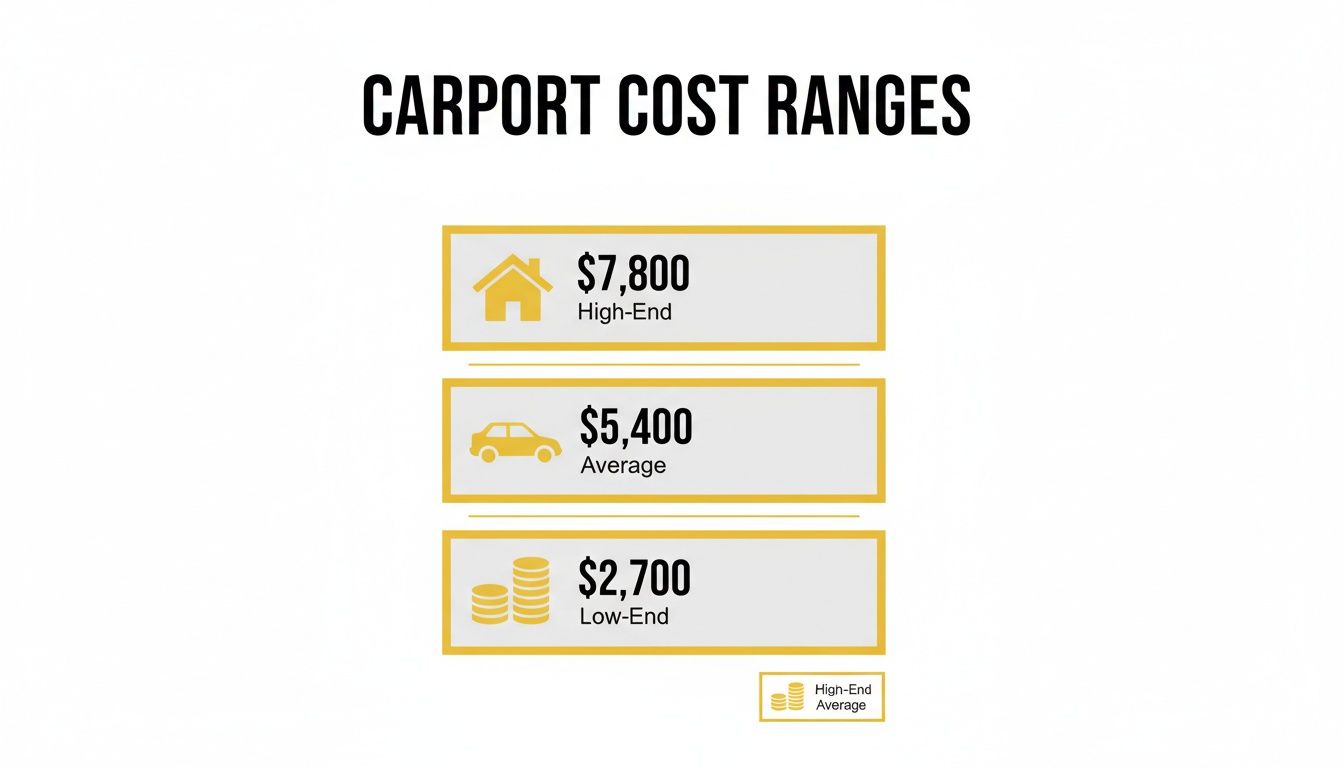
As you can see, the leap from a basic carport to a more premium one is pretty significant. That jump is almost always driven by a bigger size and higher-quality materials.
The numbers back this up. A simple 12×20 single-car unit usually runs from $2,400 to $7,200 installed. A larger 20×30 three-car structure can easily hit $6,000 to $18,000. On a national level, you’re typically looking at $11 to $25 per square foot for the total installed cost. You can dive deeper into the numbers with this excellent cost guide for metal carports on engineeredmetalbuildings.com.
It's also important to remember that here in the Dallas-Fort Worth area, local building codes often require higher wind ratings. This can add 10-15% to the final price, but it’s a crucial investment to make sure your carport can stand up to our severe Texas weather.
Choosing the Right Roof for the Texas Sky
After size, the style of roof you pick is the next biggest factor for both performance and price. Each design strikes a different balance between cost, strength, and how well it handles the weather.
The three main styles offer a clear trade-off between price and durability. Here’s a quick comparison to help you decide what’s best for your DFW property.
Cost and Benefit Comparison of Carport Roof Styles
| Roof Style | Average Cost Per Sq. Ft. (Installed) | Best For | Key Feature |
|---|---|---|---|
| Regular | $11 – $15 | Mild climates, tight budgets | Rounded, barn-style eaves; most economical choice. |
| A-Frame (Boxed-Eave) | $13 – $19 | A traditional home-like look | Horizontal panels create a clean, residential appearance. |
| Vertical | $16 – $25 | The DFW climate; best long-term value | Vertical panels allow for superior drainage of rain and debris. |
Let's unpack what these mean for you.
Regular Roof: This is your most budget-friendly option, featuring those classic rounded, barn-like eaves. It's a solid choice if you live in an area with pretty mild weather, but it’s not the best at shedding heavy rain or clearing off leaves and debris.
A-Frame (Boxed-Eave) Roof: This style gives you a more traditional, residential look that can match your home's roofline better. It’s a popular mid-range choice. The panels run horizontally, giving it a clean look and better strength than the regular style.
Vertical Roof: This is the premium option, and it's the one we recommend most often for DFW homeowners. The roof panels run vertically, from the peak of the roof down to the eaves.
The real magic of a vertical roof is its superior drainage. This design lets rain, leaves, and anything else slide right off effortlessly. That prevents buildup and potential leaks—a critical feature during a Texas thunderstorm.
While a vertical roof has the highest upfront cost, its incredible durability and low-maintenance design make it the smartest long-term investment. It gives you peace of mind that your vehicles are protected from our harsh local climate, year after year.
What About Those "Hidden" Installation Costs?
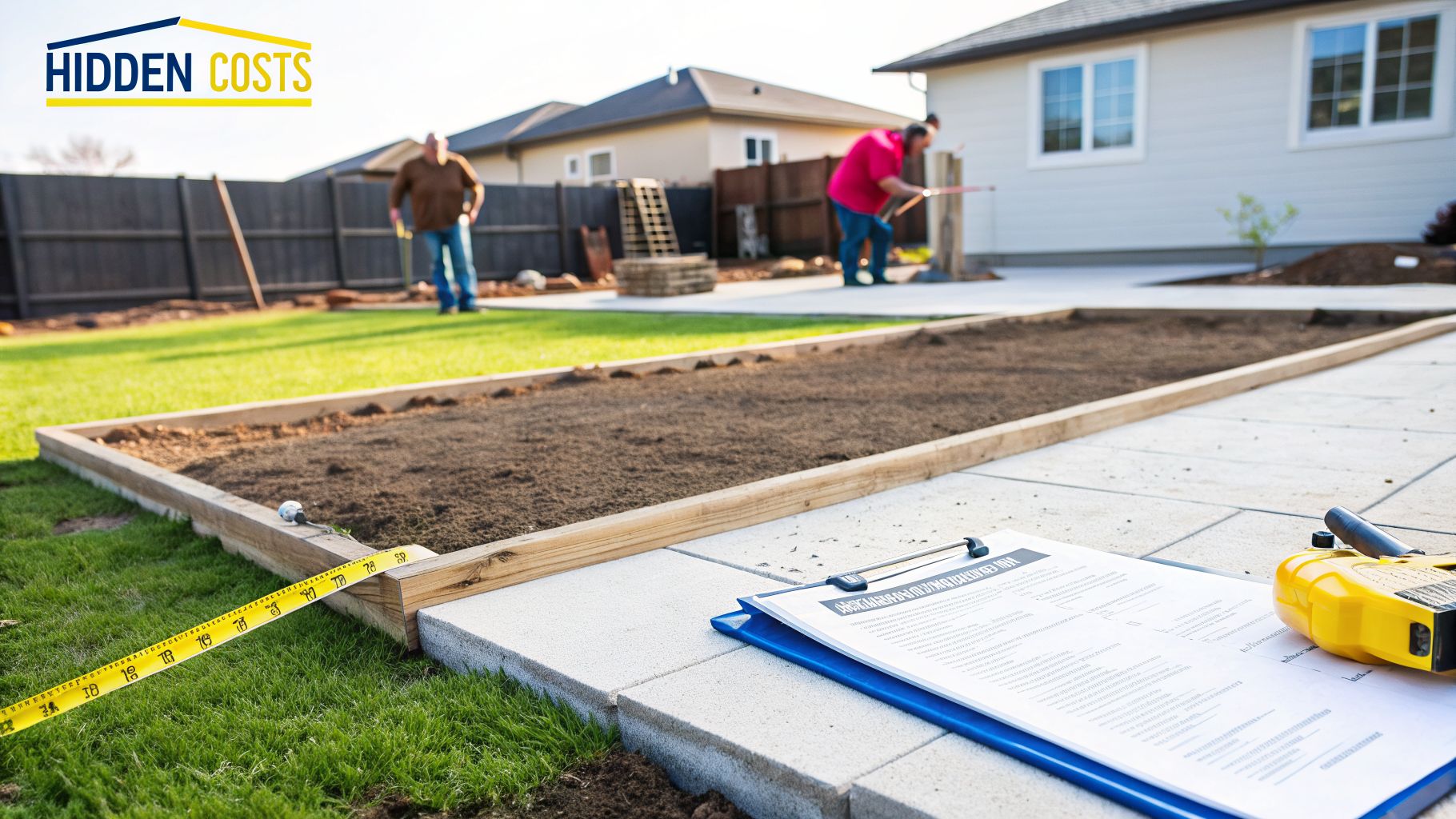
The price tag on a metal carport kit is really just the starting line. Your true metal carport installation cost includes a few crucial steps that are easy to overlook when you're just budgeting for the structure itself.
Think of it like this: you wouldn't build a house on a shaky, uneven patch of dirt, right? A carport is no different. It needs a solid, well-prepped base to guarantee it holds up, especially against the wild weather we get here in the Dallas-Fort Worth area.
These aren't "hidden" costs meant to surprise you. They're essential investments to make sure your new carport stands strong for decades. From getting the land ready to pouring a foundation and dealing with city permits, each step is vital. Skipping them can lead to project delays, failed inspections, or even structural failure down the road.
Building on a Strong Foundation
The biggest expense outside of the carport kit is almost always the foundation. You absolutely need a perfectly level and stable base—it's non-negotiable. Without one, the carport's frame can twist, the panels won't line up, and the whole thing could be at risk during a severe storm.
Your site might look flat to the naked eye, but even a tiny slope can create big problems. That's where professional site preparation comes in.
Grading and Leveling: If your chosen spot is on a hill or just has uneven ground, it has to be graded. This just means moving soil around to create a perfectly flat pad. This can run anywhere from $500 to over $2,000, depending on how much work is needed.
Foundation Options: Once the ground is level, you’ve got a few choices for the foundation itself. Each comes with a different price point and level of durability.
A carport is only as strong as the ground it stands on. Investing in a proper foundation isn't just an add-on; it's the core component that protects your vehicles and your property by anchoring the structure securely against shifting Texas soil and high winds.
A concrete slab is the gold standard, offering unmatched stability and a clean, paved surface for your vehicles. When you look at different types of concrete patio finishes, you can even see how a professionally poured slab can boost your property's overall look. Asphalt is another solid choice, while simple ground anchors are the most basic option, really only suited for smaller carports on already level ground.
When you're trying to figure out your total budget, it helps to think like a commercial contractor by understanding project costs per square foot, which often brings these necessary "extras" to light.
Navigating DFW Building Permits
Another cost people often forget is the building permit. Just about every city in the DFW metroplex—from Dallas and Fort Worth to suburbs like Plano and Frisco—requires a permit for a permanent structure like a metal carport. This isn't just bureaucratic red tape; it's a critical safety measure.
Permits make sure your carport meets local building codes for things like:
- Wind Resistance: The structure has to be rated to handle the high winds we see in North Texas.
- Property Setbacks: There are rules about how far the carport must be from your property lines, fences, and the house itself.
- Foundation Requirements: The city will specify exactly what kind of foundation is needed to be safe.
The permit process itself costs money, too. The fees can range from $100 to $500 or more, based on your city and the project's value. This covers the city's administrative work and the cost of inspections during and after the build.
Trying to DIY the permit process can be a massive headache, full of confusing paperwork and potential delays. A failed inspection means you're on the hook for costly rework and more waiting around. This is a huge reason why partnering with an experienced local contractor like Moore Construction Co. is so valuable. We handle the entire process—from submitting plans to scheduling and passing inspections—making sure your project is 100% compliant and hassle-free. That professional management is a key part of the total metal carport installation cost that brings incredible peace of mind.
How Labor and Custom Features Affect Your Quote
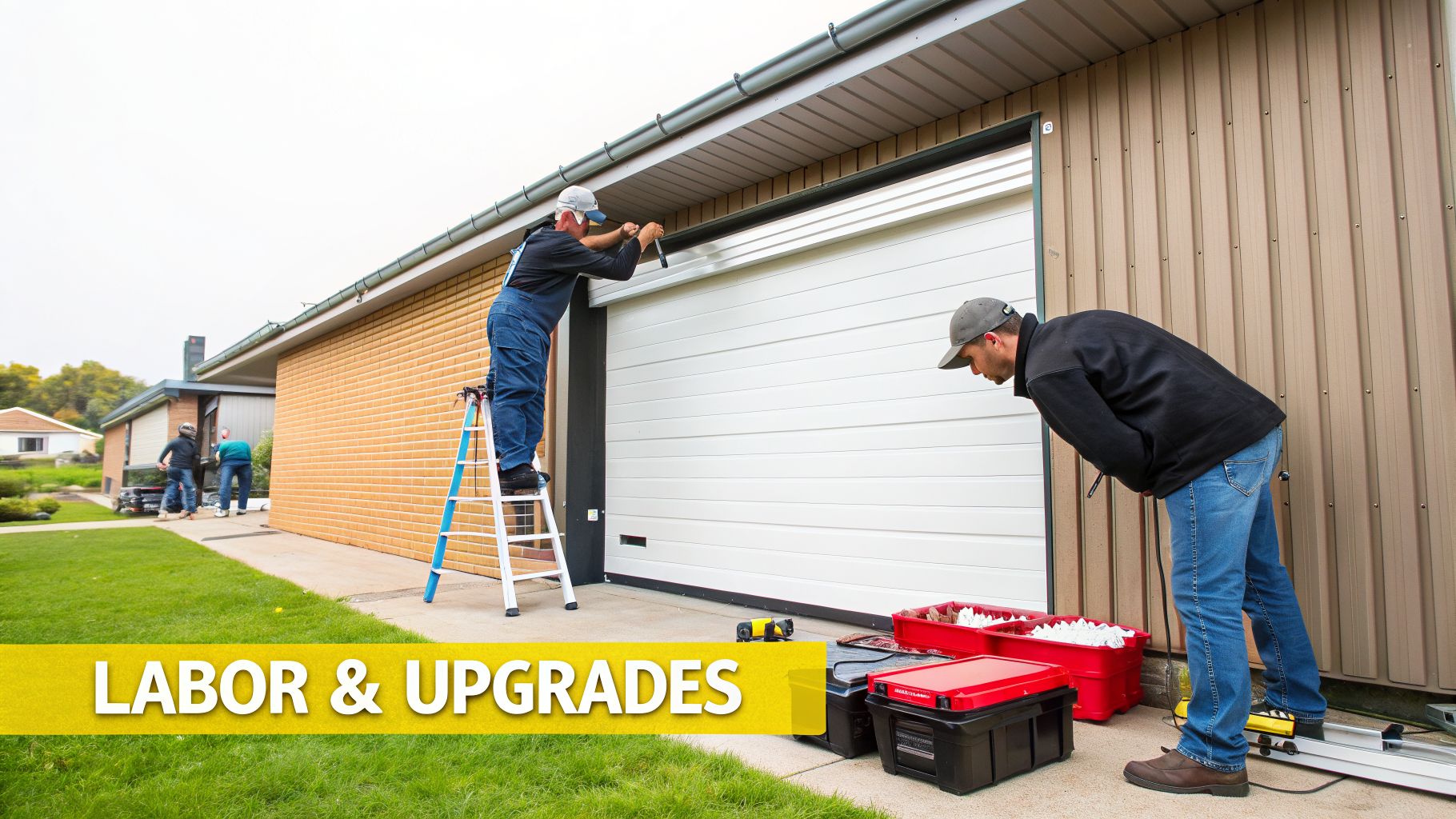
When you buy a metal carport kit, you’re really only getting half the story. The materials are just the starting point. It’s the professional labor to put it all together and the custom features you add that turn that stack of steel into a structure ready to protect your vehicles.
Think of it like getting furniture delivered in a flat-pack box. The price tag is for the pieces, not for the expert assembly that makes sure it’s sturdy and won't fall apart. It's the same deal with carports—skilled labor is a critical part of the final metal carport installation cost, ensuring your investment is tough enough for our wild Texas weather.
Why Professional Labor is a Smart Investment
This isn't just about saving yourself a weekend of work. Opting for a professional crew is all about making sure your carport is structurally sound for the long haul.
An expert team knows how to get every panel perfectly aligned, every bolt securely fastened, and every anchor properly set in the foundation. That kind of precision is what stands between your carport and a North Texas thunderstorm.
Trying to DIY might look like a way to shave off some cash, but one small mistake—an uneven frame or a weak anchor—could lead to total failure in high winds. Professional labor is basically your insurance policy against having to make expensive repairs down the road.
In fact, the cost of labor and add-ons can make up a huge chunk of your final bill. It’s not uncommon for these elements to account for 40-60% of the total project cost. Here in the Dallas-Fort Worth area, a full-service installation with a foundation will often run you somewhere in the $15-$30 per square foot range. If you want to dig deeper into how those costs break down, Angi.com offers some great insights into carport pricing.
Customizing Your Carport for Your Needs
Beyond the basic roof and frame, you can add a whole range of features to take your carport from a simple shelter to a seriously versatile space. These upgrades let you dial in the structure to fit exactly what you need, just like adding option packages to a new truck.
Here are a few of the most popular upgrades we see DFW homeowners go for:
- Side Panels and Gable Ends: Want more protection from that sideways rain and hail? Adding partial or full side panels is the way to go. Gable ends are also a great touch, closing off that triangular space at the top to give the carport a more finished, garage-like look.
- Roll-Up Garage Doors: If you need maximum security, a roll-up door is a game-changer. It instantly turns an open carport into a fully enclosed, lockable space—perfect for protecting a classic car, expensive tools, or turning it into a workshop.
- Walk-In Doors and Windows: Planning to use the carport as more than just parking? A walk-in door gives you easy access without having to open the big roll-up door every time. Throw in a few windows, and you've got natural light for your projects.
It's worth noting that upgrades like side panels and roll-up doors don't just add features—they dramatically increase the overall strength and rigidity of the entire structure. That extra reinforcement is a huge plus here in North Texas.
These kinds of enhancements fall under the umbrella of custom metal fabrication. To see how we apply these skills to other projects around your property, you can learn more about our professional metal work services.
While adding these features will raise your initial quote, they also boost your property value and make the carport far more useful. An enclosed structure with a roll-up door gives you almost all the benefits of a traditional garage for a lot less money, making it one of the smartest upgrades you can choose.
When you're looking at the metal carport installation cost, it's easy to see it as just another expense. But that's the wrong way to think about it. A quality carport isn't a cost—it's an investment that starts paying you back from day one. Over the years, that initial investment protects your biggest assets, boosts your property's appeal, and even cuts down on other regular expenses.
Think of it like a shield for your vehicles. Here in the Dallas-Fort Worth area, we know our weather can be brutal, especially when it comes to hail. A single surprise hailstorm can leave a car pockmarked with thousands of dollars in damage. That means ugly dents, maybe some shattered glass, and the headache of dealing with an auto body shop.
A well-built metal carport is your 24/7 guard against that chaos. The money you spend on the installation could easily be less than what you'd pay for just one major hail damage repair. It’s a smart, proactive move that keeps your vehicles looking great and your money where it belongs—in your bank account.
Boosting Your Home’s Market Value
It's not just about defense, though. A professionally installed carport is a real, tangible upgrade to your home. In the fast-paced suburban real estate markets all around DFW, smart, functional additions that add both convenience and curb appeal really move the needle. Potential buyers see a solid carport as a huge plus, right up there with a nice deck or a covered patio.
It sends a clear signal that you've taken care of the property and invested in practical features for daily life. While it might not give you the same dollar-for-dollar return as a full kitchen gut and remodel, a carport consistently adds to a home's resale value. Your upfront investment keeps working for you right up until the day you sell.
A carport is a practical asset that pays you back in multiple ways—through damage prevention, lower insurance premiums, and increased property value. It transforms an upfront cost into a long-term financial benefit.
More Than Just Hail Protection
And let's be honest, the benefits go way beyond just stopping falling ice. That relentless Texas sun is just as big a threat over time. It fades paint, cracks dashboards, and absolutely cooks a car's interior. A carport provides that constant shade, preserving your vehicle's finish and protecting its resale value year after year.
This kind of consistent protection can also pad your wallet in a few other ways:
- Potential Insurance Savings: Check with your auto insurance provider. Many of them offer discounts for vehicles that are kept under a covered structure. A carport can often qualify you for a lower premium, giving you a small but steady return on your investment every single month.
- Avoiding Costly Repairs: By shielding your vehicle from the daily grind of sun, rain, and tree sap, you’re dramatically reducing wear and tear. This helps you avoid premature aging of paint, trim, and interior surfaces, saving you cash on cosmetic repairs and detailing down the road.
- Versatile Usable Space: A carport isn't just for cars! It instantly becomes a covered outdoor workshop for weekend projects, a shaded play area for the kids, or the perfect spot for a backyard barbecue, rain or shine. You're adding functional square footage to your property without the massive cost of a full home addition.
Getting an Accurate and Reliable Carport Quote
Turning your research into a real-life project starts with getting a clear and accurate quote. To make sure the metal carport installation cost you receive is spot-on, a little bit of prep work on your end goes a long, long way.
This simple checklist will help you pull together all the key details an installer needs to give you a solid estimate that’s actually tailored to your property, not just a shot in the dark. Before you pick up the phone, taking a few minutes to walk through these steps will make the whole process smoother and help you communicate exactly what you’re looking for.
Your Quote Preparation Checklist
First things first, let's nail down the basics of your project. Answering these questions gives any contractor a solid foundation to build a detailed and reliable quote.
- Measure Your Space: Grab a tape measure and figure out the length and width you have available for your new carport. Be sure to note any potential roadblocks like trees, fences, or property lines.
- Determine Vehicle Needs: How many cars, trucks, or other vehicles are you trying to cover? Think about what you have now and what you might add in the future, like a boat or an RV.
- Check Local Rules: Spend a few minutes looking up your Homeowners Association (HOA) guidelines. It’s critical to know if they have any restrictions on size, style, or where you can place the carport before you get too deep into planning.
Partnering with an experienced local installer is the most critical step. A DFW-based company like Moore Construction Co. already understands the specific soil conditions, weather patterns, and municipal permit requirements unique to North Texas, preventing costly surprises.
With this info in hand, you're ready to get a quote that reflects your actual project. This groundwork clears up any potential misunderstandings and makes sure the final price tag matches what you're expecting. If you’re thinking about other outdoor upgrades, our guide on how to find the right patio installation contractor has more great tips for picking qualified pros.
Ready to take the next step with confidence? Moore Construction Co. offers a free, no-obligation estimate to help you finalize your budget and bring your carport project to life.
Still Have Questions About Carport Costs?
Even after breaking down all the numbers, it's natural to have a few more questions rattling around. It’s a big decision, and getting every detail straight before you commit is just plain smart. Let's tackle some of the most common things DFW homeowners ask us.
Think of this as your final check-in before pulling the trigger. We'll give you clear, straight answers to iron out any last-minute uncertainties, so you can feel completely confident when you're ready to get a quote.
Is It Cheaper to Build a Carport or a Garage in Texas?
Hands down, a metal carport is the more affordable option. A standard two-car carport installation here in the DFW area will typically run you somewhere between $3,200 and $8,000.
Now, compare that to a traditional detached garage. For the same two-car capacity, you’re easily looking at $20,000 to $50,000—and that number can climb quickly depending on the materials and finishes you pick.
Carports are the clear winner for cost-effective vehicle protection because:
- They don't need a massive, complex foundation.
- The installation process is way faster.
- They simply require fewer materials and less labor.
Do I Need a Permit for a Carport in the Dallas Area?
Almost certainly, yes. Most cities and counties across the DFW metroplex—Dallas, Fort Worth, Plano, you name it—will require a building permit for a permanent structure like a carport. This is especially true if it’s being anchored to a concrete foundation.
A building permit isn't just red tape; it's your assurance of safety and quality. It confirms that your carport is engineered to handle our local wind loads and is positioned correctly on your property, saving you from potential fines or even a tear-down order from the city.
This is exactly why you hire a pro. A contractor like Moore Construction Co. takes care of the entire permitting headache for you. We handle the paperwork, schedule the inspections, and make sure your new carport is 100% compliant from day one.
How Long Does Metal Carport Installation Take?
This is one of the best parts. Once the site is ready and any concrete has cured, the actual assembly of a prefabricated metal carport is incredibly quick. For a typical single or double carport, our crew can usually have the entire thing built in just one day.
For a bigger or more customized project, it might stretch into a second day, but that’s about it. It’s a massive advantage over building a traditional garage, which can drag on for weeks or even months.
Can I Install a Metal Carport Myself to Save Money?
While you can buy DIY kits, we really advise against it for homeowners here in the Dallas-Fort Worth area. First off, a DIY job can instantly void the manufacturer’s warranty on the materials. If something fails, you're on your own.
Second, getting the structure perfectly level, square, and anchored securely enough to withstand a Texas thunderstorm takes real expertise and specialized tools. An anchor that isn't set properly is a serious safety hazard waiting to happen. And honestly, trying to navigate the local building codes and permit process on your own is a nightmare.
Hiring a professional ensures it's done right the first time, meets every safety code, and protects your investment for years to come.
Ready to swap that sun-baked driveway for a durable, high-quality metal carport? The team at Moore Construction Co. is here to give you a clear, honest quote designed specifically for your DFW property. Contact us today for your free, no-obligation estimate!


