


When you're comparing James Hardie siding against vinyl, the choice really boils down to one thing: durability versus upfront cost. For those of us living in the Dallas-Fort Worth area, it’s a decision with long-term consequences.
From our experience, James Hardie fiber cement siding is the hands-down winner for a lasting investment, especially given our local climate. It's built to withstand the punishing Texas sun and those notorious hailstorms. While vinyl siding looks tempting with its lower price tag, it often just can't hold up to our weather extremes.
Your Quick Guide To Siding in Dallas
Picking the right siding for your home in Dallas isn't just about looks. It’s a crucial decision that pits your immediate budget against long-term performance and peace of mind. The DFW climate is no joke—we’re talking intense UV rays, high humidity, and the constant threat of hail. These factors put unique demands on a home's exterior.
This guide is designed to give you a straightforward comparison, helping you figure out which material truly fits your home and priorities.
To make it even simpler, think about it this way: what's your number one priority for your new siding? This decision tree can help you visualize the best path forward.
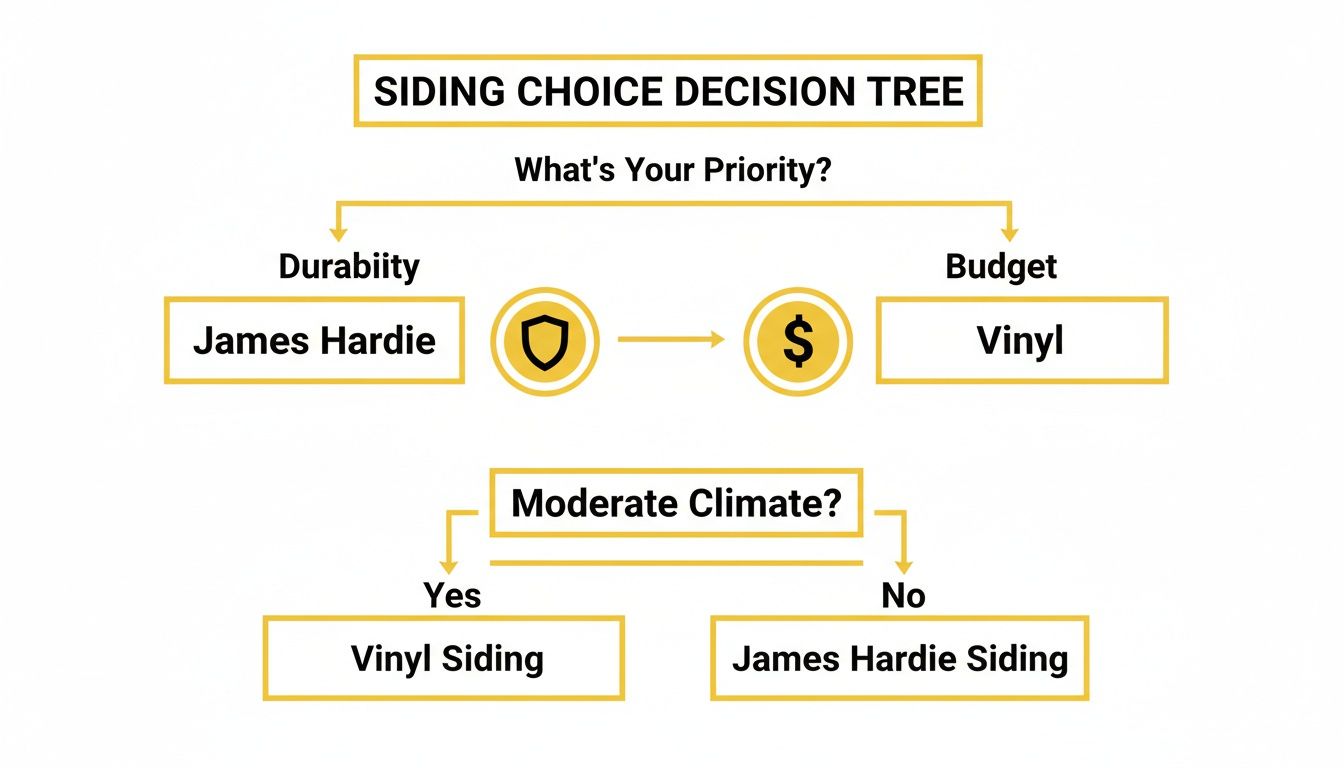
As you can see, the choice becomes pretty clear. If your main goal is bulletproof durability and weather resistance, James Hardie is the obvious choice. If your budget is the absolute top concern, then vinyl becomes the alternative.
At-a-Glance Siding Comparison
For decades, vinyl siding was the go-to budget option for many homeowners. But lately, we've seen a major shift. James Hardie fiber cement has become the preferred choice for people who want a more permanent, high-quality solution. Its unique blend of cement, sand, and cellulose fibers gives it a serious edge in both strength and lifespan.
To lay it all out, we've put together a table that summarizes the key differences between these two materials, specifically for homeowners here in Dallas-Fort Worth. This comparison focuses on the things that matter most in our climate, like hail resistance, aesthetics, and overall value.
James Hardie vs Vinyl Siding: A Dallas Comparison
This table breaks down the key differences to help Dallas-Fort Worth homeowners decide between James Hardie and vinyl siding.
| Factor | James Hardie Fiber Cement | Vinyl Siding |
|---|---|---|
| Material Composition | A tough mix of cement, sand, and cellulose fibers | Polyvinyl chloride (PVC) plastic resin |
| Hail Impact Resistance | Excellent. Built to resist dents and cracking from hail. | Poor. Often cracks, chips, or shatters upon impact. |
| Fire Resistance | Non-combustible. It won't ignite or fuel a fire. | Melts quickly when exposed to flame and can release toxic fumes. |
| Upfront Cost | Higher initial investment, but a one-time cost for many. | Lower initial cost, making it budget-friendly at first. |
| Aesthetic Quality | Thick profile with deep, realistic wood grain textures. | Can look thin and has a noticeable "plastic" sheen. |
| Long-Term Value | Offers a high ROI and significantly boosts curb appeal. | Can sometimes lower a home's value in premium markets. |
Ultimately, while the lower price of vinyl is appealing, the real-world performance of James Hardie siding provides far greater value and protection for Dallas homeowners over the long haul.
Siding Market Trends for Dallas Homeowners
When you’re weighing the pros and cons of James Hardie vs. vinyl siding, it helps to look at the bigger picture. For a long time, vinyl was the undisputed king of siding. It was cheap, easy to install, and you saw it on new homes everywhere, including right here in the Dallas-Fort Worth area. It was the default choice for builders looking to keep costs down.
But times are changing. Homeowners and builders are starting to think differently. We're seeing a clear shift away from just looking at the initial price tag. Instead, people are considering the total cost of ownership, and that’s a huge deal in a place like North Texas. Our weather is no joke, and a siding that can’t handle it will end up costing you more in the long run.
This new focus on performance is pushing premium materials like fiber cement to the forefront.
The Rise of Fiber Cement
This growing preference for durability is really shaking up the new construction market. While vinyl is still around, it’s losing its grip where it counts—in quality builds that hold their value. Smart buyers and reputable builders are choosing resilience over rock-bottom prices.
The numbers tell a fascinating story. Right now, vinyl siding is used on about 33% of new single-family homes, but that number is slipping as tougher materials gain ground. In fact, fiber cement has already captured a solid 25% of the new construction market. You can explore the full analysis of siding market dynamics to see exactly how these trends are playing out.
This shift in new home construction is a powerful signal for the entire market. As these new, more durable homes become the standard, older homes with less resilient siding will need to be updated to keep up. This is creating a huge opportunity for fiber cement in the repair and remodel world.
James Hardie's Market Dominance
When you talk about fiber cement, you’re really talking about one name: James Hardie. The company is so dominant that it holds an incredible 90% of the U.S. fiber cement market. That’s not just good marketing; it’s proof that their product consistently performs and delivers on its promises.
James Hardie isn't sitting back, either. They're actively aiming to win over homeowners who might have traditionally chosen vinyl or wood siding. Their goal is to grow fiber cement's overall share in the popular wood-look siding segment from 22% to 35%—all while keeping their 90% hold on the fiber cement category.
For a Dallas homeowner, this is crucial information. It means choosing James Hardie siding puts your home in line with the rising standards for quality, durability, and long-term value that are shaping the future of our neighborhoods.
Comparing Durability in the North Texas Climate
Choosing the right siding in Dallas-Fort Worth isn't just about curb appeal—it’s about picking the right armor for your home. We live in a tough climate. The relentless North Texas combination of punishing hail, blistering sun, and thick humidity requires a level of toughness that siding in milder regions just doesn't need to have. When you put james hardie vs vinyl siding head-to-head on durability, the differences are stark and absolutely critical for your home’s future.
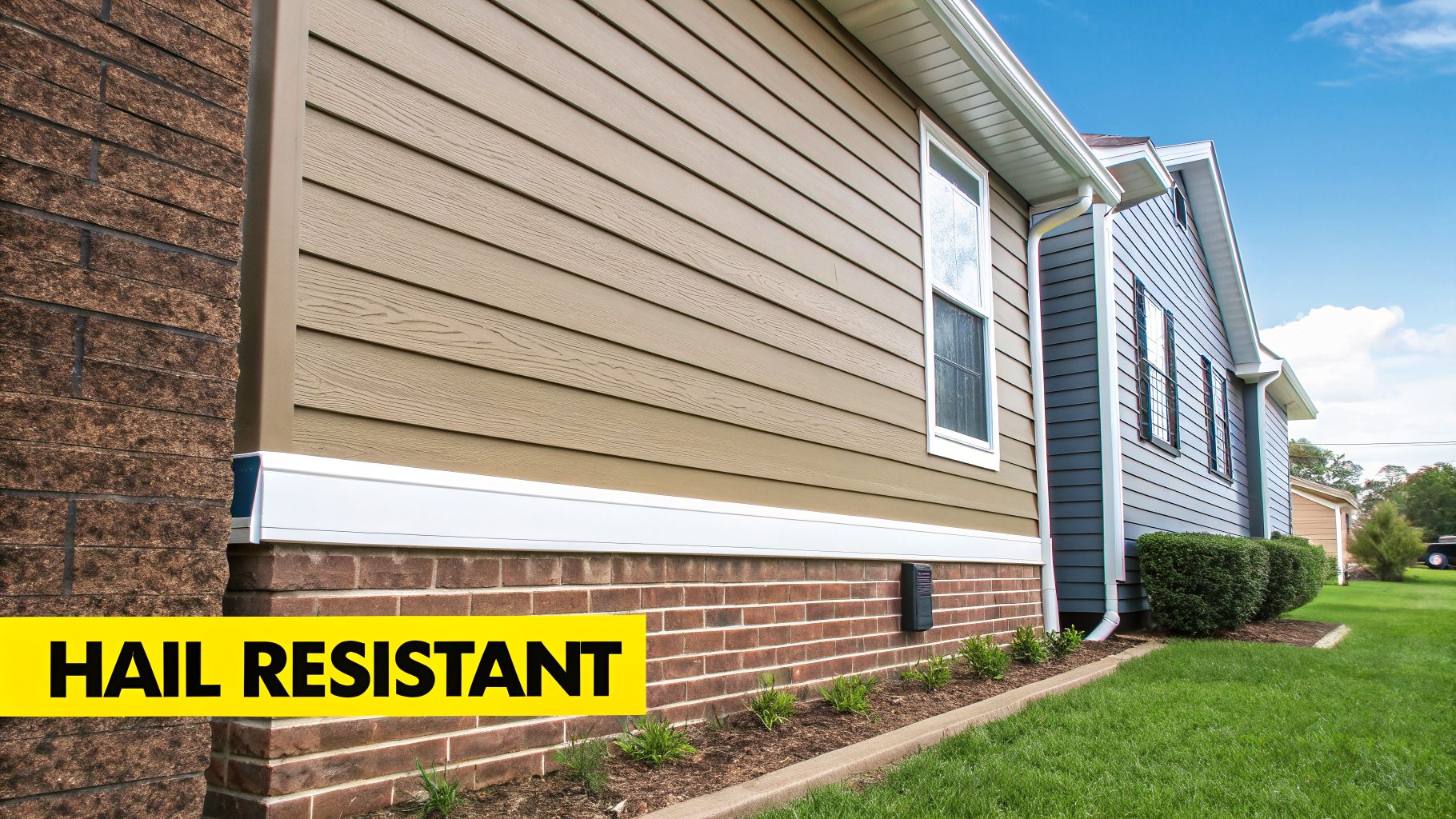
The most dramatic test any siding will face in DFW is the inevitable hailstorm. Vinyl siding, which is made from PVC plastic, gets brittle in the cold and is well-known for being susceptible to impact damage. It doesn't take much—even moderate-sized hail can leave it peppered with cracks, holes, and chips. When that happens, your home's protective layer is instantly compromised, setting you up for widespread and expensive repairs.
On the other hand, James Hardie fiber cement is engineered specifically for impact resistance. Made from a tough blend of cement, sand, and cellulose fibers, it’s a dense, rigid material that can take a beating from hail without cracking or breaking. That resilience means that after a storm blows through, a home with James Hardie siding is far more likely to be standing strong and secure.
The Battle Against Sun and Heat
Beyond the sudden violence of a hailstorm, the brutal Texas sun poses a constant, slower threat. The intense UV radiation and soaring temperatures we live with for months can wreck exterior materials, and this is another area where vinyl siding struggles.
Under prolonged sun exposure, vinyl is known for several issues:
- Warping and Buckling: As the plastic heats up and cools down, it expands and contracts. This movement often causes ugly warping, buckling, or what's known as "oil canning," making the panels look wavy and uneven.
- Fading: The color in vinyl siding is only skin deep. Over time, UV rays break down the pigments, causing the color to fade badly and unevenly. Your house can end up looking tired and worn out much sooner than you'd expect.
- Brittleness: The constant heat cycles also make the PVC material more brittle over time, which just makes it even more vulnerable to cracking from minor impacts.
James Hardie siding, especially with its ColorPlus® Technology, is built to win this fight. The color is a factory-applied, baked-on finish that is specifically engineered to resist fading from UV exposure. This means your home’s color stays vibrant for years. And because fiber cement is dimensionally stable, it doesn't expand and contract with temperature swings, so it won’t warp or buckle—even on those west-facing walls that get hammered by the afternoon sun.
The core difference is simple: James Hardie is a cement-based product that is naturally stable and resistant to the exact environmental stressors North Texas throws at it year after year. Vinyl is a plastic that degrades under those same conditions.
Resisting Humidity, Rot, and Pests
Finally, let's talk about the humidity here in Dallas. It creates the perfect environment for moisture problems like rot, mold, and mildew. If not installed perfectly, vinyl siding can trap moisture behind the panels, creating a breeding ground for these issues which can silently damage your home's underlying structure. Pests like termites can also easily get behind or even chew through vinyl to get to the wood frame of your house.
James Hardie fiber cement provides far better protection against these threats. It won’t burn, and it’s engineered to be water-resistant, so it doesn't rot, swell, or fall apart when exposed to our humidity and rain. If you're curious about just how tough it is, you can learn more about how long Hardie Board lasts in our detailed guide. It's also completely unappealing to pests like termites and woodpeckers, giving you another critical layer of defense.
Of course, siding is just one part of a durable home exterior. It works together with other materials to protect your home. For instance, many DFW homeowners also invest in hail resistant roofing materials that are engineered with the same goal in mind: to stand up to our severe weather.
Achieving Your Ideal Look with Siding
Your home's exterior is the first thing people see, making a statement about your style before anyone even steps inside. When you're weighing the aesthetic differences in the James Hardie vs. vinyl siding debate, it's about much more than just a surface-level look. The materials themselves really dictate the design possibilities, from texture and color to true architectural character.
Vinyl siding has certainly improved over the years, but it has a hard time escaping what it is: a thin plastic panel. This can often lead to a flatter, less substantial appearance. Sometimes the repeating patterns and visible seams can give away that it’s manufactured, and that classic "plastic" sheen can take away from a premium look.
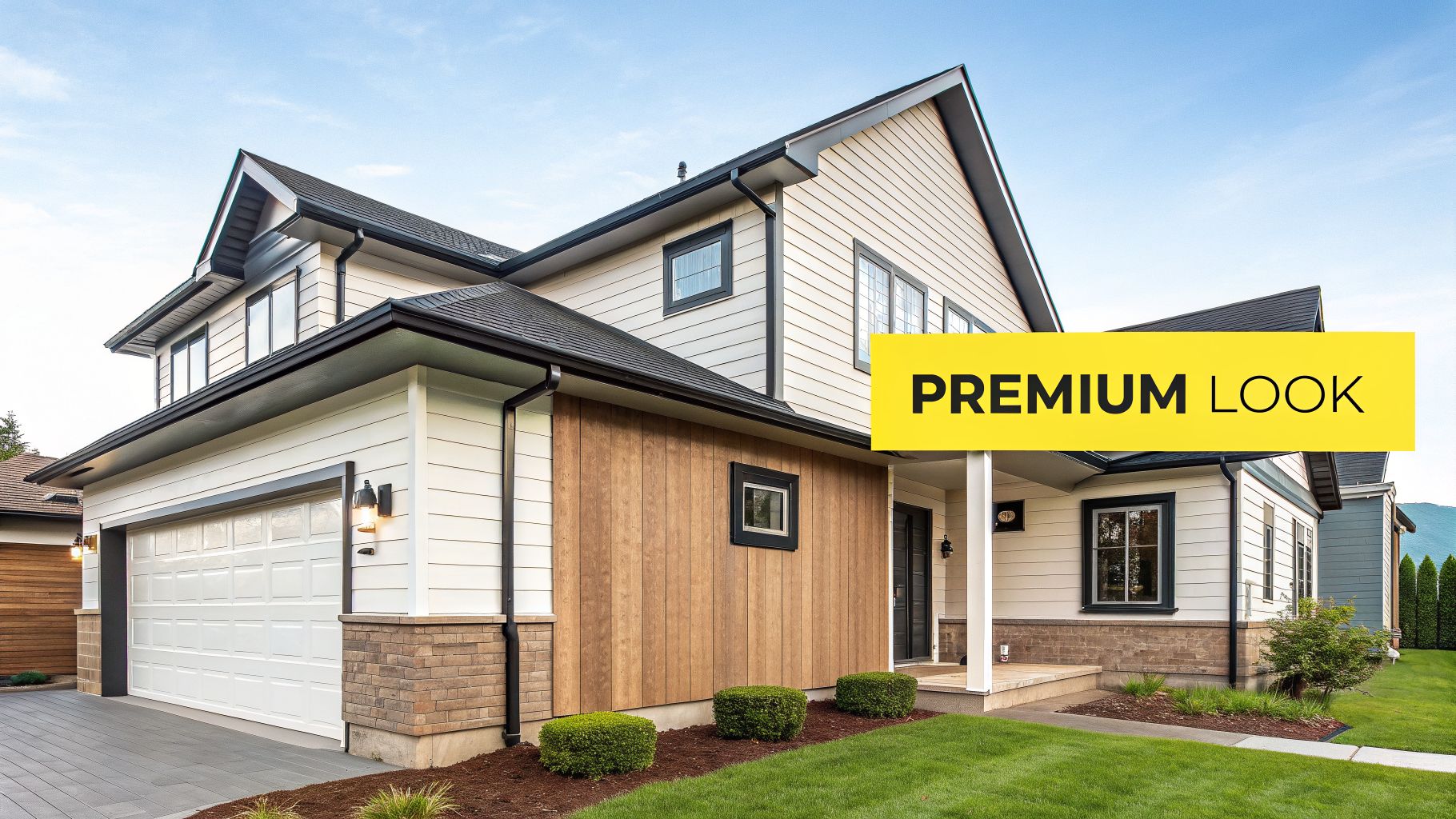
James Hardie fiber cement siding, on the other hand, is much thicker and heavier. This extra thickness allows for deeper, more convincing wood-grain textures. It also creates sharp, defined shadow lines that give a home incredible depth and character. The result is a richer, more upscale appearance that does a fantastic job of mimicking traditional wood without all the maintenance headaches.
Customization and Architectural Flexibility
The design potential with James Hardie siding goes far beyond just a simple wood look. Its versatility lets homeowners create a wide range of architectural styles that just aren't on the table with standard vinyl.
- Diverse Profiles: James Hardie offers a full lineup, including traditional lap siding, vertical board-and-batten, authentic-looking shingles, and even sleek, smooth panels for modern designs. This means you can mix textures and styles on different parts of your home for a custom, layered look.
- Stucco and Panel Alternatives: For homeowners who want a smooth, contemporary finish, Hardie® Panel siding gives you a clean, minimalist aesthetic that looks like modern stucco or architectural panels. That's something completely outside what vinyl can do.
- Authentic Shingles: Hardie® Shingle siding delivers the character of cedar shingles for gables or as an accent, but with the toughness of fiber cement. Vinyl shingle versions often lack the deep texture and individual look of their fiber cement counterparts.
This kind of architectural freedom is a major difference. You can explore all sorts of outside siding ideas to see just how mixing profiles can take a home's curb appeal from ordinary to truly exceptional.
The ability to combine different profiles—such as plank lap on the main body of the house with shingle accents in the gables and board-and-batten on a bump-out—allows for a truly custom, high-end design. This layering of textures is a hallmark of sophisticated exterior design that is difficult to replicate with vinyl's more limited offerings.
The Critical Role of Color
Color is another area where these two materials head in different directions. With vinyl siding, the color is mixed right into the PVC material. While this is great for making scratches less noticeable, it has its downsides. The color palette can be more limited, and over time, exposure to the harsh Texas sun can cause significant, uneven fading, leaving your home looking tired. Premium options do perform better, but it's still a common issue. To really get the look and performance you want with vinyl, it's a good idea to research the best vinyl siding brands available.
James Hardie tackles color with its advanced ColorPlus® Technology. This isn't just paint. It’s a factory-applied, multi-coat finish that's cured between each coat to create an incredibly strong bond. This baked-on finish is specifically engineered to resist fading from UV rays, making sure your home’s color stays vibrant for years. That’s a huge advantage in the sun-drenched Dallas climate. The professionally curated color palette offers a range of beautiful, lasting options that will maintain your home’s premium look.
Analyzing Cost and Return on Investment
When you’re weighing James Hardie vs. vinyl siding, it’s all too easy to get fixated on the initial price tag. Vinyl siding almost always comes in with a lower upfront cost, which can definitely be tempting if you're working with a tight budget. But the real cost of siding isn't just the check you write on installation day; it’s a long-term equation that includes durability, future repairs, and your home’s resale value.
The initial investment for James Hardie fiber cement siding is typically 2 to 3 times higher than for standard vinyl. That difference covers both the more substantial material and the more complex, labor-intensive installation that requires specialized tools and know-how. While that higher number can cause a bit of sticker shock, you have to see it as the starting line, not the finish line, when it comes to value.
Total Cost of Ownership: A Dallas Perspective
This is where the concept of Total Cost of Ownership (TCO) completely flips the script. TCO looks at every single expense over the entire life of the product, which is a game-changer here in the demanding Dallas-Fort Worth climate.
With vinyl siding, that lower upfront cost can get eaten up by surprise expenses down the road.
- Hail Damage Repairs: After a nasty DFW hailstorm rolls through, vinyl is notorious for widespread cracking, chipping, and punctures. This almost always means replacing panels, and in bad cases, a whole new siding job. In North Texas, these repairs aren't a matter of if, but when.
- Warping and Fading: The relentless Texas sun is brutal. It can cause vinyl to warp, buckle, and fade over time. While that’s mostly a cosmetic issue at first, it seriously hurts your curb appeal and often pushes homeowners to replace it much sooner than they'd planned.
- Lower Lifespan: Even in a perfect world, vinyl siding has a shorter life, typically 15-25 years, before it starts looking tired and becoming brittle.
James Hardie siding, on the other hand, starts with a higher price tag but has a much, much lower TCO. Because it stands up to hail, rot, and pests, you’re far less likely to be facing unexpected repair bills after a storm. With a lifespan of 30-50 years or even more, it's a one-and-done investment for most homeowners.
The financial math is pretty simple: with vinyl, you pay less now but you're signing up for the risk of paying again and again for repairs or a premature replacement. With James Hardie, you pay more upfront to all but eliminate those future costs, giving you a more predictable—and often lower—total investment over the years.
Maximizing Your Return on Investment
Beyond just maintenance costs, the biggest financial factor is your Return on Investment (ROI), especially when you think about your home's resale value. Not all home improvement projects are created equal, and siding replacement is consistently one of the most impactful upgrades you can make.
The material you pick makes all the difference, though. Remodeling Magazine's Cost vs. Value Report has shown year after year that installing fiber cement siding gives you one of the best ROIs of any major exterior project. In a market like Dallas, homeowners can often get back over 80% of what they spent when they sell their home. That’s because James Hardie siding gives an instant, dramatic boost to curb appeal, tells buyers the house is high-quality, and offers the long-term durability they’re looking for.
Vinyl siding just doesn't provide that same kick in value. In a competitive real estate market like Dallas, where buyers have high expectations for quality finishes, standard vinyl can come across as a "builder-grade" shortcut. It might not drag the price down, but it definitely won't add the significant value that fiber cement does, which means a much lower ROI. For any homeowner looking to build as much equity in their property as possible, the choice becomes crystal clear.
Installation and Long-Term Maintenance Compared
The way your siding is installed and how you care for it over the years directly impacts its performance and beauty. When you're weighing James Hardie against vinyl siding, the differences in installation and upkeep are huge. One requires a specialist's touch, while the other is faster but far less forgiving of small mistakes.
Putting up vinyl siding is a pretty quick and simple process, which helps explain its lower labor cost. But that speed comes with a major string attached. Vinyl naturally expands and contracts with temperature swings. If an installer nails the panels too tightly or fails to leave the right amount of space, they'll end up warping, buckling, or rippling under the hot Texas sun. The result is an ugly, compromised exterior.
James Hardie siding, on the other hand, requires a much more deliberate and specialized installation. The material itself is heavy, so you need more crew members just to handle it safely. It also demands specific tools, like saws equipped with dust-collection systems and diamond-tipped blades, to cut through the dense fiber cement without creating a mess or damaging the boards. This isn't a job for a general handyman.
The Importance of Certified Installation
These installation differences are exactly why choosing the right contractor is so critical. For James Hardie products, you absolutely need to hire a certified installer. These are pros who have been trained directly by the manufacturer on the precise techniques needed to make the siding perform as promised. Just as importantly, a certified installation keeps your warranty valid. One wrong move by an uncertified crew can void Hardie's robust 30-year non-prorated warranty, leaving you completely unprotected.
Vinyl siding doesn't have a similar certification program, which makes it much tougher for a homeowner to know if an installer is truly an expert. An inexperienced crew can easily make mistakes that cause moisture intrusion or that dreaded warping—problems that might not even show up for months or years. If you want to see what a professional job looks like, take a look at our James Hardie siding installation guide, which breaks down the best practices we follow on every project.
Hiring a certified installer for James Hardie siding is your best insurance policy. It guarantees that every panel is correctly fastened, every seam is properly sealed, and your home is protected to the manufacturer's exact specifications, safeguarding both your investment and your warranty.
A Practical Look at Siding Maintenance
Once everything is installed, the maintenance for both materials is surprisingly similar in some respects, but very different in others. Both James Hardie and vinyl siding will look their best with a gentle wash once or twice a year. Just use a soft brush and a garden hose to get rid of the dirt, pollen, and grime that builds up.
However, their long-term maintenance needs are where they really part ways. Vinyl siding's biggest claim to fame here is that it never needs to be painted; the color is baked right into the material. While that sounds convenient, it also means if the color fades badly or you just want to update your home's look, your only real option is to replace all the siding.
James Hardie siding, by contrast, will need to be repainted eventually. If you go with their ColorPlus® Technology, the factory-applied, baked-on finish is warrantied for 15 years against peeling, chipping, and cracking. If you get pre-primed Hardie board and have it painted on-site, it will typically need a fresh coat every 10-15 years.
While repainting might sound like a chore, many homeowners actually see it as a huge advantage. It gives you the freedom to completely refresh your home’s curb appeal, adapt to new design trends, or just try a new color without the massive cost of a full tear-off and replacement. It turns long-term maintenance into an opportunity for renewal—a trade-off many people find well worth it for the superior protection and durability of fiber cement.
When homeowners in Dallas-Fort Worth are weighing James Hardie against vinyl siding, a handful of practical questions always come up. It’s all about performance, long-term value, and what the installation really involves. Getting straight answers is the only way to feel confident about the investment you're making in your home's exterior.
Is James Hardie Siding Truly Hail-Proof?
While no siding material can be called completely "hail-proof," James Hardie fiber cement gets as close as you can get. Its incredible impact resistance comes from a dense mix of cement, sand, and cellulose fibers, a formula specifically engineered to take a beating without cracking or puncturing. During a typical DFW hailstorm, that same impact often shatters vinyl, leaving your home exposed to water damage.
Of course, a freak storm with massive, baseball-sized hail could leave a cosmetic mark on any siding. But James Hardie is built to stand up to the vast majority of what North Texas weather throws at us. That toughness means you’re far less likely to be looking at a full, expensive replacement after the next storm rolls through.
How Do the Warranties for Siding Differ?
Warranties tell you a lot about how much a manufacturer truly believes in its own product. James Hardie backs their siding with an outstanding 30-year, non-prorated product warranty. That means your siding is covered for its full replacement value for three decades—a powerful statement about its durability.
On the other hand, most vinyl siding warranties are prorated. This is a critical difference. Prorated coverage means the value of your warranty shrinks over time, offering you less and less protection as the material ages. Many vinyl warranties also have a long list of exclusions for things like fading or impact damage from hail, which are exactly the issues we face most here.
The non-prorated nature of the James Hardie warranty is a significant differentiator. It ensures consistent, long-term protection for your investment, unlike the diminishing coverage common with most vinyl siding products.
Can I Install James Hardie Siding Myself?
Frankly, we strongly advise against trying to DIY a James Hardie installation. The job requires a whole set of specialized tools, from diamond-tipped saw blades to dust-mitigating equipment. More than that, it demands specific training to handle the material, which is heavy and can be brittle if not installed correctly.
But here's the most important part: the 30-year warranty is contingent on installation by a certified professional who follows the manufacturer's strict best practices. If you try to do it yourself, you not only risk a bad installation that leads to problems down the road, but you'll almost certainly void your warranty. That leaves your entire investment completely unprotected.
Does Vinyl Siding Lower a Home's Value?
It might not actively lower your home's value, but in a competitive market like Dallas, basic vinyl siding certainly doesn't do much to raise it. Experienced home buyers often see it as a builder-grade or budget material, not a premium feature.
In neighborhoods filled with homes that have stone, brick, or fiber cement, a house with standard vinyl siding can have a tough time standing out. Upgrading to James Hardie, however, consistently delivers a high return on investment. It dramatically boosts curb appeal and sends a clear signal of quality and durability to potential buyers.
Ready to protect your home with siding that’s actually built for the Dallas climate? The experts at Moore Construction Co. can help you explore your James Hardie options and provide a flawless, warranty-protected installation. Schedule your free in-home estimate today.


