


Choosing the right roofer in the Dallas-Fort Worth area is a huge decision, especially with our infamous hail storms. It’s not just about getting a good price; it’s about making sure your home's biggest protector is installed by a true professional. The best way forward is to do your homework—verifying local credentials, confirming rock-solid insurance, and checking a contractor's reputation before a single nail is hammered.
Your Essential DFW Roofing Contractor Checklist
With over 101,679 roofing companies in the U.S., the market is absolutely flooded. This makes it tough for DFW homeowners to tell the pros from the pretenders. Here in Texas, where construction is always booming, high demand for roofing unfortunately attracts some less-than-reputable outfits looking to make a quick buck.
That's why a systematic approach to vetting contractors isn't just a good idea—it's essential.
You're looking for someone who gets the unique challenges of our North Texas climate. We're talking about brutal summer heat that can bake shingles to a crisp and hailstorms that can cause catastrophic damage in minutes. A roofer with deep local roots will recommend the right materials and be there when disaster strikes.
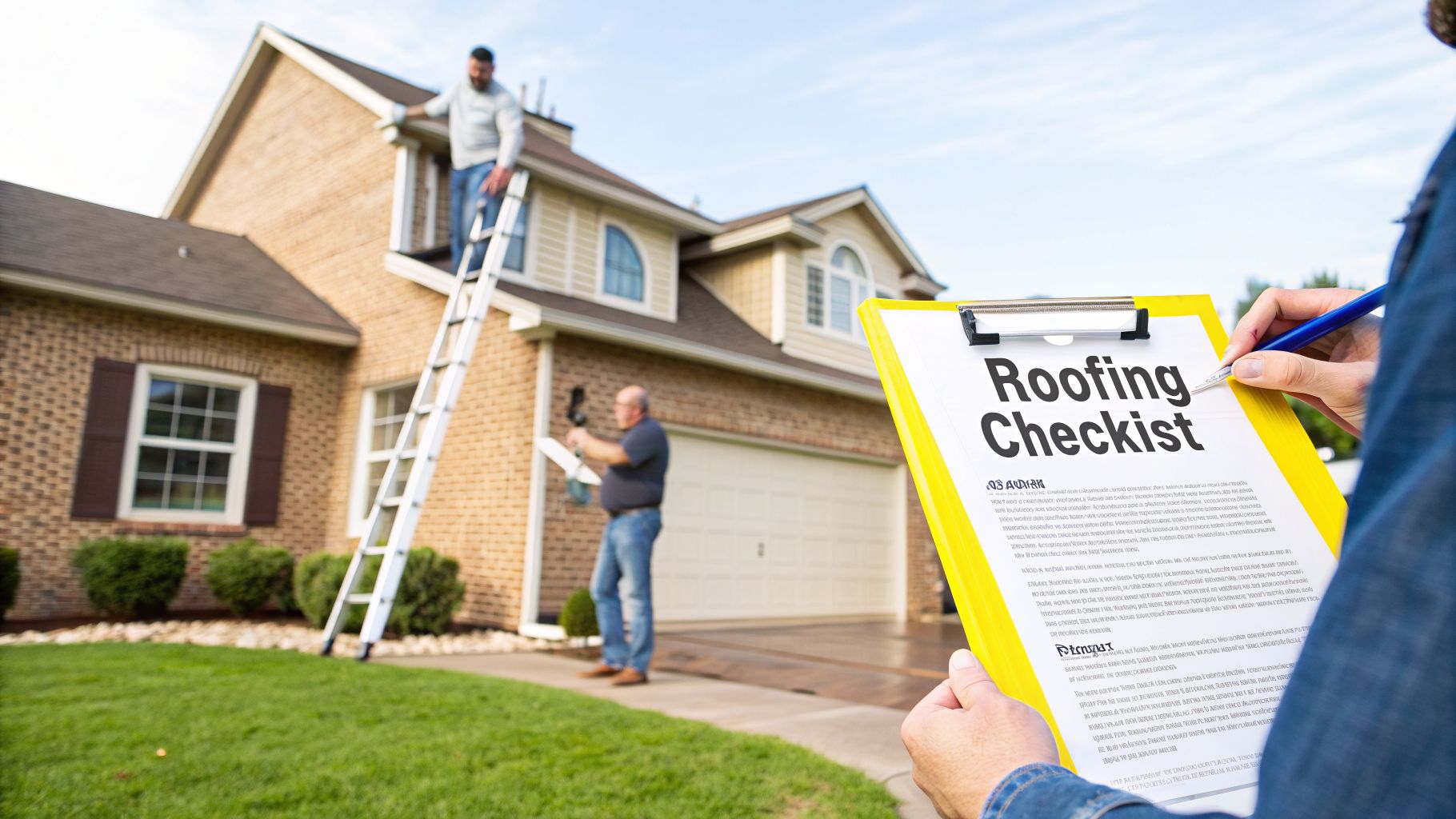
Key Credentials to Verify
Before you even start comparing quotes, there are a few non-negotiables to check off your list. Think of these as the foundation for a trustworthy partnership that protects you from shoddy work and major liability issues. One of the most telling signs of a pro is how they handle communication; always look for a responsive roofing contractor who makes sure your calls are answered promptly.
Here are the absolute must-haves:
- A Local, Physical Address: A contractor with a real, local office in the DFW area is far more accountable than someone working out of a truck. They have a vested interest in protecting their reputation right here in our community. A P.O. box just doesn't cut it.
- Full Insurance Coverage: This is a big one. They need both general liability and workers' compensation. Don't just take their word for it—ask to see the certificate of insurance and call the provider yourself to confirm the policy is active. This is what protects you if a worker gets hurt on your property.
- A Solid Reputation and Real References: Look for recent, positive reviews on sites like Google and the BBB. But don't stop there. Ask them for a list of at least 10 local references you can actually call. A confident roofer will be happy to provide them.
A roofer’s local presence isn't just about convenience; it’s about accountability. After a major storm, out-of-state 'storm chasers' often flood North Texas, only to disappear when warranty issues arise later. A permanent DFW address is your first line of defense.
To help streamline your initial screening process, I’ve put together a quick-reference table. Use it as a checklist when you're on the phone with potential roofers. These aren't just suggestions—they are critical safeguards that separate the established professionals from the risky alternatives.
Quick Vetting Checklist for DFW Roofing Contractors
| Credential or Quality | Why It's Critical in North Texas | What to Ask For |
|---|---|---|
| Local Physical Office | Storm-chasers from out of state are a huge problem here. A local roofer is accountable and won't disappear after the job. | Their office address (and drive by it!). |
| General Liability Insurance | Protects your property from accidental damage during the roof replacement. Essential coverage. | A current Certificate of Insurance (COI). |
| Workers' Comp Insurance | If a worker is injured on your property, this protects you from being sued. This is a non-negotiable. | A current Certificate of Insurance (COI). |
| Recent Local References | Proves they have a track record of happy customers right here in the DFW area. | A list of at least 10 recent DFW customers. |
| RCAT License | The Roofing Contractors Association of Texas offers a voluntary license; it's a strong sign of professionalism. | Their RCAT license number. |
Having these credentials in place is the bare minimum. A contractor who can't provide this information immediately should be a major red flag, and you're better off moving on to the next one on your list.
Verifying Credentials: Licenses and Insurance
Before you even think about looking at an estimate, the very first thing you need to do is confirm you're dealing with a legitimate, professional business. This is way more than just asking, "Are you insured?" and taking a "yes" for an answer. Here in the DFW area, we get more than our fair share of storm-chasing opportunists, so doing your homework isn't just a good idea—it protects you from huge financial and legal nightmares.

Think of this process as your first line of defense. It’s what separates the pros from the fly-by-night crews who could vanish after a storm, leaving you with a leaky roof and no one to call. Proper credentials are the foundation of any good partnership.
The Non-Negotiable Insurance Policies
Any roofer worth their salt must carry two key types of insurance. Don't just take their word for it. You need to ask for their Certificate of Insurance (COI) and then take the extra step to call the provider listed on the certificate to confirm the policies are active and the coverage is enough for a project like yours.
These two policies are your shield against liability:
- General Liability Insurance: This covers any damage to your property. If a worker drops a bundle of shingles on your AC unit or a supply truck cracks your driveway, this policy is what pays for the repairs, not your homeowner's insurance.
- Workers' Compensation Insurance: Honestly, this is the most critical piece of protection for you as a homeowner. If a roofer gets hurt on your property and their boss doesn't have this coverage, you could be held personally liable for their medical bills and lost wages.
Imagine a crew member slipping and falling from your roof. It happens. Without workers' comp, their only option might be to sue you directly. I've seen scenarios like this financially ruin homeowners, turning a simple roof replacement into a years-long legal battle. A quick phone call to verify coverage can prevent a total catastrophe.
A contractor who hesitates to provide their insurance certificates or seems annoyed by your request is a major red flag. Legitimate, professional companies expect you to ask and are proud to demonstrate they operate responsibly.
Decoding Licenses and Certifications
Now, it's true that Texas doesn't have a statewide license requirement for roofers. But it's a huge mistake to think that means there are no standards to look for. The best DFW contractors hold voluntary certifications that prove their commitment to doing things the right way. When you're considering any kind of roofing work, even specialized jobs like adding a skylight, it’s crucial to know what to look for; a good guide on finding certified installers can be a real help here.
You’ll want to see a membership or license with an organization like the Roofing Contractors Association of Texas (RCAT). An RCAT license isn't just a piece of paper; it means the contractor has met specific insurance requirements and passed a serious exam on roofing best practices.
Also, ask about manufacturer certifications from big names like GAF or Owens Corning. These show the crew has been specifically trained to install their products correctly, which is often a requirement to get the best material warranties. These are the credentials that separate the true professionals from the rest of the pack.
Understanding Bonded vs. Insured
You’ll often hear a contractor say they're "licensed, bonded, and insured." It sounds great, but what does "bonded" actually mean for you? A surety bond is another layer of protection. It’s a type of insurance that protects you if the contractor fails to finish the job or doesn't pay their suppliers.
If your roofer takes your deposit and disappears, or they finish the job but don't pay for the shingles they used (leaving you with a lien on your property), the bond provides financial compensation. It’s an extra safety net, making sure you don't end up paying for the same job twice.
For DFW homeowners dealing with the aftermath of a big hail storm, this step is absolutely critical. The high cost of hail damage repair means there's a lot of money on the line, and knowing your contractor is fully insured and bonded gives you the peace of mind you deserve.
Asking Questions That Reveal True Expertise
A slick sales pitch and a cheap price might grab your attention, but they tell you almost nothing about the quality of work you’ll actually get. Any roofer can say they're the best. The real pros, however, reveal their expertise in the details. Knowing how to choose a roofing contractor comes down to asking specific, operational questions that separate the seasoned professionals from the crews who are just winging it.
This is where you get to take control of the conversation. It’s your chance to dig deeper into their process. The goal isn't just to find out what they'll do, but how they'll do it—and who, exactly, is accountable every step of the way.
Project Management and On-Site Protocol
Your first questions should be all about logistics and who you'll be dealing with on the job site. If you get vague answers here, consider it a huge red flag. It often points to a disorganized operation where important details are bound to fall through the cracks.
A professional, well-run company will have clear, immediate answers for these kinds of questions.
- "Who is my dedicated on-site project manager?" A great answer is a specific name and a direct cell phone number. A weak response sounds like, "Our guys know what to do," or "You can just call the main office." You absolutely need one person on-site who is responsible for the crew and can answer your questions directly.
- "What is your protocol for protecting our landscaping and driveway?" An expert will walk you through their process. They'll mention using tarps to cover flower beds, laying down plywood to protect sensitive areas from falling debris, and performing a thorough magnetic sweep for nails when they're done. An answer like, "Oh, we're careful," just doesn't cut it.
- "How do you handle unexpected issues like rotten decking?" A professional will explain that their contract includes a set per-sheet or per-foot cost for replacing rotten wood. They’ll also promise to document it with photos and get your approval before doing the work. This kind of transparency prevents those nasty surprise charges on the final bill.
The quality of a contractor’s answers directly reflects the quality of their organization. Clear, detailed responses about project management and property protection show they have established systems in place—a hallmark of an experienced and reliable company.
Materials and DFW-Specific Challenges
Here in North Texas, our roofs face a unique kind of punishment, from blistering summer heat to some of the most severe hail storms in the country. A contractor's knowledge of our local conditions—and the best materials to combat them—is non-negotiable.
Their responses will tell you if they are just shingle installers or true roofing experts who actually understand our climate.
For instance, with roughly 23% of U.S. homeowners planning to re-roof in 2026, the massive $99.8 billion roofing industry is feeling the pressure from rising material costs—a challenge for 52% of contractors. In a hail-prone area like DFW, a contractor who can navigate these economic pressures to source high-quality, impact-resistant materials without blowing up your estimate is worth their weight in gold. You can find more insights about these industry trends on ibisworld.com.
Try asking these questions:
- "What specific underlayment do you recommend for our intense summer heat, and why?" A knowledgeable roofer will immediately suggest a high-quality synthetic underlayment over standard felt paper. They’ll explain its superior heat and moisture resistance, which is critical for proper attic ventilation and energy efficiency in Texas.
- "Which brand of hail-resistant shingles do you prefer for this area?" They should be able to name specific brands and product lines (like Class 4 rated shingles) and tell you why they prefer them based on performance, warranty, and local availability. If you’re worried about the quality of work you might get, it’s a good idea to learn more about how to spot improper roof installation before it's too late.
These questions push the conversation beyond just the price tag. They help you gauge the true depth of a contractor's expertise, ensuring you hire a partner who is genuinely prepared to protect your home against everything our wild DFW weather can throw at it.
How to Compare Roofing Estimates and Warranties
Once you've collected a few estimates, the real homework begins. Trying to compare quotes from different roofers can feel like comparing apples and oranges—no two bids ever seem to line up perfectly. The trick is to look past the final number and dig into the nitty-gritty to see what you’re actually paying for.
Be immediately skeptical of a suspiciously low bid. It’s almost always a huge red flag. A price that seems too good to be true usually means a contractor is cutting corners, whether it’s with cheap materials, skipping crucial steps like proper underlayment, or bringing in an inexperienced crew. A true pro will give you a detailed, line-item estimate that accounts for every cost, leaving no room for nasty surprises later.
Deconstructing the Roofing Estimate
Think of a good estimate as the blueprint for your roofing project. It should be broken down into clear, easy-to-understand categories so you know exactly where your money is going. If someone hands you a single-page quote with just one price on it, hand it right back and ask for a proper breakdown.
Here’s what you should be looking for in a professional, line-item bid:
- Tear-Off and Disposal: This line should cover all the labor and fees for removing your old roof and hauling away the debris legally.
- Decking Replacement Allowance: No roofer has X-ray vision; they won't know the true condition of the wood decking under your shingles until everything is torn off. A professional quote will include an allowance—like a set price per sheet of plywood—so you know the cost upfront if any rotten wood needs to be replaced.
- Specific Material Brands and Types: The quote absolutely must list the exact manufacturer and product line for all the key parts, like the shingles (e.g., GAF Timberline HDZ), underlayment, and flashing. This is how you ensure you get the quality you were promised.
- Labor and Installation Costs: This covers the crew doing the hands-on work. It's also where you'll see the impact of industry-wide issues. For example, ongoing labor shortages are a top concern for 36-38% of contractors, a problem made worse by an aging workforce where one in five roofers is over 55. In a busy market like DFW, this can mean project delays and higher costs, which is why it’s so important to pick an established company with a reliable, seasoned team. You can get the full picture by reading the full 2026 industry report from Roofing Contractor magazine.
The best estimate isn't the cheapest one; it's the most transparent one. A detailed, line-item quote is a sign of professionalism. It builds trust by showing you exactly what your investment covers, from materials and labor to warranties.
Decoding Roofing Warranties
Warranties are easily one of the most misunderstood parts of getting a new roof. It’s vital to understand that there are two different warranties involved, and they cover completely different things. Getting them mixed up can lead to some expensive headaches down the road.
This infographic breaks down the key conversations you should be having with a contractor, from the scope of the project to the materials and warranties they stand behind.
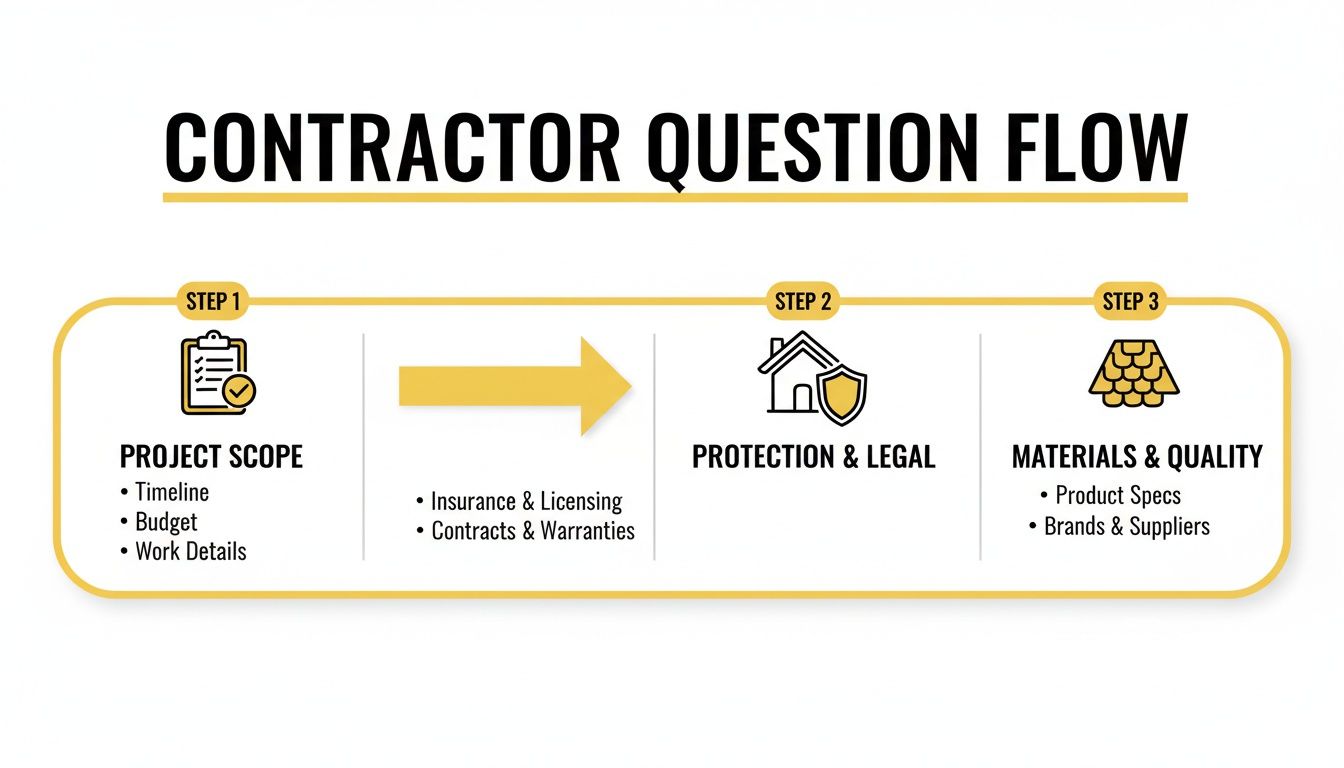
As you can see, getting a handle on the materials and warranties is a critical final step in making your decision.
Here’s the breakdown you need to know:
- Manufacturer's Material Warranty: This warranty comes directly from the company that made your shingles, like GAF or Owens Corning. It only covers defects in the materials themselves. These are often long-term (25, 30, or even 50 years), but they only kick in if a product fails because of a flaw in how it was made.
- Contractor's Workmanship Warranty: This is the guarantee from the roofing company that actually installs your roof. It covers their work—the installation itself. If your roof leaks because of flashing that was put on wrong or shingles that weren't nailed down correctly, this is the warranty that has your back.
Of the two, the workmanship warranty is arguably the more important one. The vast majority of roof failures within the first 10 years are caused by installation errors, not bad shingles. A strong, long-term workmanship warranty from a roofer with deep roots in the DFW area is your best insurance policy. A "storm chaser" from out of town might promise a lifetime warranty, but that piece of paper is worthless if their company vanishes next year. Every layer of your roof plays a role, which is why we suggest you learn more about protecting your home with proper roof underlayment.
Reviewing the Contract and Spotting Red Flags
You’ve done the interviews and reviewed the estimates. You've picked your contractor. But hold off on the celebration for just a minute—you've reached the most important step of all: the contract.
This document is your single greatest protection. It’s not just a piece of paper; it’s the legally binding agreement that lays out every single detail of the job. A professional, thorough contract is a hallmark of a reputable company. On the flip side, a vague or sloppy agreement is one of the biggest red flags you’ll ever see.
Never, ever let a contractor pressure you into signing something on the spot. Take it home, pour a cup of coffee, and read every word. If you don't understand something, ask.
Essential Components of a Roofing Contract
A solid roofing contract should be an instruction manual for the entire project, leaving absolutely no room for interpretation. If it feels a little thin or short on details, that’s a major problem.
Here’s a look at the non-negotiables that must be in your agreement:
- A Detailed Scope of Work: This needs to be extremely specific. It should spell out everything from the tear-off of the old roof and underlayment to the installation of new decking (if needed), flashing, ventilation, and the exact brand and color of shingles you agreed on.
- A Clear Payment Schedule: The contract has to state the total cost and precisely when payments are due. A common, fair structure is a small deposit at signing, a second payment when materials arrive at your home, and the final payment only after the job is completed to your satisfaction.
- A Projected Timeline: We all know weather in DFW can be unpredictable, but the contract should still provide a clear start date and an estimated completion date. This gives you a baseline and helps keep the project on track.
- Proof of Insurance and Licensing: Don't just take their word for it. The contract should explicitly state that the company carries full general liability and workers' compensation insurance, and it should list their license numbers right there in the document.
A strong contract is a sign of a contractor's professionalism. It demonstrates they have established processes and are committed to transparency, protecting you from misunderstandings and unexpected costs down the line.
Major Red Flags to Watch Out For
Knowing what a good contract looks like is one thing, but knowing the warning signs of a bad one is just as critical. Here in North Texas, we see a lot of "storm chasers" pop up after a big hail event, and they often use shady tactics to lock people into terrible deals.
Your alarm bells should be ringing if you see any of these:
- A Demand for a Large Upfront Cash Payment: Never pay a large deposit in cash. A legitimate roofer won’t ask for more than 10-20% upfront to get materials ordered. If someone is demanding a massive cash payment before any work has started, there's a good chance they'll take your money and you'll never see them again.
- High-Pressure Sales Tactics: If a roofer is pushing you to sign immediately with a "special deal that expires today," it's time to show them the door. A true professional understands this is a big decision and will give you the space to review everything without feeling cornered.
- Vague or Missing Details: A contract that just says "Install new roof for $15,000" is worthless. Without specifics on material brands, cleanup procedures, or tear-off protocols, the contractor has a free pass to cut corners everywhere possible.
The Danger of Contingency Contracts
This is one of the most common traps in the DFW area, especially after a storm. The contingency contract, often presented by a door-to-door salesperson, is an agreement that legally binds you to use their company if your insurance claim gets approved.
Here's how it plays out: A hailstorm rolls through your neighborhood. The next day, a roofer is at your door offering a "free" inspection. He has you sign a form, saying it just gives him permission to meet with your insurance adjuster. What you may have actually signed is a contingency agreement. If your claim is approved, you're stuck with him—even if you find out later his bid is way too high or his online reviews are a nightmare.
Always read every single word before you sign. Never sign anything that takes the choice out of your hands before you’ve had a chance to properly vet multiple companies. Deciding on the right roofer is your call to make, and it shouldn't be dictated by a slick salesperson on your front porch.
Putting It All Together and Making the Final Call
Alright, you’ve done the hard work. You've dug into insurance certificates, made sense of different warranties, and learned how to spot the red flags in a contract. You now have everything you need to pick a DFW roofer with real confidence, knowing your home will be in the hands of pros who actually get the wild weather we have here in North Texas.
It might feel like a lot, but every single step you've taken is a critical layer of protection for your biggest investment. This isn't just about grabbing the cheapest quote; it's about finding a reliable partner who will be there for your home long-term.
Your Final Gut-Check Before You Sign
Before you put pen to paper, think of this as your final pre-flight checklist. When you meet with your top choice, run through these questions one last time. How they handle this final conversation says everything about the kind of experience you're about to have.
- Insurance Proof: "Could you email me a current copy of your general liability and workers' comp certificates? I'd just like to verify them."
- Warranty Walk-Through: "Can you walk me through your workmanship warranty one more time? I want to be crystal clear on exactly what's covered and for how many years."
- The On-Site Leader: "Who is going to be my go-to person on-site once the project starts? I'd like to have one point of contact."
- Protecting Your Property: "What's your crew's standard procedure for protecting our landscaping, driveway, and the A/C unit from falling debris?"
Choosing a roofing contractor isn’t just another home improvement transaction. It's an investment in your home’s safety and your family's peace of mind. A roofer who not only answers these questions but welcomes them is showing you they respect that investment.
Ready to See for Yourself? Schedule an Inspection.
For homeowners in the Dallas-Fort Worth area who are ready to take that next step, a professional inspection is the clear path forward. It’s the perfect chance to apply all this newfound knowledge and see what a truly professional and transparent process looks like from the start.
At Moore Construction Co., we’ve always believed an educated homeowner is the best kind of customer. We invite you to schedule a free, no-obligation roof inspection with our team. We’ll give your roof a thorough, honest assessment and answer every single one of your questions, helping you lock in the protection your home deserves for years to come.
Still Have a Few Questions?
We get it. Hiring a roofer is a big decision, and it’s natural to have questions pop up along the way. Here are a few of the most common ones we hear from homeowners right here in the DFW area, with some straight-up answers.
How Many Roofing Estimates Should I Get?
Our advice? Aim for at least three detailed, written estimates from reputable, local roofing contractors. This is about more than just shopping for the lowest price—it's about comparing the scope of work, the quality of materials being proposed, and the warranties each roofer offers.
Getting fewer than three quotes doesn't really give you a feel for the market. On the flip side, collecting a dozen of them can lead to total analysis paralysis. Three is the sweet spot for making a smart, confident decision.
Is It a Red Flag If a Roofer Asks for Cash?
Yes, absolutely. Consider this a major red flag. If a contractor is pushing for a "cash discount," it's often a sign they're trying to skirt their tax obligations or, even more concerning, they might not be carrying the proper insurance.
A cash-only deal leaves you completely exposed. You have no paper trail, which becomes a nightmare if a dispute comes up or you need to file a warranty claim down the road. For your own protection, always insist on paying with a check or credit card.
What Is a Storm Chaser and Why Should I Avoid Them?
A "storm chaser" is exactly what it sounds like: an out-of-town roofer who follows bad weather, especially the hail storms we see so often in North Texas. They sweep into a neighborhood, use aggressive door-to-door sales tactics, and try to sign as many contracts as they can, as fast as they can.
The biggest danger here is their total lack of local accountability. If your brand-new roof starts leaking a year or two later, they’ll be long gone, operating in another state. Your workmanship warranty will be worthless, and you'll have nobody to call. Your best defense is to stick with a contractor who has deep, established roots right here in the DFW community.
Your roof is your home's first and most critical line of defense. Making sure you choose the right contractor is the only way to guarantee that defense is solid for years to come. The team here at Moore Construction Co. has been a part of the DFW community for decades, and we're ready to provide a free, no-obligation inspection. We’ll answer all your questions with the honesty and transparency you deserve. Schedule your free inspection today.


