


For homeowners here in Dallas-Fort Worth, the short answer is pretty simple: you need to clean out your gutters at least twice a year. This isn't just a random number—it's the gold standard schedule that protects your home from the trifecta of water damage, wood rot, and foundation problems.
A baseline of one cleaning in the late spring and another in the late fall is your first line of defense.
Why Twice-A-Year Is the Gutter Cleaning Gold Standard
Think of your home’s gutter system like its arteries. They have a critical job to do, channeling water safely away from the vital parts of your house. When they get clogged, the whole system backs up, and that’s when the trouble starts.
This twice-a-year schedule isn't just busywork. It's strategically timed to handle the specific headaches our DFW climate and trees throw at us every year. It’s all about being proactive and keeping things flowing smoothly.
The Two Critical Seasons for Gutter Maintenance
Late Spring Cleaning: Once the live oaks have dropped all their tassels and the spring flowers have shed their petals, your gutters are likely filled with a thick, pollen-heavy sludge. You absolutely want to clear this mess out before our famous summer thunderstorms roll in. A clean system means all that heavy rain can drain away properly instead of overflowing and damaging your roof, siding, and flowerbeds.
Late Fall Cleaning: As pretty as the fall colors are, all those leaves are the number one enemy of a clean gutter. A thorough cleaning after most of the leaves have come down gets that debris out before a winter cold snap can freeze it solid. When that happens, you get ice dams, which can force water up and under your shingles, leading to nasty roof leaks and interior damage.
This consistent maintenance is more than just a chore; it's a vital defense for your property. By aligning your cleaning schedule with the seasons, you address the most common culprits of gutter clogs when they are most prevalent, preventing small issues from escalating into major repairs.
To help you stay on track, here's a quick guide to our two most important gutter-cleaning seasons.
Seasonal Gutter Cleaning Checklist for DFW Homeowners
| Season | Primary Debris | Risk of Neglect |
|---|---|---|
| Late Spring | Oak tassels, flower petals, pollen, seeds, shingle grit | Clogs that cause overflows during heavy summer thunderstorms, leading to potential foundation and landscape damage. |
| Late Fall | Fallen leaves, twigs, pine needles | Debris freezes, creating ice dams that can force water under shingles, causing roof leaks and water damage. |
This table makes it clear why both seasons are equally important. Skipping one can set you up for some serious and expensive problems down the road.
The financial stakes are surprisingly high if you let things go. While professional gutter maintenance is a pretty minor annual expense, the cost of doing nothing can be massive. Industry research shows that homes with unmaintained gutters see a 300% higher failure rate compared to systems that are cleaned out regularly. Even worse, the average water damage claim from gutter neglect can run as high as $14,000, which makes the cost of routine care look tiny in comparison. You can read the full research about these findings to see the data for yourself.
Figuring out the right maintenance schedule is key for every part of your home, ensuring you don't overdo it or, worse, neglect critical tasks. For instance, homeowners often wonder about things like how often various home components need attention. This twice-a-year baseline for gutters is the perfect starting point for most DFW homes, but next, we'll get into the specific things that might mean you need to clean them even more often.
How North Texas Trees and Storms Change the Game
That twice-a-year baseline for cleaning gutters? It’s a fantastic starting point, but let’s be honest—it’s just a start. For those of us in the Dallas-Fort Worth area, our local environment loves to throw curveballs that a simple rule of thumb just can't predict. The reality on your property, especially with our trees and weather, calls for a much more customized game plan.
Think of the standard schedule like a highway speed limit. It's a safe bet under most conditions, but you wouldn't keep cruising at 70 mph in a blinding Texas thunderstorm. In the same way, you can’t just stick to a rigid biannual cleaning if your yard is dumping debris into your gutters all season long. You’ve got to adjust your speed—and your cleaning frequency—to match what’s really happening around your home.
The Truth About Our Trees
The gorgeous, mature trees that give DFW neighborhoods so much character? They're also the number one reason gutters get clogged. But not all trees are created equal. Figuring out what’s in your yard is the first step to creating a cleaning plan that actually works.
- Heavy Shedders (Oaks and Pecans): These giants are notorious for dropping a staggering amount of leaves, acorns, and tassels. If your roof is canopied by big oaks or pecans, a simple spring and fall cleaning probably won't cut it. You’ll likely need to add a mid-season checkup, particularly after a windy spell, to head off any major buildup.
- Pine Trees: They don't have leaves, but their long needles are uniquely troublesome. Pine needles can weave together into dense mats that act like a solid dam, completely stopping water flow. Even worse, they slip right into downspouts and create deep clogs you can't even see from the ground. Homes with nearby pine trees often need quarterly cleanings to stay ahead of the problem.
- "Messy" Trees (Crepe Myrtles and Cottonwoods): These are the ones that drop blossoms, seeds, and all that cottony fluff. Mix that with a little rain, and you get a thick, sludge-like paste that gums up the works in no time. This kind of gunk requires much more frequent attention.
This decision tree gives you a good visual for how your cleaning strategy should shift with the seasons, depending on what's falling from above.
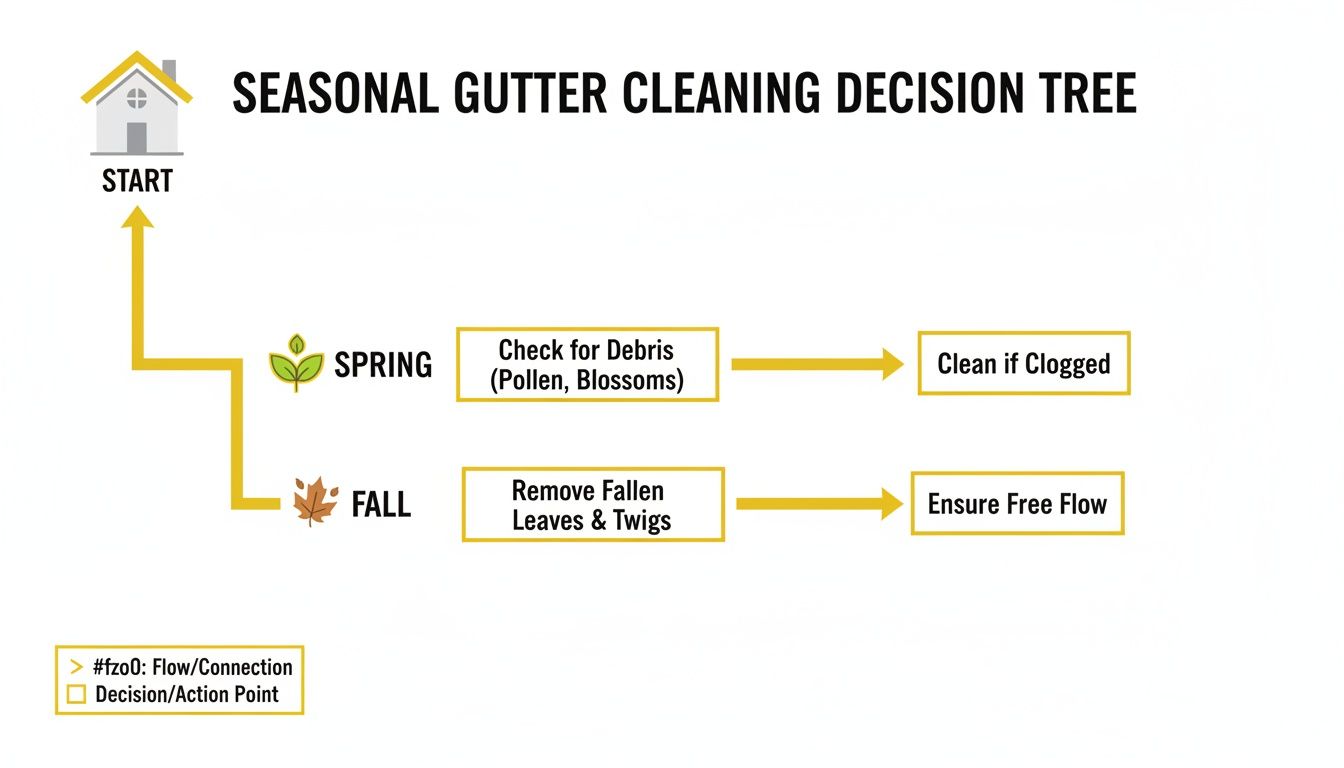
The key takeaway is that spring debris is very different from fall debris, and your cleaning schedule needs to reflect that.
When Storms and Your Roof Collide
Beyond the trees, our infamous Texas weather plays a massive role. A single, intense DFW thunderstorm can wash an entire season's worth of shingle grit, dirt, and small branches right off your roof and into your gutters—all in less than an hour. If your gutters are already a little clogged, that one storm is all it takes to cause a major overflow.
Your home's design factors in, too. A house with a steep roof pitch acts like a slide, sending water and debris rocketing into the gutters way faster than a flatter roof would. This rapid-fire accumulation means you might need to clean your gutters more often than your neighbor with a low-pitch roof, even if you have the exact same trees.
The bottom line is simple: your property is unique. The "twice-a-year" rule is a solid foundation, but observing your own yard's behavior through the seasons is the only way to create a truly effective maintenance plan that protects your home.
Telltale Signs Your Gutters Need Immediate Attention
While sticking to a twice-a-year schedule is a solid baseline, sometimes your house sends out clear distress signals that demand action now. Waiting for your next planned cleaning when problems are already staring you in the face is a bit like ignoring your car's check engine light until the next scheduled oil change—it almost always leads to bigger, more expensive damage down the road.
Learning to spot these warning signs lets you get ahead of the problem. Your home will tell you exactly when its gutters are clogged; you just need to know what to look for.
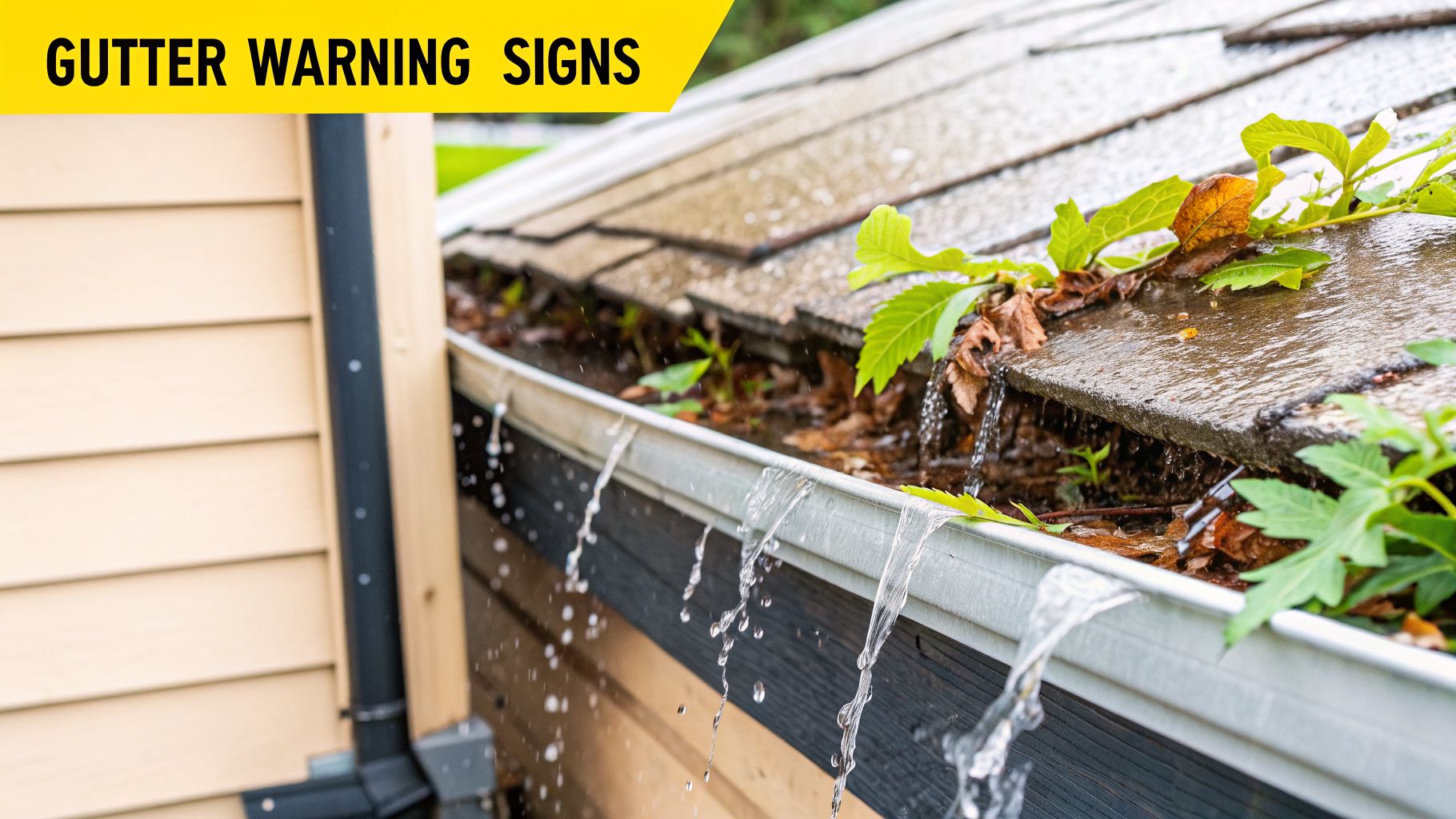
The Obvious Signs of a Clog
Some gutter problems are impossible to miss once you know what they look like. These are the most common red flags that your gutters are full and can't do their job properly.
Water Cascading Over the Sides: During a rainstorm, your gutters should work quietly in the background. If you see a waterfall pouring over the edge, that’s the clearest sign of a major clog. All that overflow soaks the ground right next to your foundation, which can lead to cracks and serious structural issues over time.
Plants Growing in Your Gutters: Notice little green sprouts peeking over the edge? It might seem harmless, but it means your gutters are holding onto enough dirt, decomposed leaves, and moisture to actually grow something. That nutrient-rich sludge is a heavy, dense blockage that has probably been building up for months.
Birds or Pests Making a Home: If you see birds, squirrels, or insects hanging around a specific section of your gutter, they aren't just admiring the view. They’ve likely found a cozy, sheltered spot in a nest of dry leaves and twigs, creating a perfect dam that stops water in its tracks.
These symptoms are your home's way of telling you it's time to get those gutters cleaned out before real damage occurs.
Clogged gutters are more than just an eyesore; they're a direct threat to your home's integrity. The sheer weight of wet debris can cause gutters to sag and pull away from the fascia, while constant overflow can rot the wood and leave ugly stains on your siding.
The More Subtle Clues of Trouble
Other signs are less dramatic but are just as important to catch. Spotting these early can prevent the more obvious, damaging problems from ever happening.
Visible Water Stains or Peeling Paint: Take a close look at the siding or the wooden board (fascia) right below your gutters. See any dark, streaky stains or blistering paint? That's a classic sign of a slow, persistent overflow. This constant moisture is the first step toward wood rot, which can be a costly repair. If you see this, you might also want to read our guide on identifying water damage on your roof and the areas around it.
Little to No Water from Downspouts: After a good rain, check your downspouts. If you only see a weak trickle of water—or nothing at all—it’s a sure sign the blockage is deep inside the downspout itself, creating a complete backup.
Your Simple Ground-Level Gutter Inspection Checklist
You don’t always need to haul out the ladder just to see if your gutters are in trouble. A quick, safe walk around your property can tell you almost everything you need to know about their condition. Think of it as a five-minute health check for your home’s water management system.
Sticking to this simple routine helps you spot problems early, long before they escalate into serious water damage. By regularly checking a few key areas, you’ll know for sure when your system is working perfectly and when it’s time to call in a pro for a deep clean.

What to Look For from the Ground
Find a good vantage point on your lawn where you can see your roofline clearly. Now, take a slow walk around the house, keeping an eye out for these specific visual cues. Each one tells a story about what’s happening up there.
Gaps and Sagging: Look at the horizontal line of your gutters against the roof. See any sections that are sagging in the middle or pulling away from the fascia board? This is a classic sign they’re overloaded with heavy, waterlogged debris like wet leaves and shingle grit. That sheer weight is straining the mounting hardware, and it can eventually fail completely.
Stains on Siding: Check the siding directly below your gutter runs. Notice any dark streaks, peeling paint, or discoloration? These "tiger stripes" are caused by persistent overflows, where water is spilling over the edge instead of flowing to the downspout. It’s a subtle but surefire sign of a blockage.
Ground Erosion: Now look at the ground directly beneath the gutters. Do you see little channels or ditches carved into your mulch, flowerbeds, or soil? This erosion happens when water cascades over the sides in the same spot, rain after rain, pointing to a significant and consistent clog.
A ground-level inspection isn't about diagnosing every issue perfectly. It's about spotting anomalies. If something looks different from last month—a new stain, a slight sag—it warrants a closer look.
Checking Your Downspouts
Your downspouts are the final exit for all that water, making them a critical inspection point. A clog here can back up the entire system, rendering it completely useless.
The next time it rains, take a quick walk outside and see how much water is flowing out of each downspout. If you see just a weak trickle from one while others have a healthy flow, you’ve probably found a deep, internal clog. You should also check the seams of the downspout itself for any leaking water, which signals a blockage is forcing water out through weak points.
Choosing Between DIY and Professional Gutter Cleaning
When it comes to keeping your gutters clean, you’re faced with a classic homeowner dilemma: climb the ladder yourself or call in the professionals? At first glance, the DIY route looks like an easy way to save a few bucks. But when you really dig into what's involved—your time, the right gear, and some serious safety risks—the picture gets a lot more complicated.
A weekend afternoon on a ladder might not sound so bad. But a proper cleaning job is more than just scooping out some leaves. You’ll need a sturdy ladder, good gloves, buckets, a garden hose with a decent spray nozzle, and probably a gutter scoop. If you don't already have all that equipment, the startup cost can quickly add up to what you’d pay for a single professional visit anyway.
The True Cost of a DIY Approach
Honestly, the biggest cost of DIY gutter cleaning isn't money—it's safety. Every year, thousands of homeowners end up in the emergency room from ladder-related falls. One wrong step or an unstable ladder can have life-changing consequences that no amount of savings can justify.
And it's not just falls you have to worry about. Once you're up there, you might run into some unpleasant surprises:
- Pest Encounters: That cozy bed of damp leaves is prime real estate for wasps, rodents, and sometimes even snakes looking for a place to hide.
- Hidden Hazards: You never know what you'll find. Be on the lookout for sharp metal edges on the gutters or unseen rot in the fascia board your ladder is leaning on.
- Physical Strain: This is tough work. It involves a lot of reaching, balancing, and hauling heavy, soggy gunk up and down a ladder.
Deciding whether to tackle a home project yourself is a big decision that goes beyond just the financial aspect. This resource offers a good general framework for thinking through the pros and cons of various home services: DIY or Hire a Pro: What's Right For You.
The Value of Professional Gutter Service
Hiring a team like Moore Construction Co. turns a risky weekend chore into a smart investment in your home's health. Professionals show up with the right safety harnesses, commercial-grade equipment, and the experience to get the job done safely and efficiently.
A professional cleaning is far more than just removing leaves. It’s a comprehensive system check-up that protects your entire home. Technicians not only clear the gutters but also flush the downspouts to ensure there are no deep, hidden clogs causing backups.
That last part is critical. You might be able to clear the horizontal gutters on your own, but if there's a stubborn clog packed deep inside a downspout, the whole system is going to back up and overflow during the next big DFW downpour.
Plus, a trained pro can spot early warning signs of bigger issues you might miss, like loose gutter hangers, rust spots, or water damage staining the fascia. Catching those things early can save you thousands in future repairs. If you want to get a better sense of how the whole system works, you can learn more about professional gutter installation and its components.
To make the decision a little easier, we've broken down the key differences between going it alone and hiring a pro.
Gutter Cleaning Decision Guide DIY vs Professional Service
This table compares the key aspects of cleaning gutters yourself versus hiring a professional service to help homeowners decide which option is best for them.
| Factor | DIY Approach | Professional Service (e.g., Moore Construction Co.) |
|---|---|---|
| Cost | Lower upfront cost (if you own tools). $100 – $250+ to buy equipment. | Higher upfront cost. Typically $150 – $350+ per visit for an average home. |
| Safety | High risk. Ladder falls are a leading cause of home-related injuries. | Low risk. Professionals use proper safety gear, training, and are insured. |
| Time | 3-6 hours for an average-sized home, depending on debris levels. | 1-2 hours. Professionals work efficiently with specialized equipment. |
| Thoroughness | Risk of incomplete cleaning, especially inside downspouts. | Comprehensive cleaning, including flushing downspouts to ensure clear flow. |
| Expertise | Limited to visible debris. May not recognize signs of damage. | Technicians are trained to spot issues like leaks, rust, or improper pitch. |
| Tools | Requires purchasing and storing a ladder, gloves, bucket, and other tools. | All necessary professional-grade tools and equipment are provided. |
| Convenience | Requires you to dedicate a weekend day and get dirty. | Schedule a service and it's done for you. No effort or cleanup required. |
Ultimately, the choice comes down to balancing your budget, your comfort with heights, and how thorough you want the job to be.
While the DIY route can save you some money upfront, the risks are high and you might not get the job done completely. A professional service provides peace of mind, a more effective cleaning, and a valuable inspection that protects your investment in your home.
Protect Your Investment with Professional Maintenance
If this guide makes one thing clear, it’s this: keeping your gutters clean isn't just another chore. It's one of the most important lines of defense for your home's foundation, roof, and siding. When it's time to bring in an expert for this critical task, you need a local partner who truly gets the challenges of Dallas-Fort Worth weather.
At Moore Construction Co., we provide comprehensive gutter cleaning and inspection services all across the DFW area. Our team doesn't just scoop out leaves and call it a day. We’re also looking for those small, hidden issues with your roof, fascia, and soffits before they can snowball into major, expensive headaches.
Knowing how to spot trouble with these parts of your home is key, and you can learn a lot more by checking out our guide to gutter and siding repair.
Don't leave your largest investment to chance. Let us help you get your home ready for whatever Texas weather throws its way. Contact us today for a free, no-obligation inspection and discover the peace of mind that comes with knowing your home is in professional hands. We're here to help keep your home safe, secure, and looking great for years to come.
Common Questions About Gutter Maintenance
Even with a solid game plan, you're bound to have a few questions. We get them all the time from homeowners around DFW, so let's clear up some of the most common ones right now.
Is Cleaning Gutters Just Once a Year Enough?
Honestly, for most of us here in North Texas, cleaning your gutters only once a year is asking for trouble. Our local climate hits us with a one-two punch: heavy pollen and blossom drops in the spring, followed by a massive leaf dump in the fall.
If you skip the spring cleaning, all that gunk turns into a thick, heavy sludge that can easily clog your downspouts—right before our intense summer thunderstorms roll in. And if you neglect the fall cleaning, those wet leaves can freeze solid, creating ice dams that can pry up your shingles and cause serious roof damage. A twice-a-year schedule is the safest bet.
Do Gutter Guards Mean I Never Have to Clean Again?
Gutter guards are a fantastic investment for cutting down on how often you have to clean, but they don't make your gutters maintenance-free. It's best to think of them as a filter, not an impenetrable forcefield.
Over time, smaller debris like shingle grit, seeds, and pesky pine needles will still find their way through. This stuff settles at the bottom and eventually forms that same heavy sludge.
While gutter guards might let you stretch your cleanings from twice a year to once every 1-2 years, you'll still want a professional to get up there, inspect everything, and clear out whatever snuck past the guards.
What’s the Going Rate for Professional Gutter Cleaning in DFW?
The cost for a professional crew in the DFW metroplex really depends on a few things: the size of your home, whether it’s a single-story or a two-story, and just how packed the gutters are.
As a ballpark, you can expect to pay somewhere between $150 and $250 for an average-sized single-story home. For a larger, two-story house, that range usually goes up to $250 to $400. Remember, that price doesn't just save you a risky Saturday on a ladder—it also includes a professional inspection to catch any small issues before they become big headaches.
Your home is your biggest investment, and keeping it protected is our top priority. For thorough, safe, and reliable gutter cleaning, repair, or replacement services in the DFW area, you can trust the experts at Moore Construction Co. Contact us today for a free, no-obligation estimate!


