


When you hear a number like 30 to 50 years, it’s easy to be skeptical. But with James Hardie siding, that’s not just an optimistic guess—it’s a reflection of how this stuff is engineered. Think of it less like simple siding and more like a long-term shield for your home, built to stand up to decades of whatever Texas throws at it.
The Real-World Lifespan of Hardie Board in North Texas
For homeowners here in the Dallas-Fort Worth area, picking siding isn't just about making the house look good. It's a strategic move against our wild weather. Materials like wood can look great for a few years, but our humidity, heat, and surprise hail storms often send them to an early grave, sometimes in as little as 10-20 years due to rot and warping.
That's where Hardie Board really shines. It has become a top choice for protecting homes in our demanding local climate precisely because it doesn't back down. Its impressive lifespan comes from its unique fiber cement composition—a tough blend of cement, sand, and cellulose fibers. This mix is built to resist moisture, pests, and the kind of extreme weather that has DFW homeowners checking the forecast. If you're weighing your options, it's worth exploring the pros and cons of this durable siding material to see the full picture.
Hardie Board Durability at a Glance
To really understand Hardie Board's value, you have to look beyond the 50-year number and see how it performs against the specific challenges we face right here in North Texas. This quick table breaks down what makes it such a reliable choice for our area.
| Durability Factor | Expected Performance | Relevance for Dallas Climate |
|---|---|---|
| Material Lifespan | 30-50+ years | Outlasts multiple paint jobs and often even entire roofing systems. |
| Moisture Resistance | Will not rot, swell, or warp when exposed to humidity or rain. | Absolutely crucial for handling DFW's notorious humidity and heavy spring storms. |
| Impact Resistance | Withstands hail and wind-blown debris far better than vinyl or wood. | A key benefit in a region known for severe and frequent hailstorms. |
| Paint & Finish | Factory-applied ColorPlus™ finish is backed by a 15-year warranty against chipping, peeling, and cracking. | Resists fading from intense UV exposure, keeping your home looking vibrant for years. |
Ultimately, the question isn’t just about how long Hardie board lasts, but how well it lasts. For Dallas-Fort Worth homeowners, its ability to stand firm against local weather extremes makes it a smart, lasting investment in your home’s protection and value, year after year.
What Determines Your Siding's Actual Lifespan
While James Hardie gives you an impressive 30-year warranty right out of the box, the real-world lifespan of Hardie Board can stretch much, much further—often hitting 50 years or more. So what’s the secret? Why does one home's siding look fantastic for decades while a neighbor's shows its age much sooner?
It really comes down to a few key factors working together. Think of it like a high-performance car. The manufacturer guarantees it for a certain number of miles, but how long it actually lasts depends on how well it was put together, the conditions it's driven in, and whether you keep up with the maintenance. Your home's siding is exactly the same.
The Foundation of Durability Is Professional Installation
Honestly, the single most critical factor for a long-lasting Hardie Board installation is the quality of the initial job. You can have the best siding material on the planet, but if it’s installed incorrectly, it’s bound to fail early. Little mistakes like improper fastening, not leaving enough clearance, or sloppy sealing create weak spots. These vulnerabilities are an open invitation for moisture to sneak in behind the boards, and that's where bigger problems start.
A professional, certified installation ensures every single detail is handled according to James Hardie's strict guidelines. This isn't just for show—it's essential for both the siding's performance and keeping your warranty valid.
This includes things like:
- Proper Nailing: Using the right nails in the right spots to stop panels from cracking or getting ripped off by our notorious Texas winds.
- Correct Clearances: Leaving precise gaps between the siding and things like the roof, gutters, and the ground. This simple step prevents water from wicking up into the boards.
- Flawless Sealing: Applying high-quality caulk to create a watertight seal around every window, door, and seam.
Cutting corners during installation is just asking for trouble down the road. A certified installer not only protects your warranty but makes sure your siding is ready to defend your home against the elements from day one.
How Climate and Maintenance Extend Siding Life
Once your Hardie Board is up, its longevity shifts to its environment and how you care for it. Here in Dallas-Fort Worth, our climate throws a unique mix of challenges at a home’s exterior, and siding is on the front lines.
This diagram shows the main forces that Hardie Board is engineered to fight off.
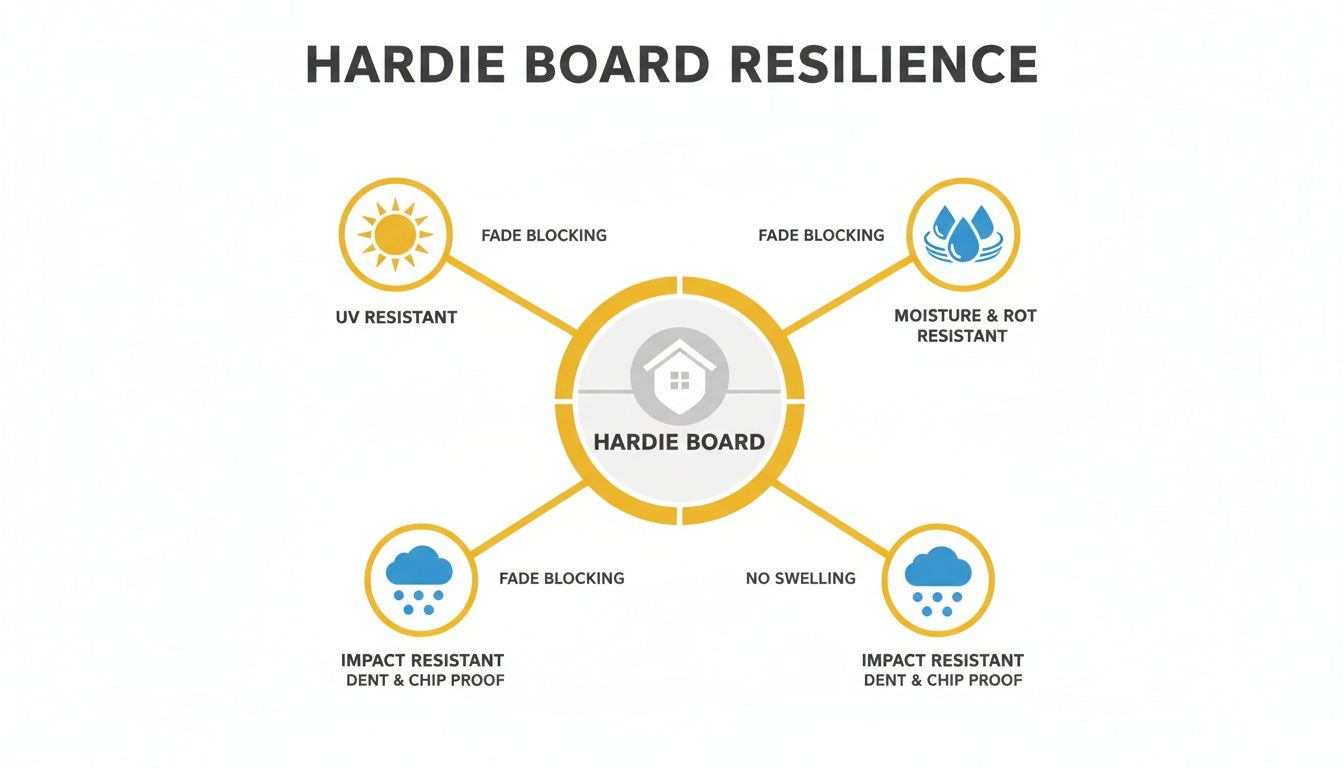
As you can see, the core material is built to be a powerful shield against our relentless sun, humidity, and the occasional hailstorm.
A few key things can shorten or extend your siding’s life:
- UV Exposure: That intense Texas sun is no joke. Over time, it will cause paint to fade and break down. This is why using a top-tier, UV-resistant paint is so important. James Hardie’s ColorPlus™ Technology is a great example—it’s a factory-applied finish that’s baked on for a bond that’s tough to beat. It even comes with its own 15-year warranty against peeling, chipping, and cracking.
- Moisture Management: While the fiber cement itself is resistant to water, the seams and joints between boards are not. Keeping an eye on the caulking is vital to stop water from getting in, especially with our humid air and heavy spring rains.
- Regular Cleaning: You don't need anything fancy. A simple annual wash with a garden hose and a soft brush is usually enough to get rid of the dirt, grime, and mildew that can build up and eat away at the paint finish.
By paying attention to these factors, you can make sure your siding stays looking great and performing perfectly for decades. If you want to dive a bit deeper, you can learn more about why choosing fiber cement siding is such a smart move for long-term home protection.
Cracking the Code on the James Hardie Warranty
When you see a manufacturer’s warranty, what you're really looking at is their promise of performance. It's the baseline of quality you can expect. James Hardie puts their money where their mouth is, backing their fiber cement siding with a 30-year limited, non-prorated warranty—one of the best you'll find anywhere.
But what does that actually mean when the siding is on your house?
Think of it like the warranty on a high-end appliance. It guarantees the core components will be free from defects for a long time. The Hardie warranty does the same, covering manufacturing flaws that could cause the siding to fail. It’s a powerful vote of confidence in just how tough the material is.
Just remember, this warranty isn't a substitute for home maintenance. It’s designed to protect against specific issues like rotting, swelling, or delaminating under normal conditions. This is the crucial point where the official guarantee meets the real-world lifespan of Hardie Board.
What’s Covered vs. What’s Not
The protection you get is solid, but it’s important to know the boundaries. Understanding this is the key to making sure your investment is protected.
Here’s what the warranty has your back on:
- Manufacturing Defects: It covers problems that stem directly from a flaw in the product itself.
- Material Integrity: The warranty promises the siding will stand up to damage from hail and termites.
- Non-Prorated Protection: This is a big one. Unlike warranties that offer less coverage as the years go by, this one protects you just as much in year 29 as it does on day one.
Now, for what it doesn't cover. The warranty won't apply to issues outside of James Hardie's control. This means things like damage from improper installation, not keeping up with basic maintenance (like cleaning your gutters or making sure sprinklers aren't constantly soaking the walls), or physical damage from an accident.
The warranty is the starting line, not the finish line. It sets a minimum expectation for durability, but it's the professional installation and basic upkeep that unlock the siding's potential to last 50 years or even longer.
Why a Pro Installation Isn't Optional
This is, without a doubt, the most important piece of the puzzle. James Hardie has very strict installation guidelines, and if they aren't followed to the letter, you could void your warranty entirely. A certified installer knows exactly how to space, fasten, and seal every single board to create the weather-tight shield your home needs.
Don't just take our word for it. Industry experts agree that when installed correctly, fiber cement siding can last anywhere from 50 to 100 years. Here in the Dallas-Fort Worth area, where some parts of the metroplex can get hit with over 50 hail events a year, you need siding that won't back down. Properly installed Hardie Board can handle impacts from hail up to two inches in diameter—a level of resilience vinyl siding just can't match. To get a better sense of its staying power, you can learn more about fiber cement's exceptional longevity and see how it really performs.
Your Simple Hardie Board Maintenance Checklist
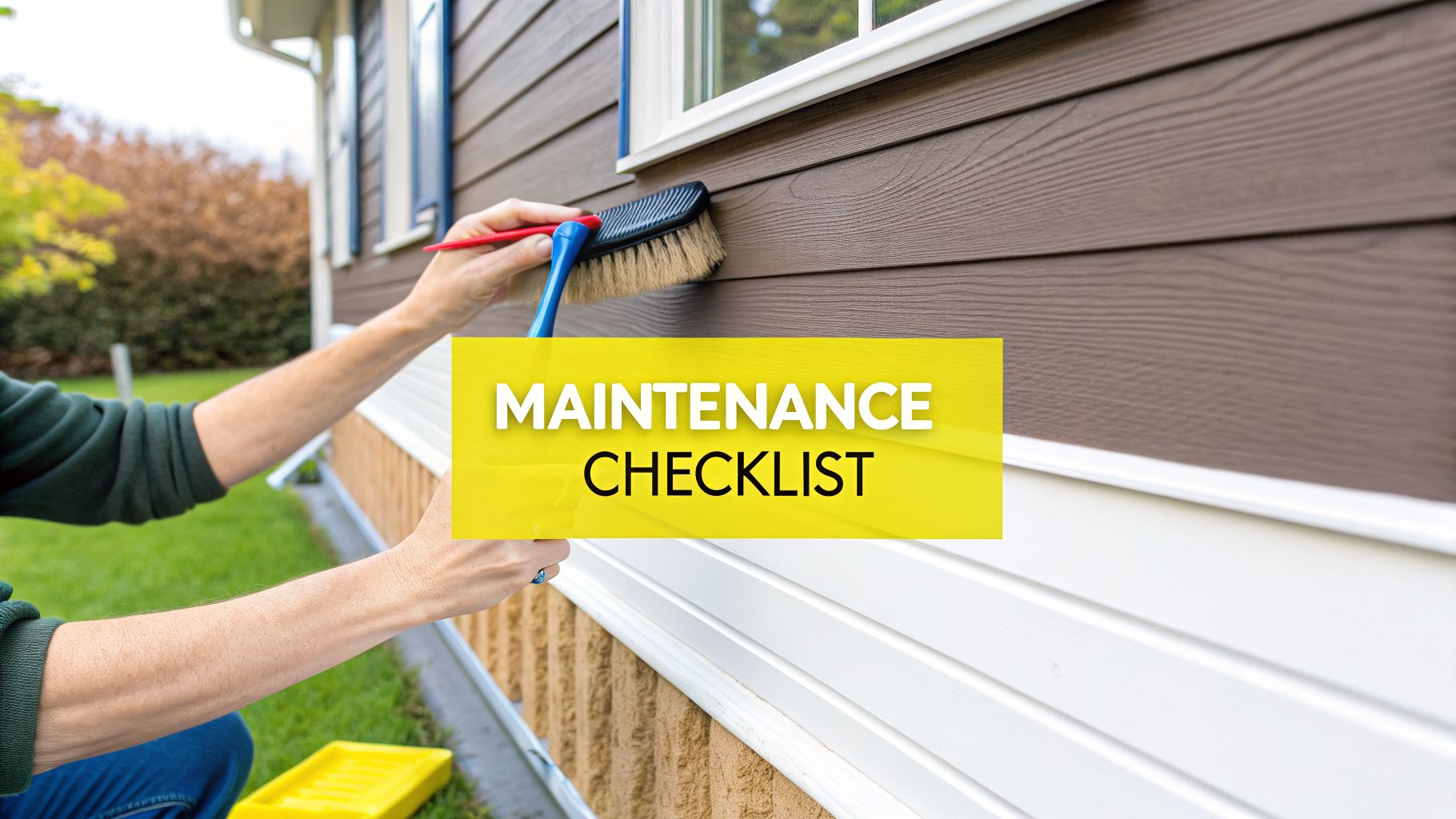
If you want your Hardie Board siding to hit that incredible 50-year mark, all you need is a little bit of care. Think of it like a car—a few simple checks each year go a long way in preventing big problems and keeping it running beautifully for decades. The good news is that Hardie siding needs way less attention than most other materials out there.
The key is being consistent, not intense. A gentle wash and a quick walk-around are usually all it takes to keep your home's exterior looking sharp. This simple checklist breaks down exactly what to do to protect your investment and keep your home looking fantastic year after year.
The Annual Wash Down
One of the easiest things you can do is give your siding a simple cleaning once a year. Over time, Texas dust, pollen, and everyday grime build up, which can dull your paint and give mildew a place to grow.
A low-pressure wash every spring is all it needs. You don’t need a power washer for this—in fact, a high-pressure blast can actually damage the finish and force water where it shouldn't go.
- What to use: Your everyday garden hose with a regular spray nozzle.
- For stubborn spots: A soft-bristled brush (like a car-washing brush) and some mild, non-abrasive soap.
- What to avoid: Harsh chemicals, abrasive cleaners, and high-pressure washing.
This quick wash gets rid of the buildup, brings back the vibrancy of your paint, and gives you a chance to see your home’s exterior up close.
Your goal isn't to blast the siding clean but to gently rinse away the year's accumulation of dirt. This single step can significantly extend the life and beauty of your paint finish.
Seasonal Inspection Points
Besides the annual cleaning, a quick walk around your property twice a year—once in the spring and again in the fall—is a great habit. It helps you catch small issues before they turn into big headaches. You'll want to pay close attention to areas that are most likely to have moisture problems.
Your biannual checklist should include:
Checking the Caulk Lines: Look at the sealant around all your windows, doors, and corner trim. Are there any signs of cracking, shrinking, or pulling away? Worn-out caulk is the number one way for moisture to get in. Reapplying a quality exterior caulk to small gaps is a cheap and easy fix that offers massive protection.
Inspecting Gutters and Downspouts: Make sure your gutters are clean and draining water away from the house. When gutters get clogged, water can spill over and run down your siding, creating constant moisture problems that can lead to damage.
Managing Landscaping: Take a moment to trim back any shrubs, trees, or vines that are touching the siding. This simple step prevents moisture from getting trapped against the boards and stops pests from making a home there. While you're at it, check that your sprinkler heads are pointed away from the walls to keep them from getting soaked all the time.
These small, consistent actions are what really make the difference in how long your Hardie Board lasts. A few hours a year is all it takes to protect your home’s shield for a lifetime.
Warning Signs Your Siding Needs Professional Attention
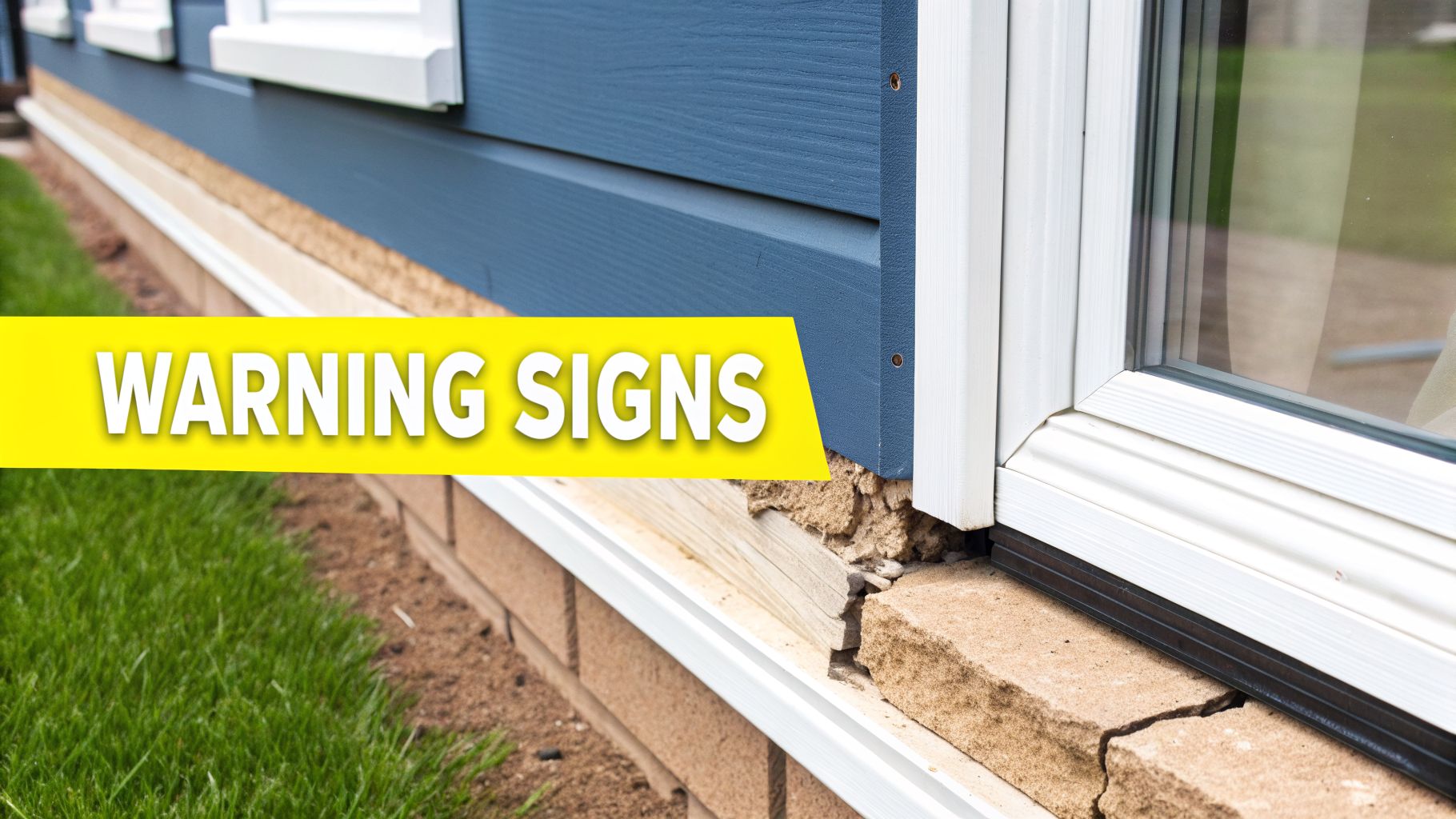
While Hardie Board is incredibly tough, it isn't completely invincible. Over decades of service, even the most durable materials can show signs of wear. Knowing how to spot these distress signals early can be the difference between a minor fix and a major, expensive problem.
Think of it like the check engine light in your car—ignoring it won't make the issue disappear. Paying attention to your siding is key to understanding how long your Hardie Board will last in the real world. Many signs are subtle at first, but they are clear indicators that your home’s protective shield may be compromised.
Visual Cues of Siding Distress
The most obvious warning signs are the ones you can see during a simple walk-around inspection. These visual red flags often point to underlying issues with moisture or structural integrity.
Look for these tell-tale signs:
- Widespread Cracking: A single hairline crack might not be an emergency, but if you're seeing multiple or growing cracks across several boards, it suggests the material is getting brittle or was installed under stress.
- Bubbling or Blistering Paint: This is almost always a sign that water is trapped behind the paint layer and pushing it outward. That moisture can eventually damage the siding board itself.
- Loose or Rattling Panels: If you hear siding rattling on a windy day, the fasteners have likely loosened over time. This compromises the entire siding system, leaving it vulnerable to wind-driven rain.
These issues are more than just cosmetic. They are gateways for water, which can lead to rot in your home’s wooden structure. For more detail on what to look for, our guide on siding repair basics covers everything you need to know.
Less Obvious Indicators of Trouble
Some warning signs aren't on the siding itself but appear in other ways. These clues often signal that your home's exterior is no longer performing as it should.
Watch out for a sudden spike in your heating or cooling bills. If your energy usage climbs without a clear reason, it could mean your siding and the underlying weather barrier are failing to insulate your home effectively.
Another subtle sign is shrinking or cracked caulk. The sealant around windows, doors, and corner trim is a critical defense against moisture. When it fails, it creates a direct path for water to seep behind your siding, potentially causing damage you won't see until it's severe.
As you prepare your home for sale, addressing any exterior issues is crucial for maximizing curb appeal. For a broader perspective on optimizing your home's appearance for potential buyers, you might find this ultimate guide on presenting a house for sale helpful. If you notice any of these signs, it’s time to call in a professional for an inspection.
Trusting Moore Construction Co. With Your Installation
Picking a top-tier product like Hardie Board is a fantastic first step for your home's future. But here’s the thing: even the world's best materials can let you down if they aren't installed with skill and an eye for detail. This is where a great contractor makes all the difference, turning an excellent product into a rock-solid shield for your home.
At Moore Construction Co., we’ve been protecting homes right here in the Dallas-Fort Worth area for over two decades. We know that putting up Hardie Board is so much more than just nailing up panels. It’s about following James Hardie’s tough installation standards to the letter—making sure every seam is tight, every board is fastened just right, and every clearance is perfect.
Your Partner in Home Exterior Excellence
Why are we so strict about following the manufacturer's rules? It all comes down to one crucial thing: protecting your 30-year warranty. A sloppy installation can completely void that powerful guarantee, leaving your entire investment at risk. We aren't just siding installers; we’re specialists who look at your home’s entire exterior.
When you work with a certified installer, you’re not just getting new siding. You’re getting the peace of mind that comes from knowing your home is protected correctly and your warranty is secure for decades to come.
Our know-how goes way beyond siding. We handle roofing, windows, and gutters, making sure every part of your home's exterior works together as a single, unified system to fend off that harsh Texas weather. This complete approach ensures every component works with the others, boosting both your home's protection and its curb appeal. A great place to start is to learn more about our professional siding installation services and see how we operate.
Ready to see how a professional job can lock in your home's value for the next 50 years? Let's schedule a free, no-pressure inspection with our team today.
Still Have a Few Questions About Hardie Board?
We get it. Investing in new siding is a big decision, and even with all the details, you probably have a few more questions. Let's tackle some of the most common things we hear from Dallas-Fort Worth homeowners about how Hardie Board actually holds up in the real world.
How Often Does Hardie Board Really Need to Be Repainted?
This is a big one, and the answer comes in two parts.
If you go with James Hardie’s ColorPlus™ Technology, you're getting a factory-applied, baked-on finish that’s incredibly tough. It comes with a 15-year warranty that covers peeling, cracking, and chipping. Honestly, here in the Texas sun, we see that finish looking fantastic for at least that long, and often quite a bit longer.
Now, if you opt for primed Hardie Board that gets painted after we install it, the lifespan of the paint job really comes down to the quality of the paint and the prep work. A professional job with top-tier exterior paint should easily give you around 10 years before you even need to think about a refresh.
Is Hardie Board Truly Worth the Higher Upfront Cost Compared to Vinyl?
It’s true that vinyl siding is cheaper on day one. But that initial savings can be a bit misleading. Vinyl siding typically only lasts 20 to 40 years, which means over the 50+ year lifespan of your home, you're almost guaranteed to replace it at least once, maybe even twice. A single, properly installed Hardie Board system can last that entire time.
When you factor in the total cost of ownership—including the inevitable replacements and frequent repairs from hail damage—Hardie Board almost always comes out as the smarter, more economical choice for DFW homeowners in the long run.
How Does Hardie Siding Handle Our Crazy Texas Hailstorms?
This is where Hardie Board truly shines and proves its worth in North Texas. Vinyl can easily get cracked, punctured, or even shattered by a decent hailstorm. Hardie Board, on the other hand, is built to take a beating. It’s engineered to resist impacts from hail up to two inches in diameter.
That’s a huge deal in a place known for powerful spring and summer storms. This incredible impact resistance doesn't just keep your house looking good; it prevents the tiny cracks and holes that let moisture seep in, saving you from much bigger, hidden repair bills down the road.
Your home's exterior is its first and most important line of defense. Make sure it's built to last with an expert installation from Moore Construction Co. Get your free, no-obligation siding estimate today!


