


Choosing new siding for your home is a big deal. When you start looking at options, you'll hear a lot about the fiber cement siding pros and cons. It’s known for being incredibly tough against weather, fire, and pests, but that top-tier performance comes with a higher price tag and requires a special kind of installation. Let's walk through it so you can decide if it's the right long-term investment for your home.
Is Fiber Cement Siding The Right Choice For Your Home
As you dive deeper into siding materials, fiber cement always stands out as a premium choice. But is it the best fit for your budget, your home’s look, and what you hope to get out of it for years to come? The answer really comes down to what you value most. It helps to think of it less like a simple purchase and more like buying decades of peace of mind.
So, what is it exactly? This material is an engineered composite, made by blending cement, sand, and cellulose fibers. The result is a uniquely resilient armor for your home. Unlike vinyl siding, it won’t warp or melt under the intense Texas sun. And unlike wood, it's completely unappealing to termites and will never rot.
Weighing The Key Factors
Making the call to go with fiber cement is all about balancing the immediate cost against the future payoff. While you’ll definitely invest more upfront compared to options like vinyl, its incredible longevity often makes it the more cost-effective choice over the life of your home. A properly installed fiber cement system can easily last 30 to 50 years, blowing many other materials out of the water.
Here are the core trade-offs you need to consider:
- Durability vs. Cost: You're paying a premium upfront for elite protection against hail, fire, and insects.
- Aesthetics vs. Installation: It delivers an unmatched, beautiful look that can mimic real wood without all the headaches, but it’s heavy and needs a certified crew to install it correctly.
- Maintenance: People call it low-maintenance, not no-maintenance. It holds paint extremely well, but you’ll still need to plan on fresh caulk and a new coat of paint every 10-15 years to keep it looking and performing its best.
Choosing fiber cement means you’re putting long-term performance and protection first. It's a true investment in your home's structural health, its resale value, and the safety of your family from fire and severe weather.
To make things a little easier, we've put together a simple table breaking down the fiber cement siding pros and cons. This quick look highlights the main advantages and drawbacks to help you see if this premium product lines up with what you want for your home.
Quick Look At Fiber Cement Siding Pros And Cons
| Key Pros (The Advantages) | Key Cons (The Drawbacks) |
|---|---|
| Superior durability and impact resistance | Higher initial material and labor costs |
| Non-combustible for excellent fire safety | Heavy material requires professional installation |
| Resists pests, rot, and fungal decay | Lower insulation value on its own |
| Versatile aesthetics can mimic wood or stone | Requires repainting every 10-15 years |
Ultimately, weighing these points will tell you if fiber cement is the right hero for your home's exterior.
What Exactly Is Fiber Cement Siding?
Before we dive into all the pros and cons, it helps to know what fiber cement siding actually is. Think of it less like a single material and more like a carefully crafted recipe for the ultimate home exterior. It’s not a natural wood plank, and it’s definitely not a simple plastic like vinyl. Instead, it’s a composite—a tough, engineered blend of a few key ingredients.
At its heart, fiber cement siding is made from four simple, yet powerful, components:
- Portland Cement: This is the backbone of the material, giving it incredible hardness and strength. It’s the same stuff used in concrete for bridges and foundations, so you know it’s tough.
- Sand (or Fly Ash): Finely ground sand or recycled fly ash acts as a filler. This adds mass and stability, helping the siding stand up to weathering and adding to its overall durability.
- Water: Water is the essential binding agent. It dissolves the cement and activates its hardening process, which allows the mix to be molded into siding planks and panels.
- Cellulose Fibers: These are small, reinforced wood pulp fibers woven throughout the mix. This is the secret sauce that gives fiber cement its flexibility, keeping the boards from getting brittle and cracking under impact.
When you bring all these together, you get a material with the rock-solid durability of cement but the resilience and workability that the fibers provide.
From Raw Mix To Rugged Siding
The manufacturing process is what really transforms this mixture into a high-performance siding. After the ingredients are blended into a slurry, the mix gets pressed into sheets and formed into whatever siding style is needed—from traditional lap siding to modern panels or shingles.
But the real magic happens in the curing stage. The siding goes through a process called autoclaving, where it’s basically baked under intense heat and high pressure. This triggers a chemical reaction that bonds every ingredient together at a molecular level.
The autoclaving process is what truly sets fiber cement apart. It creates an incredibly dense, stable material that’s highly resistant to moisture. This is why fiber cement won't swell, warp, or rot the way wood does. It’s a huge step up from just letting cement air-dry.
Why Its Composition Matters
Understanding this recipe and manufacturing process really explains how fiber cement performs in the real world. That cement and sand content is exactly why fiber cement is completely non-combustible and why pests like termites and woodpeckers want nothing to do with it. They simply can’t eat or chew through it.
The cellulose fibers are why it can handle a hailstorm that would leave dents all over aluminum siding or crack vinyl. And that high-pressure curing process is why it holds paint so well and doesn't expand and contract dramatically with temperature swings, which is a common point of failure for other materials.
This engineered toughness also accounts for some of its challenges, like its heavy weight and the need for specialized tools and professional installation. In short, the very source of its legendary durability is also why it’s considered a premium product that needs an expert’s touch.
The Clear Advantages Of Fiber Cement Siding
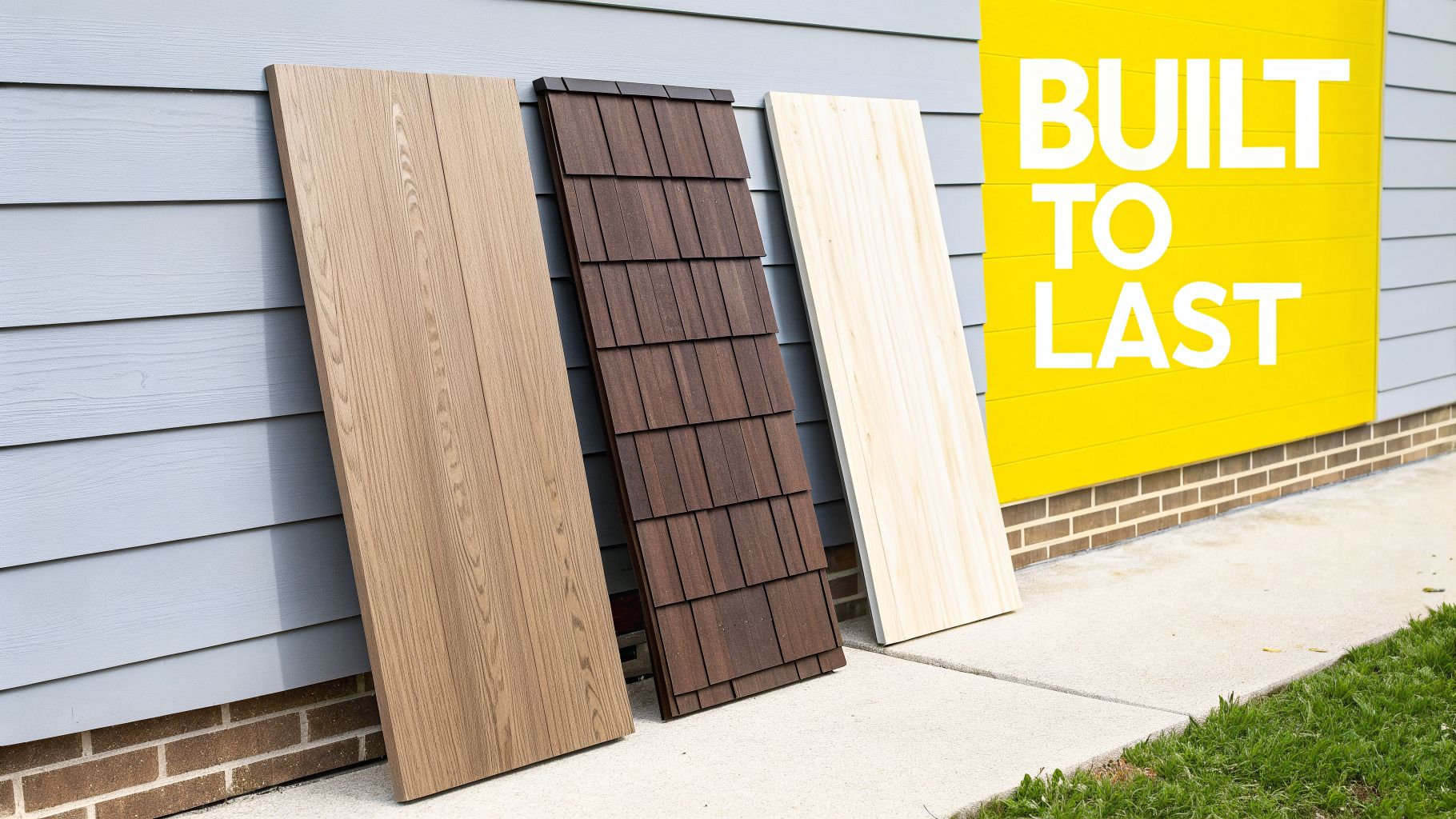
When you're weighing your siding options, the advantages of fiber cement quickly stand out. This isn't just about making your house look good; it's about wrapping it in a durable, long-lasting shield that adds real value and peace of mind for decades.
Let's look at the clear reasons so many homeowners right here in Dallas-Fort Worth are choosing this premium material for their homes.
Unmatched Durability And Resilience
The number one reason people choose fiber cement is simple: it’s incredibly tough. Think of it as armor for your house. Because of its dense, cement-based makeup, it shrugs off the kind of harsh conditions that can wreck other materials.
Here’s how that toughness plays out in the real world:
- Impact Resistance: In North Texas, hail is a real concern. While vinyl can get punctured and aluminum can dent, fiber cement is built to take a hit from hail, flying debris, and all the little bumps of daily life.
- Weatherproof Performance: From a blistering Texas summer to a sudden freeze, fiber cement stays put. It won't warp or buckle under the intense sun like vinyl often does. It also handles the expansion and contraction from temperature swings without failing.
- Rot And Pest Proof: Termites, carpenter ants, and woodpeckers just aren't interested. The mix of cement, sand, and cellulose fibers is inedible to pests and impenetrable for birds. It also can't rot, mold, or decay, no matter how much rain we get.
The best part about this durability is how long it lasts. When you go with fiber cement, you’re often making a one-and-done decision for your home’s exterior. A professional installation can easily last 30 to 50 years or more. For a closer look at its lifespan, you might want to read our guide on how long Hardie Board lasts.
Superior Fire Protection
Every homeowner puts safety first, and this is where fiber cement really shines. It’s a non-combustible material. That means it won’t ignite when hit with a direct flame, and it won’t add fuel to a fire.
Most fiber cement products have a Class A fire rating, which is the highest possible rating for building materials. In the awful event of a house fire, this siding won't contribute to the spread of flames. That can give your family precious extra time to get out safely and can help limit the damage to your home's structure. Some insurance companies even offer a discount for homes with fiber cement siding because of this.
Exceptional Aesthetic Versatility
One of the best things about fiber cement is that you don't have to trade beauty for strength. This material can be made to perfectly mimic just about any other siding style, but without any of the usual weaknesses.
You can get almost any look you're after:
- Classic Wood Look: Get the timeless, warm look of cedar planks, complete with realistic wood grain, but never worry about termites or rot.
- Modern Panels: For a clean, contemporary look, you can use large, smooth panels to create a sleek, minimalist finish.
- Rustic Shingles: Capture that charming Cape Cod or rustic style with siding that looks just like staggered or straight-edge shingles.
This flexibility means fiber cement is a great choice even if you have a strict HOA. It also holds paint incredibly well—way longer than wood does. Many brands also come with pre-finished, baked-on color for maximum fade resistance and even less maintenance down the road. Your home won't just be protected; it will keep its curb appeal for years.
The Honest Drawbacks Of Fiber Cement Siding
While the benefits of fiber cement are impressive, we believe in giving our customers the full picture. A smart decision means looking at both sides of the coin, and for most homeowners, the conversation about drawbacks starts with the price tag.
Let's be upfront—fiber cement siding has a higher upfront cost than many common materials, especially vinyl. The higher price isn't just for the siding planks themselves; it reflects the premium, heavy-duty nature of the material and the skilled, labor-intensive work needed to install it perfectly.
Think of it this way: you can buy a standard family sedan or a rugged, heavy-duty truck. Both will get you down the road, but the truck is engineered with tougher parts to handle demanding jobs. That superior capability comes at a higher price, and the same idea applies here. You're investing in a product built for long-term, superior performance.
A Complex and Demanding Installation
A big reason for the higher cost is the installation itself. We'll be the first to tell you that fiber cement is absolutely not a weekend DIY project. Trying to cut corners with an inexperienced crew is a recipe for very expensive problems down the line.
This material is heavy and surprisingly brittle before it's secured to the wall. A single 12-foot plank can weigh over 25 pounds, making it a two-person job just to handle safely. On top of that, cutting fiber cement generates fine silica dust, which requires specialized saws with dust collection and proper safety gear for the crew—not the kind of tools you find in the average garage.
The installation has to be incredibly precise. Every board must be fastened with specific corrosion-resistant nails and spaced perfectly to allow for natural expansion and contraction. All the seams and gaps need to be meticulously sealed with high-quality caulk to create a bulletproof barrier against moisture.
Improper installation is the number one cause of fiber cement siding failure. Even a tiny mistake, like driving a nail too deep or missing a small gap in the caulk, can let water in. That leads to moisture damage and rot, and it will void the manufacturer’s warranty. This is exactly why hiring a certified, experienced contractor isn't just a recommendation—it's essential.
It’s Low Maintenance, Not No Maintenance
There's a common myth that fiber cement is a "set it and forget it" siding. While it's definitely low-maintenance, it isn't "no-maintenance." To make sure it protects your home and looks great for its full 30-to-50-year lifespan, you’ll need to give it a little attention over the years.
Here’s what that looks like in practice:
- Caulking Checks: The caulked joints are your siding's first line of defense. It's a good idea to inspect them every few years for any signs of cracking or pulling away and touch them up to maintain that watertight seal.
- Routine Cleaning: A simple wash-down with a garden hose and a soft brush once or twice a year is usually all it takes to clear off dirt and grime and keep your home looking its best.
- Eventual Repainting: Fiber cement holds paint incredibly well, but nothing lasts forever. Depending on the quality of paint used and how much direct sun your home gets, you should plan on repainting every 10 to 15 years.
This is far less work than maintaining wood siding, but it's an important part of the long-term picture. Being aware of these drawbacks is a key part of the fiber cement siding pros and cons discussion and helps ensure you have realistic expectations for this fantastic product.
Fiber Cement Siding Versus Other Popular Options
It's one thing to know the good and the bad about fiber cement siding, but the real "aha" moment comes when you see how it stacks up against its main rivals: vinyl and wood. For any homeowner in the Dallas-Fort Worth area, this isn't just about looks. It's about choosing a shield for your home that can handle our intense summer heat, pop-up hailstorms, and all the critters that want to move in.
When you put these three materials in a head-to-head comparison, you start to see where your money is really going. Fiber cement carves out a unique space for itself, taking the low-maintenance ease of vinyl and pairing it with the classic, high-end look of wood—all while bringing a level of toughness that neither of the others can really touch.
Fiber Cement Versus Vinyl Siding
The most common matchup homeowners consider is fiber cement against vinyl. Let's be honest, the biggest draw for vinyl is usually its low upfront cost. Plus, since the color is baked right in, you don't have to worry about painting it, which sounds great on paper. However, that initial savings comes with some serious compromises, especially in a tough climate like North Texas.
Vinyl can get brittle in a cold snap and has a nasty habit of warping or even melting under the constant, direct sun we get here. It’s also prone to cracking from hail or an errant baseball, leaving you with damage that forces you to replace an entire panel. For a much deeper dive, you can see our full breakdown in our James Hardie vs. vinyl siding comparison.
While vinyl often wins on the initial price tag, fiber cement is the clear winner for long-term performance and grit. Its ability to shrug off impacts and stay stable in extreme temperatures makes it a much more dependable investment for protecting your home for decades.
Fiber Cement Versus Wood Siding
On the other side of the coin, you have traditional wood siding. There's no denying the authentic, timeless beauty of real wood, and that’s why so many people still love the look. The catch? That beauty demands a lot from your wallet and your weekend, both in the initial cost and the constant upkeep needed to keep it from failing.
Wood is a natural target for all the problems that fiber cement was designed from the ground up to solve:
- Pest Damage: Termites, carpenter ants, and woodpeckers see wood siding as an open invitation, leading to damage that can go way beyond surface-level.
- Moisture Issues: If you fall behind on sealing and painting, wood acts like a sponge. It soaks up moisture, which quickly leads to rot, warping, and ugly fungal growth.
- Fire Risk: Wood is naturally combustible. It’s a major safety concern that fiber cement, a non-combustible material, simply eliminates.
This is where fiber cement gives you the best of both worlds. It can be manufactured to perfectly recreate the deep, rich grain and textures of wood, giving you that premium look without any of the headaches. You get the curb appeal you want with the peace of mind you need.
Siding Comparison Fiber Cement Vs Vinyl Vs Wood
Seeing the key differences laid out side-by-side can make your decision a whole lot clearer. This table breaks down how each material performs on the factors that matter most to DFW homeowners. While it’s always smart to consider the full landscape of other popular siding solutions, this comparison zeroes in on the three main players.
| Feature | Fiber Cement Siding | Vinyl Siding | Wood Siding |
|---|---|---|---|
| Durability | Excellent; resists hail, heat, and pests | Fair; can crack, warp, or melt | Poor; susceptible to rot, pests, and fire |
| Upfront Cost | High | Low | High |
| Maintenance | Low; requires repainting every 10-15 years | Very Low; requires occasional washing | High; requires frequent painting/staining |
| Aesthetics | Excellent; mimics wood, stone, or modern panels | Good; can look plasticky, limited textures | Excellent; authentic, classic appearance |
| Lifespan | 30-50+ years | 20-40 years | 20-40 years (with high maintenance) |
| Fire Resistance | Excellent (non-combustible) | Poor (melts and burns) | Poor (combustible) |
At the end of the day, vinyl is the budget-friendly choice and wood offers that unmatched natural charm, but fiber cement truly stands apart as the smarter long-term investment. It brings together a winning mix of durability, beautiful design flexibility, and low-maintenance living that is perfectly suited for the challenges of owning a home in Texas.
Planning Your Fiber Cement Siding Investment
Okay, you’ve done the research on fiber cement siding, and it’s probably looking like a pretty strong contender for your home. Now it’s time to move past the "what if" and get into the "how-to." Deciding on a material is one thing, but making sure it’s the right long-term investment for your goals—and finding the right team to install it—is just as important.
This isn’t like buying a new appliance; it’s a major upgrade that protects your home and boosts its value for decades. Before you pull the trigger, let's do a quick final check to make sure fiber cement is truly the best path for you.
Your Final Decision Checklist
Go through these questions. If you’re nodding your head "yes" to most of them, then you're definitely on the right track.
- Is getting the toughest siding available my number one goal? Are you looking for something that can handle Texas hail, high winds, and blistering sun without cracking or warping?
- Am I willing to invest more upfront for better long-term value? Is your budget ready for a higher initial cost in exchange for a siding that lasts longer and needs fewer repairs down the road?
- Is protection from fire and pests a big deal for me? Do you want the peace of mind that comes with a siding that won’t burn and is completely unappetizing to termites and woodpeckers?
- Do I want the classic look of wood without all the work? Are you after that premium, high-end appearance but don't want to deal with the constant scraping, painting, and sealing that wood requires?
This chart gives you a quick visual of how fiber cement stacks up against the other common choices, really highlighting where it shines.
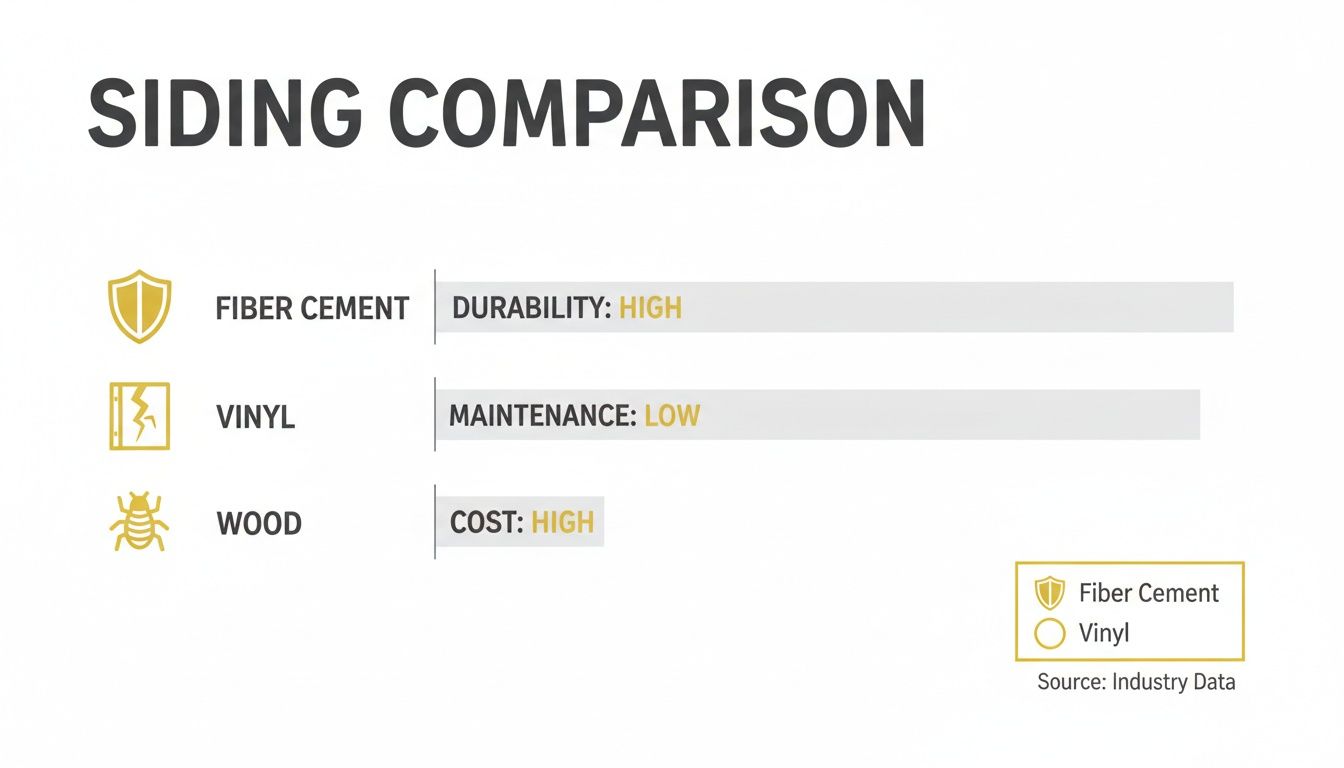
As you can see, fiber cement is the clear winner for all-around protection. Vinyl just can't take the heat (or the hail), and wood will always be a target for pests and rot.
Choosing Your Installation Partner
If you’ve made up your mind, the next step is absolutely critical: picking your installer. The incredible durability you’re paying for with fiber cement is only achieved when it’s installed perfectly. An inexperienced crew can easily turn this premium material into a very expensive problem.
The quality of your installation contractor is just as important as the quality of the siding material itself. A professional installation protects your warranty, prevents moisture issues, and ensures your siding performs for its full 30- to 50-year lifespan.
You need to find a contractor with a proven track record and the right certifications for this specific material. A good installer will also talk to you about long-term care; for example, when it's time to repaint your siding years from now, proper prep work like pressure washing your house before painting is essential. We cover the specifics of what a pro installation looks like in our detailed James Hardie siding installation guide.
Here at Moore Construction Co., we believe in transparent quotes and certified workmanship to make sure your home gets the protection it deserves. When you’re ready, contact us for a free, no-obligation estimate and we’ll help you start your project with confidence.
Frequently Asked Questions About Fiber Cement Siding
Even with all the information out there, you probably still have a few questions rolling around in your head before making a final decision. That’s completely normal.
We get these questions all the time from homeowners right here in DFW, so let's tackle them head-on.
How Long Does Fiber Cement Siding Really Last In Texas?
This is a big one, especially with our Texas sun and the surprise hailstorms we get. The great news is that when it's installed correctly by a certified team, you can expect fiber cement siding to last an impressive 30 to 50 years.
Its unique blend of materials stands up to the intense UV rays that bake and warp vinyl, and it won't fall victim to the rot that moisture brings to wood. It’s built to stay strong for decades.
Can You Paint Fiber Cement Siding?
Absolutely, and that’s one of its best perks. Fiber cement holds onto a paint job incredibly well—often two to three times longer than you'd see with wood siding.
You have two main paths. You can get it pre-finished from the factory with a baked-on color, which offers maximum durability. Or, you can have it painted a completely custom color right after we install it. Down the road, usually after about 10 to 15 years, it'll be ready for a fresh coat to keep it looking sharp and well-protected.
Pro Tip: We generally find that choosing a pre-finished color from the manufacturer gives you the most durable, fade-resistant finish. The controlled factory process creates a harder, more uniform coating than what’s possible to achieve on-site.
How Does It Impact My Home's Resale Value?
Think of fiber cement siding as a smart investment in your home's future. It consistently ranks as one of the home improvement projects with the highest return on investment.
The premium, high-end look gives your curb appeal a massive boost. Plus, today's homebuyers are savvy; they recognize quality and appreciate features like durability, fire resistance, and low maintenance. It simply makes your home a more attractive, valuable asset on the market.
Is James Hardie The Only Brand Available?
While James Hardie is definitely the biggest name in the business and an industry leader, they aren't the only ones making quality fiber cement. There are other reputable manufacturers out there.
That said, we find that James Hardie's huge range of products, solid warranties, and a long track record of performance in our climate make it the top choice for most of our projects and the homeowners we work with.
Ready to see if a durable, beautiful fiber cement exterior is right for your DFW home? The expert team at Moore Construction Co. provides certified installation of premium siding products designed to last. Contact us today for a free, no-obligation estimate and home assessment.


