


Typing "fence installation near me" into a search bar is often the first thing DFW homeowners do when they decide they need more security, privacy, or just a better-looking yard. A new fence does more than just mark a property line; it’s the frame for your home, protecting your family and boosting its value. We get it, and at Moore Construction Co., we've put together this guide to walk you through everything you need to know for your Dallas-Fort Worth fencing project.
Why a New Fence Is a Smart DFW Investment
A professionally installed fence is one of the best upgrades you can make to your home. It delivers immediate returns you can see and feel every day. Think of it as a workhorse for your property—it handles multiple jobs at once, from improving your lifestyle to adding real financial value. In a hot market like Dallas-Fort Worth, those benefits truly matter.
Key Benefits of Professional Installation
For homeowners in the DFW area, a new fence isn't just about looks. It’s about creating a space that’s more functional, secure, and enjoyable for your family.
- Enhanced Security and Privacy: A well-built fence is the first line of defense against intruders. It also turns your yard into a private sanctuary, letting your family relax without feeling like you're on display for the whole neighborhood.
- Increased Curb Appeal and Home Value: The right fence can completely change your home's first impression. This is a highly desirable feature for potential buyers and often provides an excellent return on your investment.
- Safety for Children and Pets: Nothing beats the peace of mind that comes with an enclosed yard. It gives kids and pets a safe space to run and play without you having to worry about them wandering off into the street.
- Clear Property Line Definition: Having a fence installed professionally along your surveyed property line is the best way to prevent future disputes with neighbors. It clearly and officially marks where your land begins and ends.
A fence does more than mark a boundary. It communicates something about your home before anyone walks through the door, adding a layer of professionalism and care that reflects on the entire property.
The Growing Demand for Quality Fencing
The desire for these benefits is growing everywhere. The global fencing market is booming, hitting $36.46 billion in 2025 and expected to jump to $38.43 billion in 2026. That’s driven by a steady 5.4% compound annual growth rate.
This demand is all about the need for better perimeter security, especially in residential areas. With North America leading the market, homeowners like you are investing more in strong, low-maintenance materials that will last for years. You can dig deeper into the numbers in this full fencing market analysis.
Choosing The Right Fence Material For The Texas Climate
Picking the right material for your fence in the Dallas-Fort Worth area is a big decision. Our weather isn't exactly gentle—the intense Texas sun, heavy humidity, and the occasional severe storm put a lot of stress on any outdoor structure. What you choose will define not just how your fence looks, but how much of your time and money you’ll spend on it for years to come.
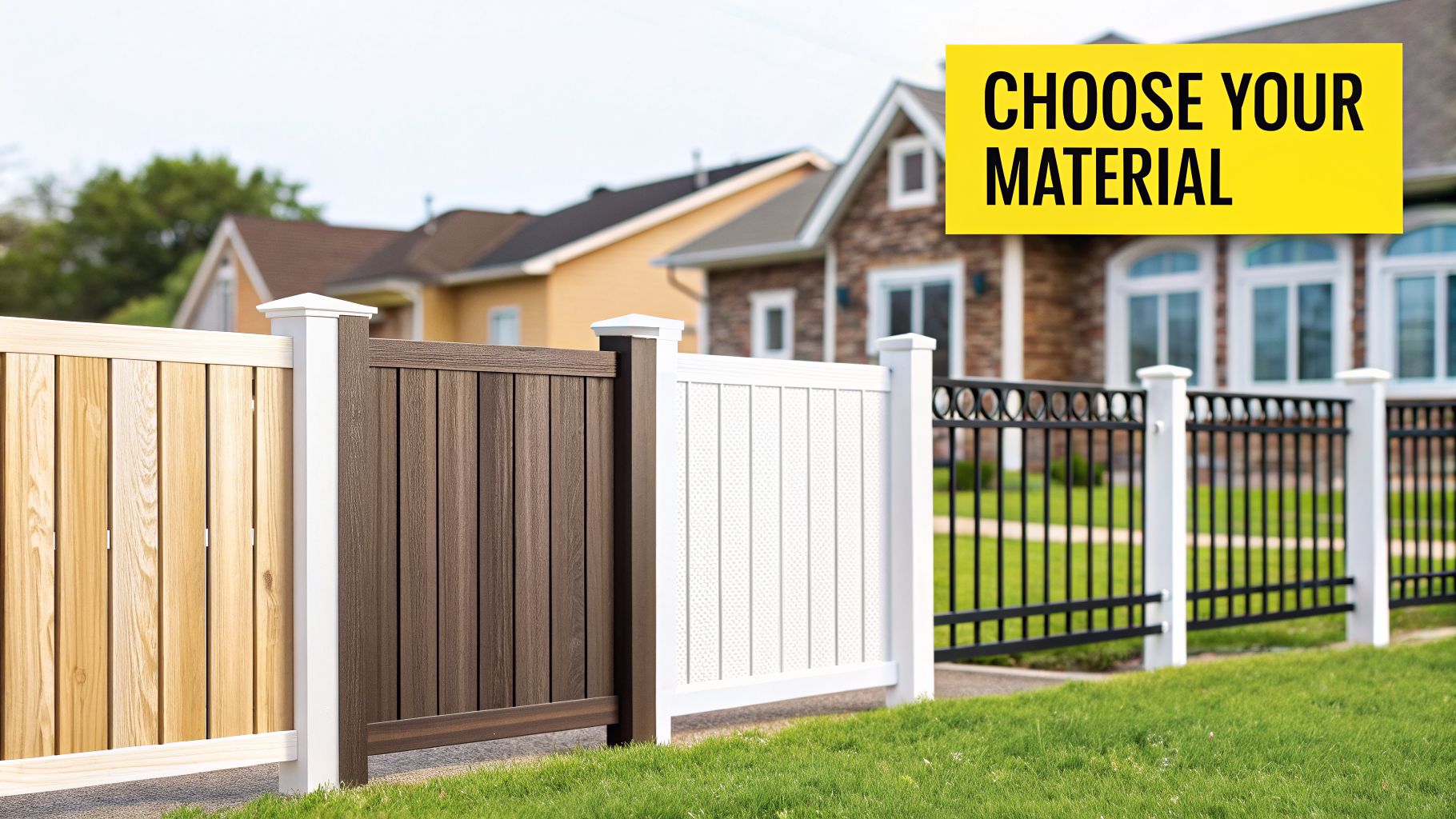
When you're looking for "fence installation near me," it's easy to get overwhelmed. Some materials give you that classic look but come with a to-do list, while others are all about modern, low-maintenance living. Let's walk through the most popular options we install for DFW homeowners so you can make a choice you feel good about.
Wood Fencing: The Timeless Texas Classic
There's a reason wood, especially Western Red Cedar, is still the go-to for so many Texas homes. It has a natural beauty and warmth that's hard to beat. Cedar is a fantastic fit for the DFW climate because it contains natural oils that help it resist rot, decay, and insects, standing up well to our humid summers.
Of course, a wood fence does ask for a little care in return. That beautiful wood color can turn a dull, brittle gray under our relentless sun if it isn't protected.
- Staining and Sealing: You’ll want to plan on re-staining or sealing your wood fence every 2-3 years. This is key to protecting it from UV rays and moisture, preserving its rich color and strength.
- Cost: While wood is often the most budget-friendly choice upfront, it's smart to think about the long-term cost of maintenance supplies and time.
Vinyl Fencing: The Low-Maintenance Champion
If you'd rather spend your weekends enjoying your yard than working on it, a vinyl fence might be exactly what you're looking for. It's built to handle our weather without needing the regular upkeep that wood demands. Vinyl won't rot, warp, or become a meal for pests.
Better yet, the color runs all the way through the material, so everyday scratches and scuffs are much less noticeable.
A simple rinse with a garden hose is usually all it takes to keep it looking fresh and clean. While the initial investment for vinyl can be more than wood, many busy DFW families find the savings in time and maintenance costs make it the right choice for the long run.
Metal Fencing: Strength And Elegance
For homeowners who put a premium on security and a more open, refined look, nothing beats metal. Your two main options here are typically aluminum and wrought iron.
Aluminum is a great all-around choice. It's lightweight, completely rust-proof, and looks fantastic around pools or as a decorative border for your property.
Wrought iron, on the other hand, is the heavyweight champion of fencing. It’s unmatched for strength and security, giving your home a stately, traditional feel. Both are incredibly durable, though iron may need a little touch-up paint now and then to prevent rust if the coating gets scratched.
To give you a clearer picture, we've put together a quick comparison of these popular materials.
Fence Material Comparison for DFW Homeowners
Here's a side-by-side look at how these materials stack up based on the factors that matter most to Dallas-Fort Worth homeowners.
| Material | Typical Cost (Per Foot) | Durability & Lifespan | Maintenance Level | Best For |
|---|---|---|---|---|
| Wood (Cedar) | $20 – $40 | 15-20 years | High (Needs staining every 2-3 years) | Classic privacy, natural look, and initial budget. |
| Vinyl (PVC) | $25 – $50 | 30+ years | Very Low (Occasional washing) | Busy homeowners wanting privacy with minimal upkeep. |
| Aluminum | $30 – $60 | 50+ years | None (Rust-proof) | Pool safety, decorative boundaries, and modern style. |
| Wrought Iron | $35 – $65+ | 60+ years | Low (Check for scratches, touch up paint) | Maximum security, traditional elegance, and durability. |
Ultimately, the best fence is one that fits your home's style, your budget, and the amount of maintenance you're willing to do. For an even deeper look at all the pros and cons, check out our guide on the best fence material to enhance your property.
Understanding Fence Installation Costs in DFW
When you start looking for fence installation in the DFW area, one of the first questions you’ll have is about the price. It's tempting to look for a single number, but the final cost is really a sum of its parts. Each piece of the project—from the materials to your property's unique layout—adds to the total.
Getting a handle on these components is the best way to set a realistic budget and know what to expect. There's no magic formula; a good contractor will walk you through exactly how they arrived at their number, so you know where every penny is going.
Primary Cost Factors
Think of these as the "big three" – the main drivers that will have the most significant impact on your fence installation quote.
- Linear Footage: This is simply the total length of your new fence. It’s the most fundamental part of the estimate. The more fence you need, the more material and labor it will take. An average backyard in DFW might require 150-200 linear feet, but every yard is different.
- Fence Height: A standard 6-foot privacy fence is the most common choice, but you might want an 8-foot fence for maximum seclusion or a shorter 4-foot fence for a more decorative touch. Taller fences naturally use more material and often need stronger, deeper-set posts, which bumps up the price per foot.
- Material Choice: As we’ve discussed, the material you pick plays a huge role in the final cost. A beautiful cedar wood fence has a completely different price point than premium vinyl or a classic, heavy-duty wrought iron fence.
These three items form the foundation of any estimate. From there, we look at the specifics of your property to dial in the final numbers.
Secondary Cost Considerations
Beyond the basics, a few other things can influence the total investment. These factors are often unique to your yard and the specific goals you have for the project.
A professional quote isn't just a price for materials; it's a complete plan that considers the specific challenges and opportunities your property offers. This is how we ensure the job is done right, creating a fence that's built to last.
For instance, working on a flat, clear lot is much more straightforward than navigating a sloped yard filled with trees and rocks. Here are some other items that can affect your final quote:
- Terrain and Accessibility: If your yard has steep slopes, large rocks, or a tangle of tree roots where the posts need to go, our crew will need extra time and specialized equipment to dig properly. This can add to the labor cost.
- Gates and Hardware: Every gate is a custom-built piece of your fence. The number of gates you need, their width, and their style—whether it's a simple walk-through gate or a wide, double-door driveway gate—will be itemized on your estimate.
- Old Fence Removal: If you have an old fence that needs to be torn down and hauled away, we can handle that. This service will be included as a separate line item, as it's a labor-intensive step that requires proper disposal.
By understanding how all these pieces fit together, you can confidently review any quote and choose a contractor who is upfront and transparent from the very beginning.
Navigating DFW Fence Permits and Property Line Rules
Putting up a new fence seems straightforward, right? You dig some holes, set the posts, and you're good to go. If only it were that simple. Before you ever break ground, there's a tangled web of local rules you have to navigate, from your city's codes to your HOA's specific demands.
Honestly, skipping this step is one of the most expensive mistakes we see homeowners make.
Every single city across the Dallas-Fort Worth area—whether it's Dallas, Fort Worth, Plano, or McKinney—has its own unique rulebook for fences. These ordinances will tell you everything from the maximum allowed height and approved materials to which way the "pretty side" of the fence has to face. A good contractor who builds fences in your area all the time will already have a handle on these local quirks.
Why a Property Survey Is Non-Negotiable
Before you even think about permits, you have to know exactly where your property line is. Guessing, or just going by that old sprinkler head you think marks the corner, can lead to some seriously frustrating and costly problems with your neighbors.
A recent property survey is the only way to be legally certain about your boundaries. It gives you an official map, ensuring your new fence is built squarely on your land. This one document is your best defense against accidentally building on a neighbor’s yard or a city easement, which could force you to tear the whole thing down.
Think of a property survey as the foundation of your fence project. Without it, everything else you build is on shaky ground. It's the definitive guide that prevents neighborly disagreements and ensures your investment is secure.
Understanding Setbacks and Permits
A setback is just a rule that says your fence has to be built a certain distance inside your property line. For example, your city might require a 1-foot setback, meaning the fence can't sit directly on the boundary. This creates a little buffer zone and keeps things clear for future access.
Most cities here in DFW are going to require a permit for any new fence. It's also common to have questions like if you need a site plan for a small project, which is often a key piece of the puzzle for getting that permit approved.
This is where having an expert fence contractor like Moore Construction Co. really pays off. We manage this entire process for you. We handle the paperwork, submit the plans, and make sure every last detail of your new fence meets city code and any HOA guidelines. This takes all the stress of dealing with bureaucracy off your shoulders so you can just look forward to the finished product.
For a deeper dive, check out our guide on what you need to know about fence installation permits.
The Fence Installation Process From Start to Finish
So you've picked out the perfect fence material and given the quote the green light. What actually happens next? A professional fence build isn't a chaotic mess of trucks and lumber. It’s a carefully choreographed process, honed over years of experience to be efficient and deliver a high-quality result.
At Moore Construction Co., we want you to be in the loop from day one. Knowing what to expect when our crew shows up turns what could be a stressful week into an exciting home upgrade. Here’s a look at how a typical project unfolds.
Step 1: Initial Consultation and Site Prep
It all starts with a final walkthrough. Before a single shovel hits the dirt, your project manager will walk the property with you one last time. We'll use flags to mark out the exact fence line, double-check where you want your gates, and confirm the final height. This little step prevents big headaches later.
Once we're all on the same page, the real work begins. If there's an old fence in the way, our crew will carefully take it down, section by section, and haul away all the debris. We believe in starting with a clean slate.
Step 2: Safety First: Call 811
This is the most critical and non-negotiable step in the entire project. Before we dig a single hole, we make the required "Call 811" notification. It’s a free service that tells every local utility company—gas, water, electric, cable—to come out and mark their underground lines with spray paint or small flags.
Accidentally hitting a utility line isn't just a costly mistake; it can be incredibly dangerous. This step is all about protecting our crew, your home, and the entire neighborhood. We always wait for every utility to be marked before we proceed.
Step 3: Setting the Foundation: Your Fence Posts
With the site cleared and all the underground lines safely marked, it's time to build the backbone of your fence. This is where precision becomes paramount. Our team digs post holes to a specific depth and spacing, which is what gives the fence its long-term structural integrity.
Each post is then set in concrete. This is the bedrock of your new fence, giving it the muscle to stand up to those wild Texas winds and stay perfectly straight for years to come. Getting this part right is everything, and if you're curious about the nitty-gritty, you can learn more about how to install fence posts with this guide. We then let the concrete cure for a solid 24-48 hours before touching it.
Step 4: Building the Fence and Final Touches
Once that concrete is rock-solid, our installers come back to bring your fence to life. They’ll start by attaching the horizontal rails that span between the posts. Next come the pickets or panels that create the face of the fence. A big decision here is often whether to use nails or screws, and we've broken down the pros and cons in our article on using screws or nails for your fence.
With the main structure up, we hang the gates, install all the latches and hardware, and fine-tune everything to make sure it swings smoothly. The job isn’t done until we’ve done a complete site cleanup, leaving your yard looking even better than when we arrived.
This diagram shows the crucial planning steps—Survey, Permit, and Setback—that have to happen before our team even shows up.
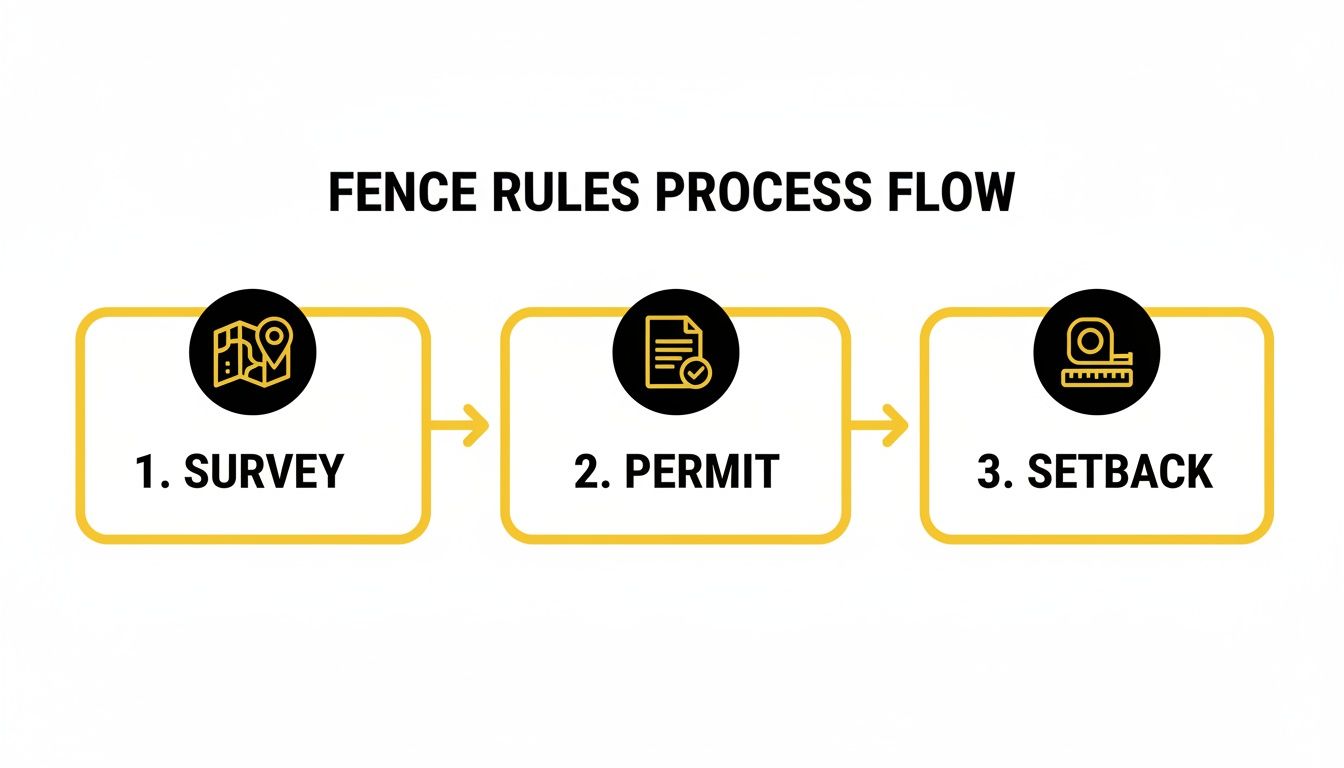
Taking care of this paperwork and planning upfront is essential. It keeps your project compliant, avoids legal drama with the city or neighbors, and ensures your fence is built right from the very beginning.
Answering Your Top DFW Fencing Questions
When you're thinking about a new fence, a lot of questions pop up. We get it. After years of installing fences all over the Dallas-Fort Worth area, we've heard just about all of them.
Making a big investment in your home should feel exciting, not confusing. To give you some peace of mind, we've put together straight answers to the questions we hear the most from homeowners just like you.
How Long Does a Typical Fence Installation Take?
This is usually the first thing people ask, and for good reason. For a standard yard in the DFW area, you can expect the entire project to take between 2 to 5 business days. It's not just one long job, though; we break it down into a few key steps.
- Day 1: This is demolition and setup day. We’ll take down and haul away your old fence (if you have one) and then meticulously set all the new posts in concrete. Getting the posts perfectly straight and secure is everything—it's the foundation of your entire fence.
- Curing Time: Then, we wait. The concrete needs at least 24-48 hours to fully cure and harden. This is a step we absolutely will not rush. Building on wet concrete is a recipe for a weak, leaning fence down the road.
- Final Days (1-2 days): Once the posts are rock-solid, our crew comes back to finish the job. This is when we hang all the rails, pickets, panels, and gates, bringing your new fence to life.
Of course, things like surprise Texas thunderstorms, tough, rocky ground, or a really complex design can add a little time. We pride ourselves on clear communication, so if we run into any potential delays, you'll be the first to know.
Do I Need to Be Home During the Installation?
Not for the whole process. We know you’re busy and can't put your life on hold.
All we need from you is to be there for two quick but important moments: the initial consultation where we walk the property and lock in the details, and the final walkthrough after we're finished to make sure you love the result.
For the days in between—when we're digging post holes and actually building—feel free to go about your normal routine. A professional crew like ours respects your property, keeps you in the loop, and leaves the job site clean and safe at the end of each day.
A professional fence installation should feel seamless, not disruptive. Our team works to minimize the impact on your daily life while delivering a high-quality finished product.
Will a New Fence Increase My Property Value?
Without a doubt. In a hot real estate market like Dallas-Fort Worth, a beautiful, sturdy fence is a huge plus for buyers. It's an investment that pays you back in a few different ways.
First, it’s a massive boost to your curb appeal, which is the first impression your home makes. But more than that, it provides real, tangible benefits that today’s buyers are looking for: more security, much-needed privacy, and a safe yard for kids and pets to play in. These features make your home stand out from the competition and can lead to a fantastic return on your investment when it's time to sell.
How Do I Care for My New Fence?
The answer to this one really depends on the material you go with.
For a classic wood fence, we can't stress this enough: plan on applying a quality stain or sealant every 2-3 years. This is the single best thing you can do to protect the wood from the brutal Texas sun and moisture, which cause fading, warping, and rot.
If you chose a low-maintenance material like vinyl or aluminum, you're in for an easy ride. Just a simple wash-down with soap and water once or twice a year is typically all it takes to knock off the dust and grime and keep them looking sharp for decades.
Ready to transform your yard with a fence that's built to last? The team at Moore Construction Co. has the experience and craftsmanship to bring your vision to life. Schedule your free, no-obligation estimate today!


