


If you’ve started to notice the edges of your roof shingles pulling up, that’s your roof’s way of telling you it needs a serious look. Curling shingles on a roof are a classic sign that the materials are getting old, losing their protective muscle, and becoming a weak spot for wind and water damage.
Think of it as a critical warning light on your home's dashboard—that distortion means your primary defense system is starting to fail.
What Curling Shingles Mean for Your Home
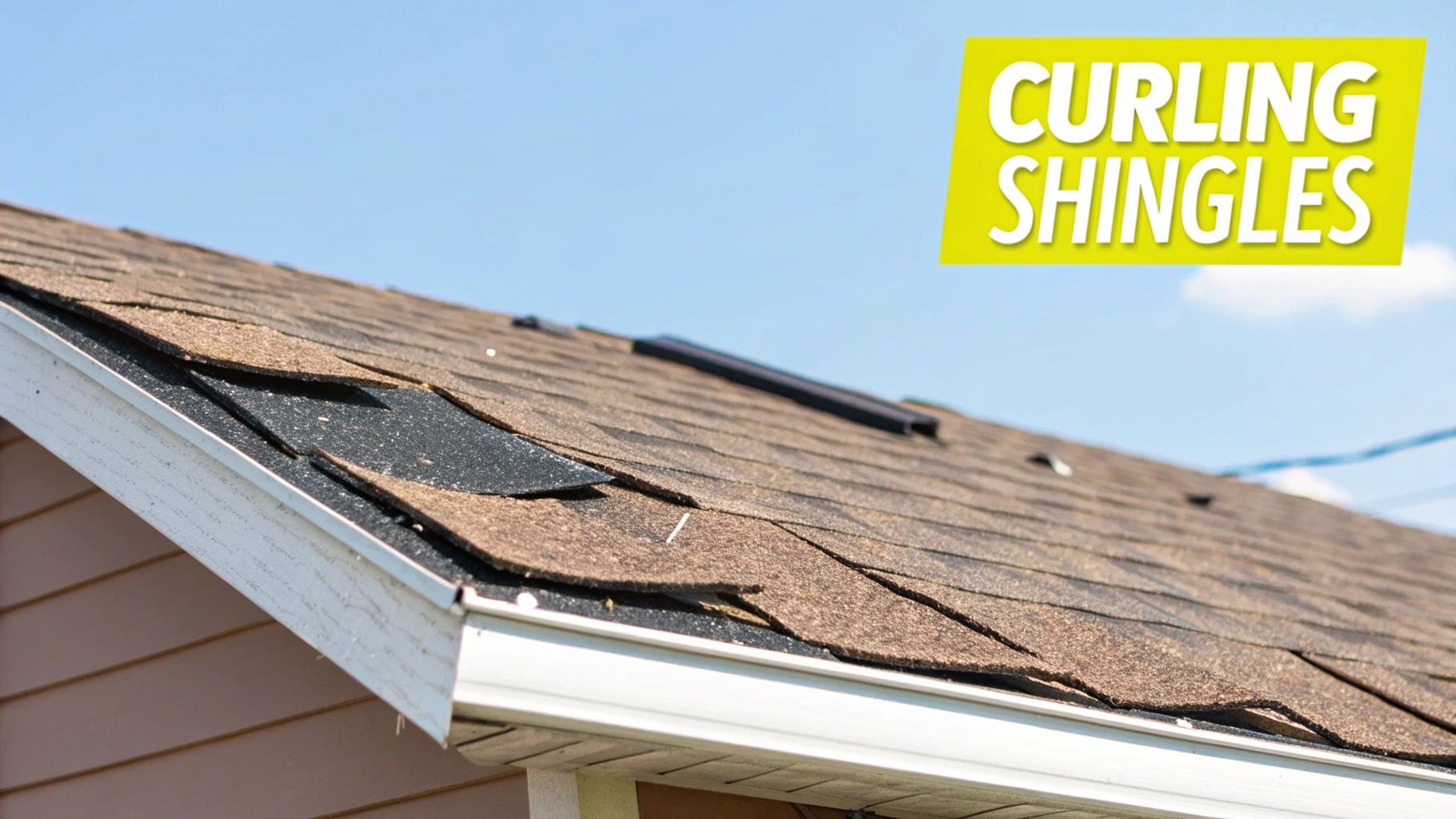
Imagine leaving a piece of paper outside in the sun and rain. After a while, it gets brittle, loses its shape, and starts to warp. That’s exactly what’s happening on your roof, especially under the relentless Texas sun. As shingles age, the asphalt layer starts to shrink, but the fiberglass mat inside doesn't. This tug-of-war is what causes the edges to curl upward or the corners to bend down.
This is far more than just a cosmetic problem; it's a structural red flag.
Once a shingle curls, it breaks the watertight seal it has with the shingle beneath it, creating a perfect entry point for trouble. This opening makes your roof extremely vulnerable to wind-driven rain and gives high winds a lip to grab onto, which can easily tear the shingle right off.
Two Key Types of Shingle Curling
When you look up at your roof, you’ll probably see one of two distinct patterns. Figuring out which one you have can give you some solid clues about what’s causing the problem.
- Cupping: This is when the edges of the shingle curl upward, making it look like a shallow cup. Cupping is often a sign that the shingles are baking from above due to extreme heat or moisture buildup.
- Clawing: This is the opposite. The center of the shingle bulges up, causing the corners to curl downward like a claw. Clawing is a tell-tale sign of poor attic ventilation, which is essentially cooking your shingles from the inside out.
A curling shingle is a compromised shingle. It has lost its ability to shed water effectively and resist wind uplift, leaving the underlying roof deck exposed to the elements. Ignoring this sign can lead to leaks, wood rot, and more significant structural damage.
Knowing these visual cues is the first step in diagnosing the health of your entire roofing system. For a deeper dive into the materials themselves, you can learn more by exploring our detailed guide on roof shingles. Catching these signs early lets you fix the root cause before a small issue turns into a massive, expensive headache.
The 5 Most Common Reasons Your Roof Shingles Are Curling
When you look up and see the edges of your shingles starting to lift and curl, it’s a sure sign that something’s not right. It’s easy to get concerned, but figuring out the why is the first step to making it right. Often, it's not just one single issue but a combination of factors that have been working against your roof over time.
Think of your shingles like the paint on a car. After years parked under the brutal Dallas sun, the finish eventually starts to fade, crack, and peel. In the same way, the intense UV rays and relentless heat in North Texas bake the vital oils right out of your asphalt shingles. This causes them to dry out, shrink, and lose their flexibility, leading to that tell-tale curling.
While this is a normal part of any roof's life, some conditions can hit the fast-forward button, turning a roof that should last 20 years into one that’s failing in just 10. Let's break down the five most common culprits we see out in the field.
1. Age and Sun Exposure
Every roof has a lifespan. After 15 to 20 years of service, the asphalt that holds your shingles together simply starts to break down. The tiny protective granules wear off, leaving the asphalt layer underneath exposed to the elements.
The Texas sun is especially harsh, essentially slow-cooking the shingles day after day until they become brittle and start to curl. If your roof is getting up there in age and the curling is happening all over—especially on the south and west-facing slopes that get the most sun—plain old aging is probably the main reason. It’s a clear signal that your roof has done its job and is nearing the end of its useful life.
2. Poor Attic Ventilation
Here’s something many homeowners don't realize: your attic needs to breathe. Without a proper ventilation system, heat and moisture get trapped up there, turning your attic into a giant oven right beneath your roof deck. On a sweltering summer day, attic temperatures can easily skyrocket past 150°F, which literally bakes your shingles from the bottom up.
This constant, intense heat from below causes the shingles to age way too fast. You’ll often see uniform curling across the entire roof, not just the parts getting direct sun. Poor ventilation is a silent roof killer that also forces your AC to work overtime, driving up your energy bills.
An improperly ventilated attic can slash a shingle's lifespan by up to 25%. It superheats the roof decking, which in turn cooks the underside of the shingles, causing them to distort and fail much sooner than they ever should.
3. Improper Installation
A roof is only as good as the crew that installed it. Unfortunately, shortcuts and sloppy workmanship can cause shingles to start curling on your roof in just a few short years. Some of the most common mistakes we find include:
- Bad Nailing: Using too few nails per shingle or placing them in the wrong spot (too high or too low) is a huge problem. It prevents the shingles from sealing down properly and allows wind to get underneath, causing them to lift and curl.
- Missing Starter Strip: Forgetting to install a dedicated starter strip along the eaves is a rookie mistake. This leaves the very first row of shingles exposed and highly vulnerable to wind uplift.
- Poor Alignment: When shingles aren't laid in straight, perfectly aligned rows, it creates gaps. This uneven stress distribution prevents a watertight seal and leads to—you guessed it—curling.
If you suspect your roof might not have been installed correctly, our guide on how to spot improper roof installation can help you pinpoint the red flags.
4. Manufacturing Defects
While it's not the most common cause, sometimes the problem isn't with the installation or the environment—it's with the shingles themselves. A bad batch from the factory can have an incorrect mixture of asphalt and fiberglass, leading them to curl, blister, or crack long before their warranty is up.
If your roof is still relatively new (less than five years old) and you’re seeing widespread, uniform curling across the whole surface, a manufacturing defect could be to blame. The good news is that in these situations, the manufacturer's warranty may cover the cost of replacement.
5. Layering New Shingles Over Old Ones
Putting a new layer of shingles on top of an old, worn-out layer is often pitched as a way to save money. We call this a "roof-over," and it's almost always a bad idea. This practice traps a massive amount of heat between the layers, essentially creating a heat sandwich that prevents the new shingles from ever cooling down properly.
Worse yet, any bumps, dips, or curls from the old layer get telegraphed right through to the new one. This creates high spots that stop the new shingles from laying flat and sealing down, making them prime targets for wind damage and curling.
To help you put the pieces together, we've created a quick reference table.
Quick Guide to Diagnosing Shingle Curling Causes
Use this table to quickly identify the most likely reason your shingles are curling based on your roof's age and the visible symptoms.
| Primary Cause | Key Symptom | Common Age of Onset |
|---|---|---|
| Age & Sun Exposure | Widespread curling, worst on sun-facing slopes (south/west) | 15-25 Years |
| Poor Attic Ventilation | Uniform curling across the entire roof surface, feels brittle | 5-15 Years |
| Improper Installation | Random patches of curling or lifting, often near edges/vents | 1-5 Years |
| Manufacturing Defect | Uniform curling on a relatively new roof, often with blisters | 1-5 Years |
| Layered Shingles | Bumpy, uneven appearance with curling at high spots | 5-10 Years |
Remember, this guide is a starting point. The best way to know for sure what's happening on your roof is to have a professional take a look. An experienced eye can spot the subtle clues that pinpoint the true root cause.
How to Safely Inspect Your Roof from the Ground
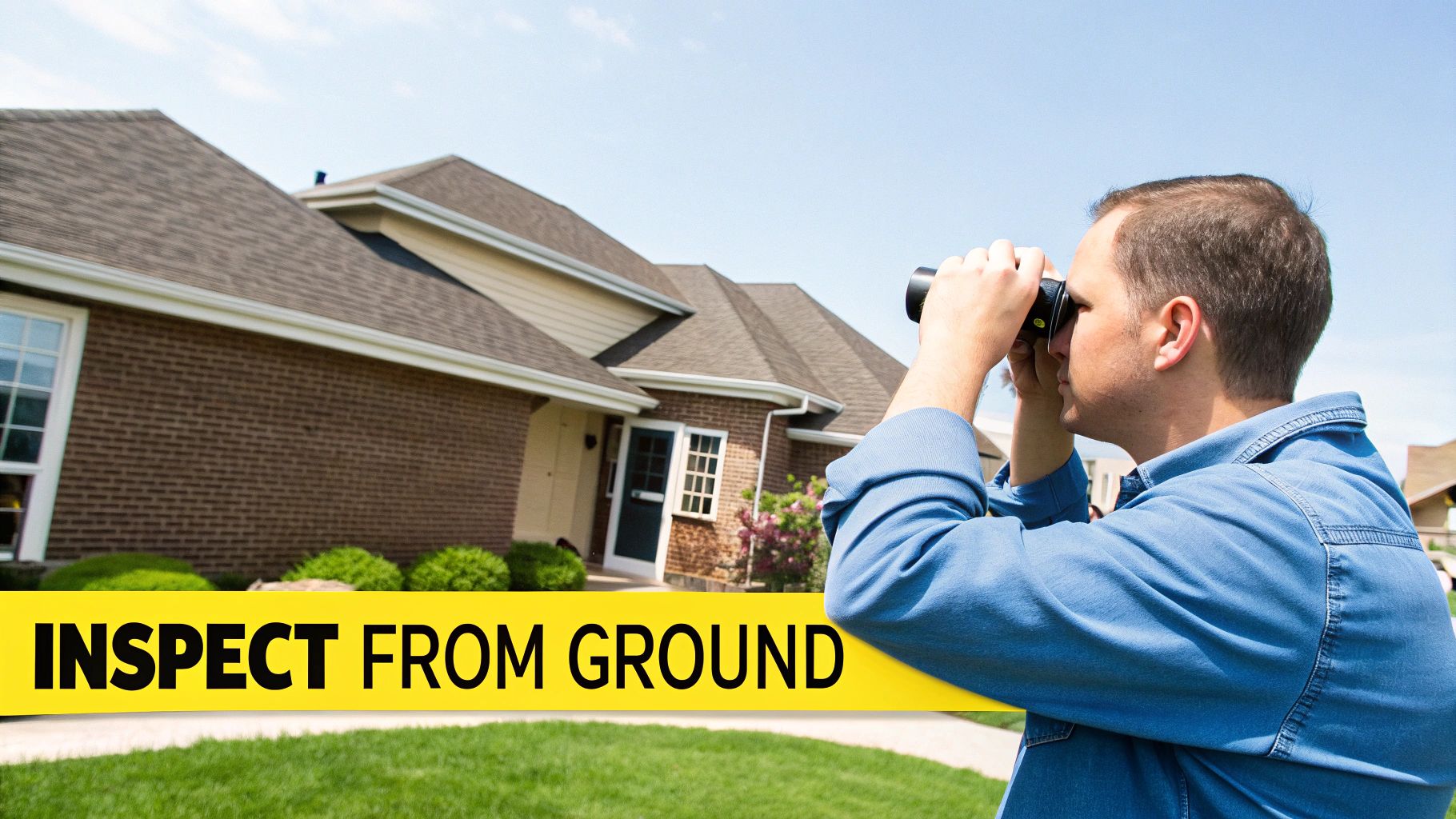
When you see something that doesn't look quite right with your roof, the first instinct for many homeowners is to grab the ladder. Before you do, hold on—you can actually get a very clear picture of what's going on from the safety of solid ground.
Think of it as playing detective. Your mission isn't to solve the whole case, but to gather enough solid evidence to bring to an expert. This first look minimizes any risk to you while arming you with the details you need to understand the problem. All it really takes is a clear day, a good view, and a pair of binoculars.
Your Ground-Level Inspection Toolkit
You don't need a truck full of professional gear to get started. Just a few simple items will give you a surprisingly detailed view of your roof.
- Binoculars: This is your most important tool, hands down. A basic pair is more than enough to zoom in on specific shingles and spot the subtle signs of curling or wear without taking a single step up a ladder.
- A Camera or Smartphone: Snap photos of anything that looks like a problem. These pictures are worth a thousand words when you're trying to explain the issue to a roofing contractor later.
- A Notepad: It’s easy to forget what you saw where. Jot down your observations for each side of the house, noting the location and how severe the curling looks.
That's it. With this simple setup, you're ready to perform a thorough and, most importantly, safe preliminary inspection.
A Step-by-Step Guide to Your Visual Scan
With your toolkit ready, it's time to start the actual inspection. Just follow these steps to make sure you're methodical and don't miss a thing.
- Find Your Vantage Point: Start by walking to the street or the far edge of your yard. You need to be able to see each entire slope of your roof. Make sure you check from different angles—front, back, and both sides—because damage is rarely spread evenly.
- Scan with Binoculars: Begin your scan, moving slowly across the roof in a systematic pattern, almost like you're reading a book. Move from top to bottom and left to right. Pay extra attention to the slopes that get blasted by the sun all day; that's often where you'll see curling shingles on a roof show up first.
- Identify Curling Patterns: Look for those classic signs. Are the shingle edges lifting up in the middle (cupping)? Are the corners turning down and inward (clawing)? Make a note if it's just a couple of random shingles or a widespread issue across an entire section.
- Look for Related Damage: While you're at it, keep an eye out for other red flags. This can include shingles that are completely missing, dark streaks from algae, or "bald" patches where the protective granules have worn away.
Don’t forget the clues on the ground! Take a peek inside your gutters and look at the area around your downspouts. If you see a lot of black, sand-like granules, that's a tell-tale sign that your shingles are getting old and brittle.
Doing this ground-level check puts you in control. It turns a vague worry into a concrete set of observations, which perfectly prepares you for the next, most important step: calling in a professional for an expert opinion.
So you've spotted curling shingles on your roof. That discovery always leads to one big question: are we talking about a quick fix or a major overhaul?
Figuring out the right answer is all about understanding the scale of the problem and your roof's age. It's the key to protecting your home without breaking the bank.
Think of it like this: if you find one or two weeds in an otherwise healthy lawn, you just pull them. But if your entire yard is overrun, spot-treating is a waste of time and money—you need a fresh start. The same logic applies directly to your roof.
When a Targeted Repair Makes Sense
Sometimes, a simple repair is the most practical solution, especially when the curling is isolated and your roof is still relatively young. If you've only got a handful of lifted shingles on a roof that's less than 10-12 years old, a professional can often perform a surgical fix.
This approach is the right call in a few specific scenarios:
- Localized Damage: The problem is contained in one small spot, maybe due to a minor installation mistake or some wind uplift in that area.
- A Younger Roof: The rest of your shingles are still in great shape—they're flexible, have plenty of protective granules left, and aren't close to the end of their life.
- Matching Shingles Are Available: Your roofer can find shingles that match your current ones, so the repair doesn't stick out like a sore thumb and ruin your home's curb appeal.
Choosing to repair in these cases is a smart, cost-effective way to handle the immediate threat. You're plugging a small hole before it can turn into a much bigger, more expensive problem. To get a better idea of how the pros handle these jobs, it helps to read up on fixing roof leaks and what it entails.
When a Full Replacement Is Necessary
On the flip side, if your roof is getting up there in age or the curling is happening all over, a full replacement is almost always the smarter long-term investment. Trying to patch an old, failing roof is like putting one new tire on a car with three bald ones. It doesn’t solve the real problem and gives you a false sense of security.
Widespread curling is a clear signal that the entire roofing system is nearing the end of its functional life. At this stage, the shingles have lost their flexibility and weather resistance, and a "repair" is just a temporary patch on a systemic failure.
A full replacement is the only real option when you see signs like these:
- Widespread Curling: The issue affects more than 30% of your roof's surface or is showing up on different sides of your home.
- Advanced Age: Your roof is 15 years or older. Here in Texas, that's right around the time most asphalt shingle systems start to seriously break down.
- Multiple Problems: You don't just have curling shingles. You're also seeing lots of granules in your gutters, bald spots on the roof, or cracked shingles.
Ignoring these warning signs means you're risking a lot more than just a few ugly shingles. You're opening the door to hidden water damage, rotting roof decking, and mold growth inside your home. As you weigh your options, it's also a good idea to find out if your homeowner's policy will insurance cover roof replacement and what steps you'd need to take. While normal wear and tear is rarely covered, understanding your policy is crucial if storm damage might have played a role.
Why a Professional Roof Assessment Is Non-Negotiable
When you spot a few curling shingles, it’s tempting to think a quick Saturday morning patch-up will do the trick. But more often than not, what you’re seeing is just the tip of the iceberg—a visible symptom of a much bigger problem lurking underneath.
Think of it this way: you wouldn't just take a painkiller for a persistent toothache without seeing a dentist. The pain is the symptom, but the root cause could be a cavity or something worse. A professional roofer acts like a doctor for your home, diagnosing the real reason your shingles are failing, not just covering up the evidence. This step is absolutely critical for a lasting fix.
What an Expert Looks for Beyond the Surface
A true professional doesn't just glance at your roof from the driveway. They get up there and conduct a systematic inspection, checking all the interconnected parts that keep your home dry and protected.
Here’s what a real pro investigates:
- Attic Ventilation: Is your attic suffocating? Without proper airflow, heat builds up and literally bakes your shingles from the inside out, causing them to curl and age prematurely.
- Deck Integrity: They'll walk the roof, feeling for soft, spongy spots. These are red flags for rot or water damage on the underlying roof deck—a serious issue that a simple shingle patch would dangerously conceal.
- Flashing and Seals: Every pipe, vent, chimney, and skylight is a potential weak point. An expert meticulously checks the flashing and seals around these areas to ensure they’re watertight.
- Underlayment Condition: If shingles are already curling or missing, what does the protective layer underneath look like? They’ll check to see if this crucial barrier has been compromised.
This decision tree helps visualize how a pro approaches the problem. It’s not just about one bad shingle.
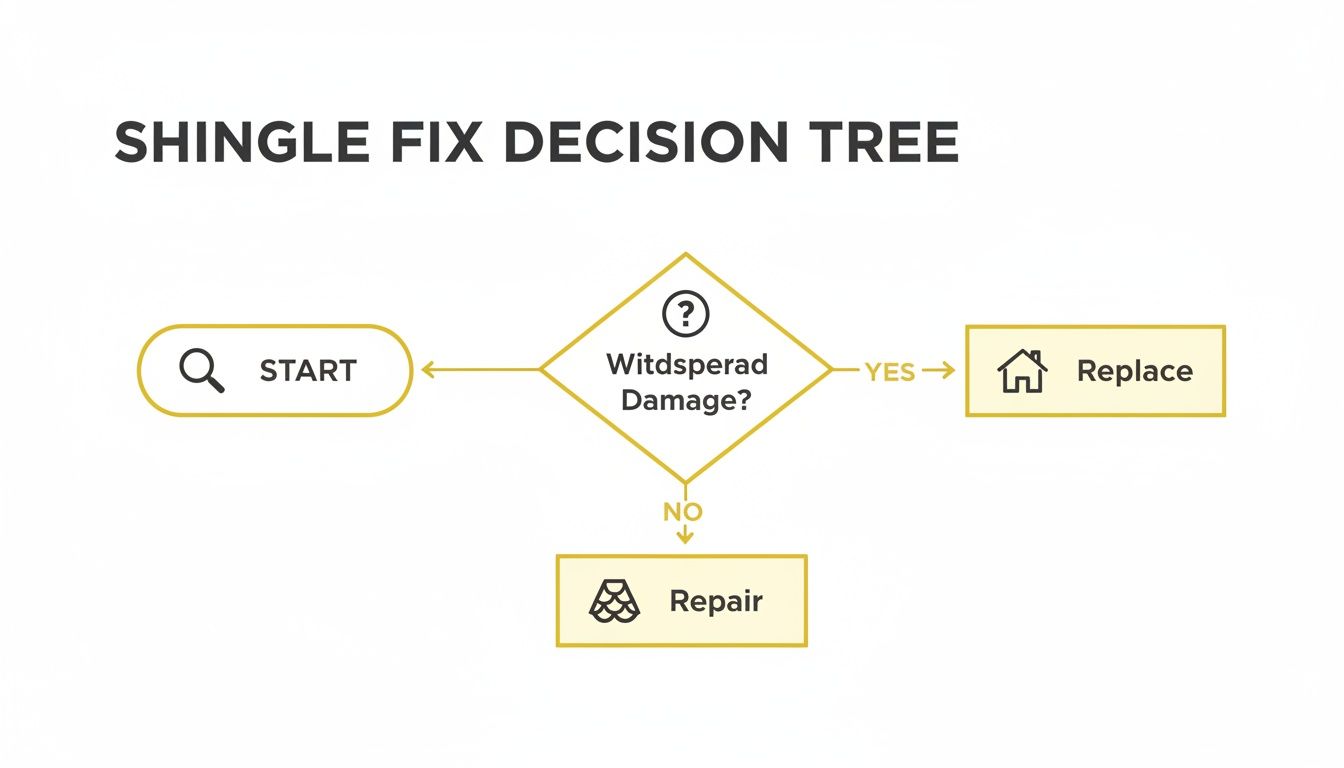
As the flowchart shows, once the curling becomes widespread, you’re past the point of small repairs. You’re dealing with a systemic failure that points toward a full replacement.
Protecting Your Biggest Investment
Skipping a professional inspection to save a few bucks is a huge gamble. It can void your roof's warranty and allow a small, fixable issue to spiral into a catastrophic leak that causes thousands in damage. Your roof is a massive part of your home's value and structural integrity.
The U.S. roofing market is a huge industry, set to reach $31.38 billion by 2026. This isn't just a number; it shows how vital this component of your home truly is. Trusting a certified professional is the only way to safeguard that investment.
When you start thinking about costs, it's good to have a ballpark idea. For local maintenance pricing, a resource like this Phoenix Roof Pressure Cleaning Cost Guide can offer some perspective. Ultimately, by getting an expert to diagnose the root cause, you’re ensuring the solution isn’t just a band-aid but a real fix that keeps your home safe for years to come.
Proactive Roof Care to Prevent Future Problems
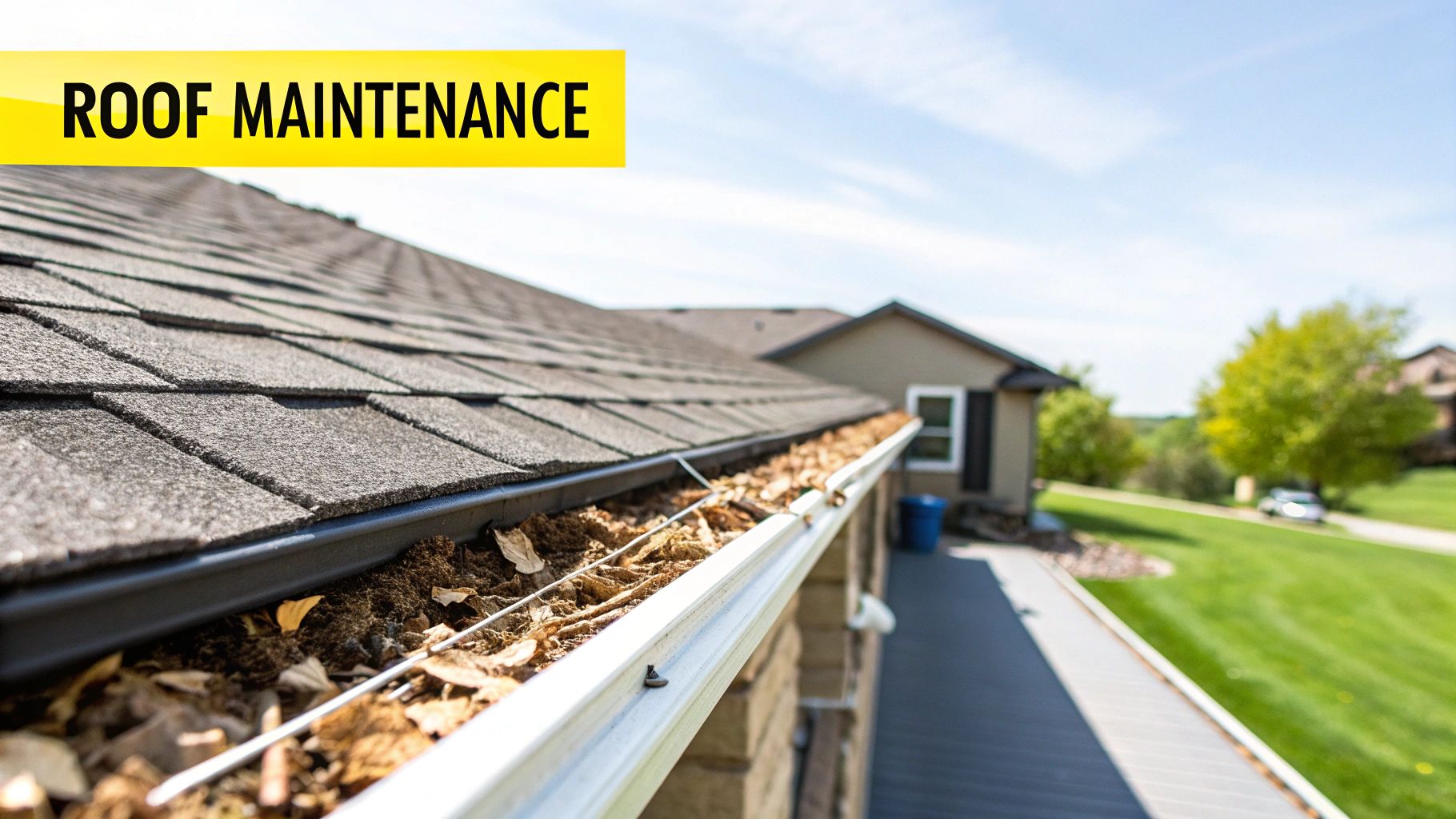
When it comes to something as important as your roof, the old saying holds true: an ounce of prevention is worth a pound of cure. The best way to deal with curling shingles on a roof is to create conditions where they’re far less likely to happen in the first place.
Shifting to a proactive mindset helps you get the most life out of your roof, protects your home's structure, and saves you from the stress and expense of a premature roof failure. These simple, routine tasks put you in the driver's seat, letting you stay ahead of problems instead of just reacting to them.
Your Essential Maintenance Checklist
Regular roof care doesn't have to be a huge, complicated job. Just focusing on a few key areas can make a world of difference, especially here in North Texas where the intense heat and severe storms are constantly putting your roof to the test.
Here are the most important maintenance tasks to keep on your radar:
- Keep Gutters Clean and Clear: Clogged gutters are one of the biggest troublemakers for any roof. When leaves, twigs, and other gunk pile up, rainwater has nowhere to go. It backs up, gets underneath your shingles, and can lead to wood rot, fascia damage, and even problems with your foundation.
- Ensure Vents Are Unobstructed: Think of your attic ventilation system as your roof's personal cooling system. You need to periodically check that soffit and ridge vents are clear of bird nests, leaves, or blown-in insulation. Good airflow is non-negotiable for preventing the extreme heat buildup that literally bakes your shingles from the inside out.
- Trim Overhanging Branches: We all love a good shade tree, but branches that are constantly scraping against your shingles will slowly wear away the protective granules that shield them from the sun. Keeping limbs trimmed back prevents this constant friction and lowers the risk of a heavy branch coming down on your house during a storm.
"A well-maintained roof is a resilient roof. Simple, consistent actions like cleaning gutters and scheduling inspections can add years to its life, preventing the very conditions that lead to shingle curling and other costly failures."
By making these habits a regular part of your home maintenance schedule, you’re building a strong defense against the most common things that cause a roof to break down.
The Power of Periodic Inspections
As great as it is to keep an eye on things yourself, nothing can truly replace a professional inspection. Scheduling a check-up with an expert—at least once a year and definitely after any major storm—is the single best proactive step you can take.
A trained roofer can spot the subtle warning signs of trouble long before you’d ever notice them from the ground. This gives you the chance to fix small issues while they're still small, simple, and affordable.
Answering Your Questions About Curling Shingles
When you spot something like curling shingles on your roof, a lot of questions start popping up. We get it. Here are some straightforward answers to the questions we hear most often from Dallas homeowners, so you can figure out your next steps with confidence.
Can I Just Glue Down My Curling Shingles?
It’s tempting to grab some roofing cement for a quick patch-up, but that’s rarely a good long-term fix. Trying to glue down a curling shingle doesn't actually solve the problem that caused it—like intense heat or just old age.
Worse yet, this can trap water underneath the shingle, which is the last thing you want. That trapped moisture can lead to wood rot in your roof deck. Plus, a shingle that's curling has already been baked by the sun and is probably pretty brittle. Forcing it flat to apply adhesive usually just makes it crack or snap, creating an even bigger problem. You really need a professional to take a look to see if replacing a few shingles will do the trick or if a more serious repair is in order.
How Long Does a Roof Last in Texas Before Shingles Curl?
Here in the Dallas-Fort Worth area, a typical asphalt shingle roof will give you somewhere between 15 and 20 years of service. The brutal Texas sun and non-stop UV exposure really do a number on roofing materials, causing them to wear out faster than they would in cooler parts of the country.
But that number can change based on a few key things. Shingle quality, how well it was installed, and especially your attic's ventilation make a huge difference.
- A roof with great ventilation can absolutely push toward the 20-year mark.
- A roof with poor ventilation, on the other hand, is getting cooked from both above and below. You could see serious curling in as little as 5 to 10 years.
Will Homeowners Insurance Cover a Replacement for Curling Shingles?
This is a big one, and the answer is usually no. Homeowners insurance typically does not cover a roof replacement when the curling is due to age, normal wear and tear, or a lack of maintenance. Your policy is there for sudden, accidental damage—think a hail storm or a specific high-wind event.
If your roof is curling all over, it's a strong sign that it has simply reached the end of its functional life. In that case, the cost of replacement falls on the homeowner. A trustworthy roofer can give your roof a thorough inspection to find the real cause of the damage and let you know if there's enough evidence of storm impact to justify an insurance claim.
Are you seeing those tell-tale curls on your roof? Don't wait for a small issue to turn into a major leak. The experts at Moore Construction Co. offer a free, no-obligation roof inspection to give you a clear and honest assessment of your roof's condition. Schedule your free estimate today!
Built with the Outrank tool


