


The intense Texas sun and unpredictable weather in the Dallas-Fort Worth area make a covered patio more than a luxury; it's an essential extension of your home. A well-designed cover transforms your outdoor space from an occasional spot into a year-round haven for relaxation, family dinners, and entertaining guests. But with countless options available, finding the right starting point can feel overwhelming.
This guide simplifies the process by presenting 10 distinct covered patio design ideas, each carefully selected to suit the unique DFW climate. We will dive deep into each concept, providing a clear roadmap to help you make an informed decision that aligns with your style and budget. You'll find practical details on everything from hail-resistant materials and ideal layouts to estimated costs and maintenance requirements.
We'll cover structures ranging from classic wood beams perfect for a rustic feel to modern louvered systems offering adjustable shade. To truly achieve patio perfection, consider enhancing comfort with the right amenities, such as the best outdoor ceiling fans to circulate air on those hot Texas afternoons. Whether your property needs a simple lean-to design or an elaborate glass enclosure, this list offers actionable insights for every homeowner. Let’s explore the possibilities and turn your backyard vision into a stunning, functional reality that adds significant value to your home.
1. Aluminum Patio Cover with Polycarbonate Panels
For homeowners seeking a modern aesthetic that doesn't sacrifice natural light, an aluminum patio cover with polycarbonate panels is a top-tier choice. This system pairs a lightweight yet strong aluminum frame with translucent or transparent polycarbonate roofing sheets. The result is one of the most functional and durable covered patio design ideas, allowing sunlight to filter through while blocking harmful UV rays and providing complete protection from rain.
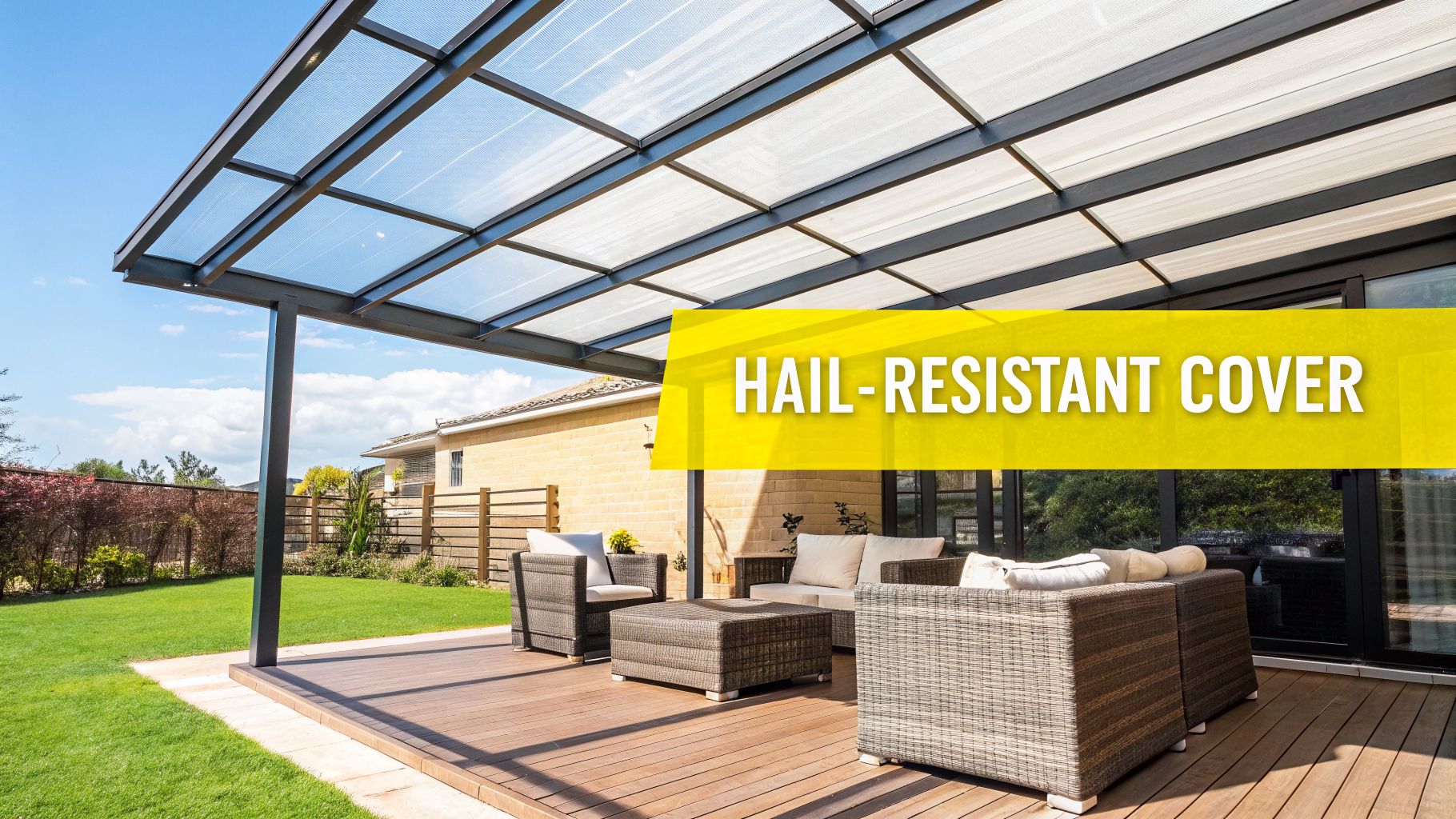
Unlike solid wood or metal roofs that create deep shade, this design maintains a bright, airy atmosphere. It's an ideal solution for north-facing patios that receive less direct sun or for homeowners who want to keep adjacent interior rooms filled with natural light. The contemporary look fits well with modern, transitional, and minimalist home styles across the DFW area, from Plano to Arlington.
Why It's a Great Choice for DFW
The Dallas-Fort Worth climate makes this design particularly practical. Polycarbonate panels are exceptionally impact-resistant, making them a formidable defense against the frequent hail storms that can damage traditional roofing materials. The non-combustible aluminum frame also offers peace of mind during dry, high-fire-risk seasons.
Expert Insight: For maximum durability in North Texas, we recommend selecting multiwall polycarbonate panels with a thickness of at least 10mm. This provides superior impact resistance against large hail and offers better thermal insulation, helping to keep the space cooler.
Implementation Tips
To get the most out of your aluminum and polycarbonate cover, consider these details during the planning phase:
- Manage Heat and Glare: Opt for tinted polycarbonate panels, such as bronze or opal. These tints significantly reduce solar heat gain and soften harsh sunlight, creating a more comfortable environment.
- Ensure Proper Ventilation: A well-ventilated design is crucial to prevent heat from getting trapped under the cover. Incorporating open sides or strategically placed vents allows hot air to escape.
- Water Management is Key: A professional installation by a team like Moore Construction will include an integrated gutter system. This is vital for directing rainwater away from your home's foundation and preventing soil erosion around the patio slab.
2. Classic Wood Beam and Lattice Cover
For those who appreciate timeless charm and a connection to nature, the classic wood beam and lattice cover is a quintessential choice. This traditional design uses a sturdy framework of solid wood beams, often cedar or pressure-treated pine, topped with lattice panels or solid roof decking. The result is one of the most beloved covered patio design ideas, offering a warm, inviting aesthetic that blends beautifully with many architectural styles, from the historic homes in Highland Park to the ranch-style residences common across Texas.
This style provides dappled shade that shifts with the sun, creating a dynamic and pleasant atmosphere. It can be enhanced with climbing vines like clematis or Texas privet, which add natural cooling and a lush, green canopy. The structure feels like a natural extension of both the home and the garden, making it a perfect fit for homeowners in places like University Park who want to integrate their outdoor living space with the surrounding landscape.
Why It's a Great Choice for DFW
The Dallas-Fort Worth climate makes a wood structure a practical and beautiful option, provided it's built correctly. The natural insulating properties of wood help create a cooler retreat during intense summer heat. When using rot-resistant materials like cedar or properly treated pine, the structure can withstand Texas's high humidity and seasonal rains for years to come.
Expert Insight: When building a wood patio cover in North Texas, always use pressure-treated lumber or naturally rot-resistant cedar for all ground-contact posts. We set posts in concrete footings to prevent shifting in the region's clay soil and ensure long-term structural stability.
Implementation Tips
To ensure your wood and lattice cover is both beautiful and long-lasting, pay close attention to these details:
- Seal for Longevity: Apply a high-quality, UV-blocking sealant annually. This is critical to protect the wood from moisture, prevent rot, and stop the sun from causing the wood to crack and fade.
- Customize Your Shade: The spacing of the lattice or roof slats directly controls the amount of shade. Tighter spacing provides more cover, while wider spacing allows for more sunlight. Discuss your desired balance of sun and shade with your builder.
- Consider Composite Alternatives: For a lower-maintenance option, explore composite wood materials. They mimic the look of real wood but resist rot, insects, and warping without needing annual sealing.
3. Retractable Motorized Patio Cover
For the ultimate in flexibility and control, a retractable motorized patio cover offers the best of both worlds. This system allows you to enjoy an open-air patio on beautiful days and create complete shade or rain protection at the push of a button. Featuring durable, weather-resistant fabric or adjustable aluminum louvers, these covers extend and retract along a track system, providing a dynamic solution for your outdoor living space.
This high-tech approach is one of the most versatile covered patio design ideas, perfect for homeowners who refuse to compromise. It maintains an unobstructed sky view when retracted and provides instant shelter when needed. You'll often see these premium systems in high-end homes in Dallas's prestigious neighborhoods and on the patios of upscale DFW resorts, a testament to their functionality and sophisticated appeal.
Why It's a Great Choice for DFW
The unpredictable Texas weather makes a retractable system an exceptionally smart investment. You can soak up the mild spring sun, then quickly extend the cover to block the intense summer heat or provide shelter from a sudden pop-up thunderstorm. For windy days, which are common in North Texas, the ability to retract the cover prevents damage that could affect a permanent, fixed structure.
Expert Insight: For DFW homeowners, we strongly recommend integrating a wind sensor. These devices automatically retract the cover when wind speeds exceed a safe threshold, protecting your investment from storm damage even when you aren't home.
Implementation Tips
To ensure your motorized cover performs reliably for years, focus on these key installation details:
- Prioritize a Quality Motor: Insist on a commercial-grade motor from a reputable brand. This is the heart of the system and is crucial for long-term, trouble-free operation.
- Select Durable Fabric: Choose a solution-dyed acrylic or similar high-performance fabric that is specifically treated for UV and fade resistance to withstand the Texas sun.
- Include a Manual Override: A manual crank or override function is essential. It provides a backup for operating the cover during a power outage or in case of motor failure.
- Plan for Professional Maintenance: Like any mechanical system, these covers benefit from professional annual service. A tune-up by the Moore Construction Co. team can check the motor, clean the tracks, and inspect the fabric to ensure smooth operation.
4. Steel Frame with Metal Roof Patio Cover
For homeowners prioritizing ultimate strength and longevity, a steel frame patio cover with a metal roof is the definitive solution. This robust construction combines a welded or bolted structural steel frame with durable metal roofing panels, such as standing seam, corrugated metal, or R-panel. The result is an industrial-grade structure that offers unmatched protection from the elements and a bold, powerful aesthetic.
This design choice delivers exceptional durability, making it one of the most resilient covered patio design ideas available. It’s perfect for creating a permanent, low-maintenance outdoor living area that can withstand virtually anything nature throws at it. The look is highly versatile, fitting in seamlessly with modern industrial-style homes in urban Dallas, sprawling ranch properties, and any home needing a fortress-like defense against severe weather.
Why It's a Great Choice for DFW
The Dallas-Fort Worth climate is the ideal proving ground for a steel and metal cover. Its superior strength easily resists high winds from severe thunderstorms and offers the highest level of impact resistance against the large, destructive hail common in Plano, Frisco, and McKinney. The non-combustible nature of steel and metal also provides critical fire resistance during Texas's dry seasons, offering homeowners significant peace of mind.
Expert Insight: For maximum corrosion resistance in the humid Texas climate, specify galvanized G-90 steel for the frame and roofing panels. This zinc coating provides a sacrificial barrier that prevents rust and dramatically extends the life of your structure.
Implementation Tips
To ensure your steel patio cover performs flawlessly for decades, pay close attention to these details:
- Manage Heat: Metal roofs can get hot. To keep the space comfortable, paint the roof with a specialized cool-roof or heat-reflective coating. This simple step can lower the surface temperature significantly.
- Address Rain Noise: The sound of rain on a metal roof can be loud for some. Installing sound-dampening insulation between the roof deck and the metal panels or adding a solid wood under-sheathing can effectively mute the noise.
- Prioritize Water Management: Proper installation is critical. Using standing seam or snap-lock panels minimizes exposed fasteners and potential leak points. A professional team will also ensure correct flashing at all connection points to the house, preventing water infiltration. To learn more about material options, you can read our guide on metal roofing basics and what you should know.
5. Pergola-Style Open-Air Patio Cover
A pergola-style cover offers a unique blend of shade and openness, making it one of the most architecturally interesting covered patio design ideas. Characterized by a framework of vertical posts supporting an open lattice of cross-beams and rafters, it provides dappled shade rather than complete coverage. This design creates a dynamic interplay of light and shadow, allows for excellent airflow, and defines an outdoor living space without making it feel boxed in.
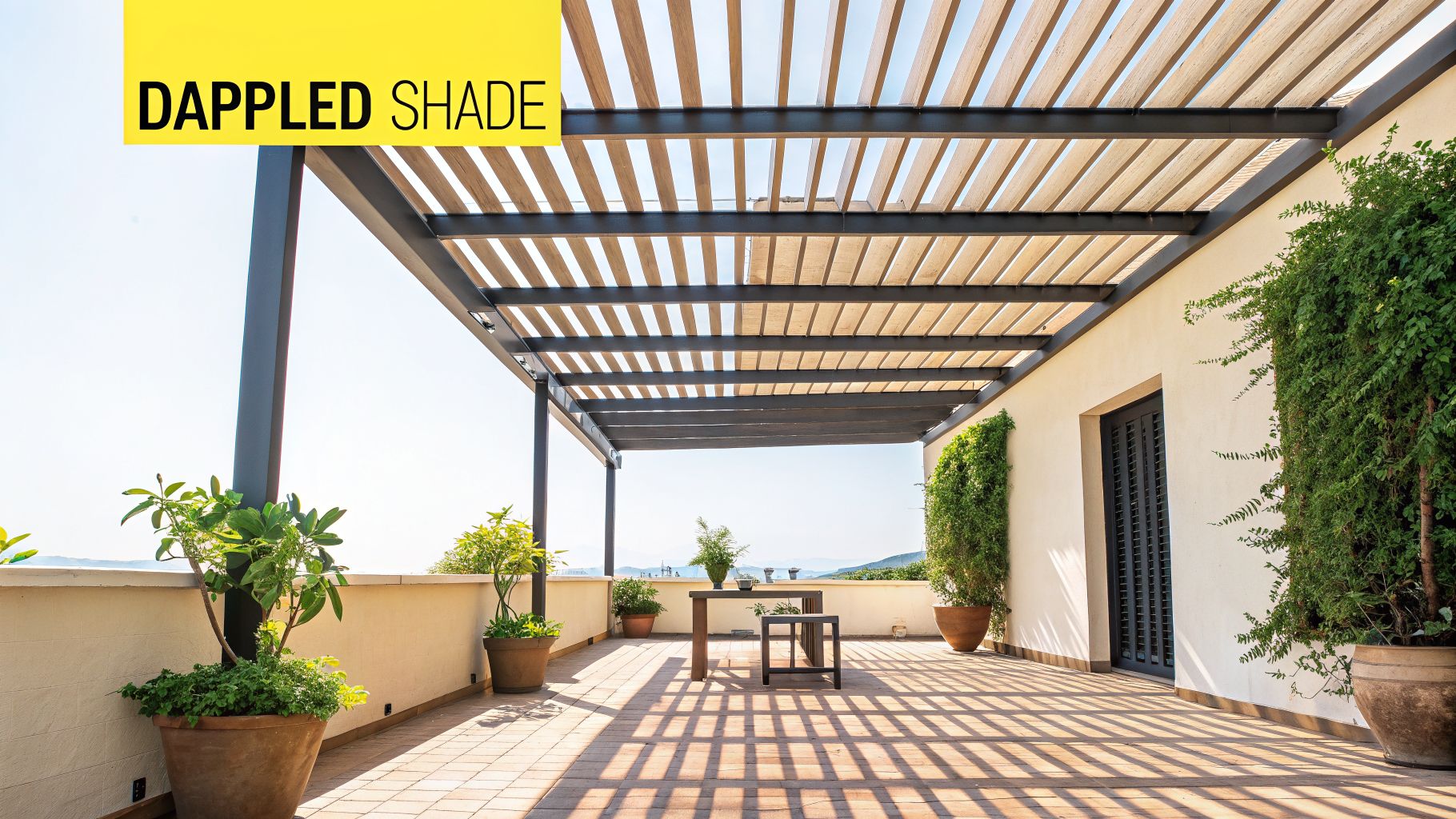
This semi-open structure is perfect for homeowners who enjoy the feeling of being outdoors but want relief from the most intense hours of direct sun. It's a popular feature in modern landscape architecture and can be seen in backyard transformations across DFW suburbs, from Plano to Frisco, complementing both contemporary and Mediterranean-style homes. For those weighing their options, understanding the differences between a pergola and other structures is key; you can explore a detailed comparison of a pergola vs. a gazebo to see which better suits your needs.
Why It's a Great Choice for DFW
The pergola’s open design is a major benefit in the often-humid Texas climate. It promotes natural air circulation, preventing the stuffy, trapped-heat feeling that can occur under solid roofs. The structure also serves as a perfect support for climbing plants, which can add a layer of natural, living shade that further cools the space during the hot summer months.
Expert Insight: For optimal sun control in North Texas, orient the top slats or rafters in an east-west direction. This orientation will block the high-angle midday sun most effectively, providing maximum shade when you need it most.
Implementation Tips
To maximize the style and function of your pergola-style cover, consider these design elements:
- Customize Your Shade: For balanced dappled light, space the top slats 4-6 inches apart. If you need more protection, consider adding a retractable shade cloth that can be extended on hot days and retracted to enjoy the stars at night.
- Go Green: Cultivate fast-growing, heat-tolerant vines like Texas Wisteria or Coral Honeysuckle. These plants will weave through the lattice to create a lush, green canopy that enhances shade and visual appeal.
- Set the Mood: Integrate outdoor-rated LED string lights by wrapping them around the beams or stringing them overhead. This simple addition transforms the patio into a magical, ambient setting for evening gatherings.
6. Glass Panel Patio Enclosure Cover
For the ultimate in luxury and year-round functionality, a glass panel patio enclosure cover transforms your outdoor space into a true extension of your home. This premium design uses tempered safety glass panels set within a sturdy aluminum or steel frame, creating a weather-tight, sun-filled room with completely unobstructed views of your landscape. It offers total protection from rain, wind, and pests while maintaining an incredibly bright and open atmosphere.
This style is a leading choice for high-end residential properties in Dallas and upscale modern homes in Plano and Frisco. Unlike a simple patio cover, a glass enclosure creates a versatile four-season room. It seamlessly blends the comfort of the indoors with the beauty of the outdoors, making it one of the most sophisticated covered patio design ideas for those seeking a resort-style living experience.
Why It's a Great Choice for DFW
While a significant investment, a glass enclosure offers unmatched versatility for the North Texas climate. It provides a comfortable retreat from sweltering summer heat and humidity when conditioned, a cozy haven during sudden chilly snaps, and complete immunity from unpredictable rain showers. For homeowners in prestigious Dallas neighborhoods, it elevates property value and usability far beyond a standard covered patio.
Expert Insight: For DFW homes, we strongly recommend using double-pane, low-e coated tempered glass. This dramatically improves thermal insulation, keeping the space cooler in the summer and warmer in the winter, which is essential for managing energy costs in a four-season room.
Implementation Tips
Proper planning is essential to ensure your glass enclosure is both beautiful and functional. Consider these key details:
- Prioritize Ventilation: Trapped heat can be an issue. Integrate motorized operable windows or large sliding glass doors to allow for natural airflow on pleasant days.
- Manage Sunlight and Heat: Even with coated glass, direct Texas sun can be intense. Plan for interior shading solutions like retractable blinds or custom shades to control light, privacy, and temperature.
- Plan for Year-Round Comfort: To maximize usability, include a dedicated heating and cooling system (like a mini-split unit) in your design.
- Ensure Effective Drainage: A professional installation from a team like Moore Construction is critical. It must include a robust gutter and drainage system to handle heavy rainfall and protect your home’s foundation.
7. Shade Sail and Cable Patio Cover System
For a modern, sculptural look that evokes a resort-like atmosphere, a shade sail and cable patio cover system is a standout choice. This design uses high-tensile strength fabric sails, often made of High-Density Polyethylene (HDPE), suspended between posts or existing structures with stainless steel cables. The result is a dramatic, minimalist covering that provides excellent sun protection and a distinct architectural statement, making it one of the most visually interesting covered patio design ideas.
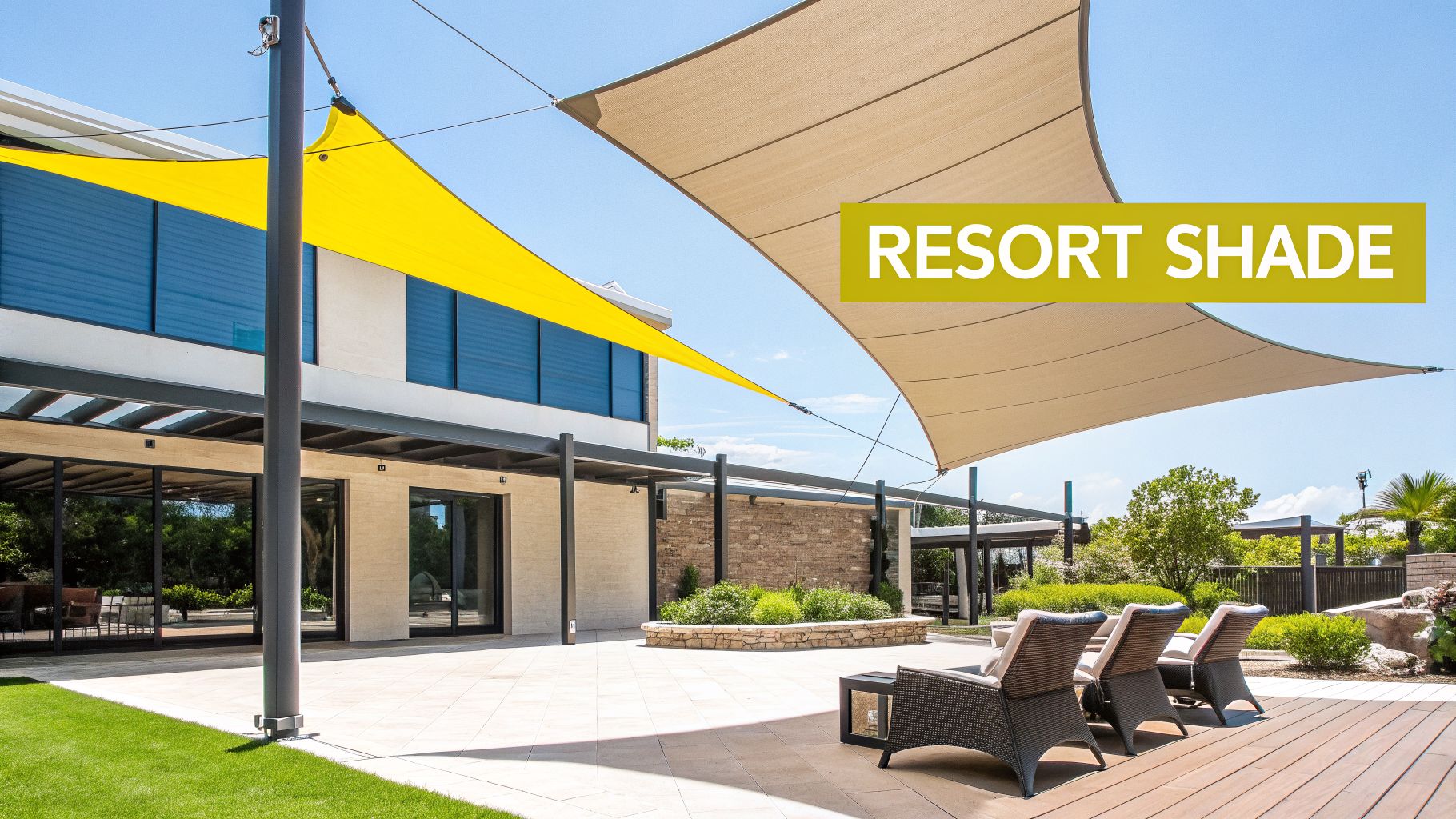
Unlike solid roof structures, shade sails create targeted shade while allowing for ample air circulation, preventing the patio from feeling stuffy. Their geometric shapes can be layered to create dynamic light and shadow patterns, perfect for contemporary homes in Dallas or modern backyard designs in upscale communities from Plano to Frisco.
Why It's a Great Choice for DFW
The intense Texas sun makes effective UV protection a necessity, and high-quality shade sails block up to 98% of harmful UV rays. Their permeable fabric allows hot air to rise and escape, helping to keep the patio area cooler than a solid cover might. This breathability also means they perform well during gusty conditions, as wind can pass through them, reducing the strain on the mounting points.
Expert Insight: Proper tensioning is the most critical factor for the longevity and safety of a shade sail system. A professional installation ensures the cables and attachment points are correctly stressed to withstand high winds and prevent sagging, which can lead to water pooling and fabric damage.
Implementation Tips
To achieve a functional and long-lasting shade sail installation, focus on these key details:
- Fabric Quality is Paramount: Choose a high-quality HDPE or commercial-grade polyester fabric. These materials are specifically designed for outdoor use, offering superior UV resistance, durability, and colorfastness.
- Strategic Positioning: Plan the sail's placement to block the sun during the hottest parts of the day. Consider the sun's path during the summer months and angle the sails accordingly for maximum shade coverage.
- Layer for Greater Effect: Use multiple, overlapping sails in different sizes or colors to create more extensive coverage and a more sophisticated visual design. This also provides more flexibility in managing shaded areas throughout the day.
- Plan for Replacement: While durable, the fabric portion of a shade sail system has a finite lifespan. Depending on sun exposure and weather conditions in North Texas, plan to replace the fabric every 5 to 8 years to maintain its appearance and protective qualities.
8. Louvered Roof Patio Cover System
For homeowners who want ultimate control and a touch of modern luxury, the louvered roof patio cover system stands out as a premium choice. This automated structure features adjustable aluminum louvers that can be opened, closed, or angled with the touch of a button. It provides the flexibility to switch between a solid, rainproof roof and an open-air pergola, offering one of the most versatile covered patio design ideas available.
This system allows you to precisely manage sunlight, shade, and ventilation throughout the day. You can close the louvers completely for full protection during a sudden downpour or open them to enjoy a starlit evening. Its clean lines and high-tech functionality make it a perfect match for high-end residential properties in Dallas and contemporary luxury homes in Highland Park, Plano, and Frisco.
Why It's a Great Choice for DFW
The unpredictable Texas weather makes a louvered system exceptionally practical. On a hot summer afternoon, you can angle the louvers to block direct sun while still allowing hot air to escape, creating a cool, breezy environment. When an unexpected thunderstorm rolls in, the roof can be sealed watertight in seconds, protecting your furniture and guests. The durable, powder-coated aluminum construction also withstands the DFW climate’s intense sun and storms without rusting or warping.
Expert Insight: For superior performance, specify a system with an integrated, hidden gutter system. This design element is crucial for managing heavy Texas rainfall, channeling water away into downspouts and preventing it from dripping onto your patio space.
Implementation Tips
To ensure your louvered roof system functions flawlessly for years, focus on these key details:
- Prioritize Automation: Opt for commercial-grade motors and include weather sensors. This allows the system to automatically close when it detects rain or open/close based on wind speed, providing protection even when you're not home.
- Plan Electrical and Controls: A professional electrical installation is non-negotiable for safety. Consider integrating the controls with your existing smart home system for convenient operation from your phone or voice assistant.
- Specify a Manual Override: In the event of a power outage, a manual override mechanism is essential. This ensures you can still operate the louvers and aren't left with a system stuck in one position.
9. Attached Lean-To Patio Cover Design
The attached lean-to is one of the most practical and cost-effective covered patio design ideas for seamlessly expanding a home's living area. This design attaches directly to an exterior wall of your house, with its roof sloping downward and away from the structure. This simple, effective design not only provides excellent shelter but also ensures proper water drainage by its very nature.
This approach is incredibly versatile, working well for everything from kitchen door extensions and protected entryways to large deck expansions. Its straightforward construction makes it a popular choice for homeowners in Dallas neighborhoods looking to add functional outdoor space without the complexity and cost of a freestanding structure. The ability to use various roofing materials, from classic shingles to modern metal, allows it to blend perfectly with the existing home.
Why It's a Great Choice for DFW
In the Dallas-Fort Worth area, the lean-to design offers a direct and efficient way to create shade and rain protection. By attaching to the house, it creates a continuous, protected transition from indoors to outdoors, which is ideal during sudden North Texas downpours or on intensely sunny days. It also maximizes usable yard space by avoiding the larger footprint required by freestanding structures with four or more support posts.
Expert Insight: The most critical part of a lean-to structure is the attachment point to the house. It must be fastened to solid structural elements like the wall studs or rim joist and properly sealed with high-quality flashing to prevent any water from getting behind the siding and into your home's framework.
Implementation Tips
To ensure your attached lean-to patio cover is secure, waterproof, and visually appealing, focus on these key details:
- Proper Slope is Essential: The roof must have a minimum slope of 2 inches for every 12 feet of run. This ensures rainwater and debris flow away from the house and into the gutter system, preventing pooling and potential leaks.
- Waterproof the Connection: Use high-quality aluminum or copper flashing where the patio roof meets the house wall. A professional contractor should handle this step to create a watertight seal, which is crucial for preventing costly water damage. You can learn more about the technical aspects of a professional patio cover installation and what it entails.
- Match Your Home's Aesthetic: Choose materials and colors that coordinate with your home's existing siding, trim, and roof. This helps the addition look like a natural extension of the house rather than an afterthought.
- Plan for Utilities Early: If you want lighting, ceiling fans, or outdoor outlets, plan the electrical wiring before construction begins. Running conduit through posts or beams is much easier and cleaner during the initial build.
10. Natural Living Wall Patio Cover (Vegetation-Based)
For the eco-conscious homeowner looking to blur the lines between indoors and out, a natural living wall patio cover is one of the most unique and sustainable covered patio design ideas. This biophilic approach uses a sturdy trellis or pergola structure as a framework for climbing plants and vines. Over time, the vegetation grows to create a lush, green canopy that provides natural shade, cools the air, and integrates the patio directly into the garden.
Unlike a solid roof, a living cover is a dynamic element that changes with the seasons, offering a connection to nature that few other designs can match. It is the perfect choice for homeowners with a passion for gardening and those who want to create a tranquil, organic retreat in their backyard. This design works beautifully with rustic, cottage, and eclectic home styles, adding a touch of natural elegance from Dallas to Denton.
Why It's a Great Choice for DFW
In the Dallas-Fort Worth climate, a living wall patio cover offers practical, environmental benefits. The plant canopy provides excellent natural cooling through a process called evapotranspiration, which can significantly lower the temperature on and around your patio during scorching Texas summers. It also acts as a natural air purifier and provides a valuable habitat for local pollinators like bees and butterflies.
Expert Insight: The key to a successful living cover in North Texas is choosing the right plants. Opt for deciduous vines, which provide dense shade in summer but drop their leaves in winter. This allows warming sunlight to reach your patio and home during the colder months, a smart passive solar design strategy.
Implementation Tips
Growing a living roof requires patience and planning, but the rewards are well worth the effort.
- Select Native Texas Plants: Choose hardy, drought-tolerant vines native to the region, such as Trumpet Vine, Coral Honeysuckle, or Passion Vine. These plants are adapted to the local climate and will require less water and maintenance.
- Install a Strong Support Structure: The vegetation will become heavy as it matures. A robust wood or metal pergola installed by professionals is essential to support the weight and withstand DFW's high winds and storms.
- Plan for Irrigation: A drip irrigation system is a wise investment to ensure your plants receive consistent moisture during the long, dry summers without wasting water.
- Prune for Health and Shape: Regular pruning is necessary to guide the plant's growth, maintain airflow, and prevent the cover from becoming overgrown and unmanageable. This also helps keep pests at bay.
Covered Patio Designs — 10-Item Comparison
| Patio Cover Type | Implementation Complexity 🔄 | Resources & Cost ⚡ | Effectiveness / Key Advantages ⭐ | Expected Outcomes 📊 | Ideal Use Cases 💡 |
|---|---|---|---|---|---|
| Aluminum Patio Cover with Polycarbonate Panels | Moderate — aluminum framing & panel installation, flashing required | Moderate–High upfront; low ongoing maintenance | ⭐⭐⭐⭐ Durable, light-transmitting, UV & hail-resistant | Long lifespan (20–30 yrs), reduced cooling load, occasional panel care | Modern homes wanting weather resistance + natural light |
| Classic Wood Beam and Lattice Cover | Low–Moderate — standard carpentry skills, customizable | Low–Moderate materials; regular maintenance costs | ⭐⭐⭐ Warm natural aesthetic, good architectural integration | Semi-open shade, moderate longevity with annual care, potential rot risk | Traditional/rustic homes desiring classic look |
| Retractable Motorized Patio Cover | High — electrical, motor, sensors, professional install | High initial cost; ongoing service & possible fabric replacement | ⭐⭐⭐⭐ Flexible operation, on-demand coverage, modern features | Adjustable shade, motor maintenance, fabric replacement every 5–10 yrs | Luxury homes, resorts, spaces needing variable exposure |
| Steel Frame with Metal Roof Patio Cover | Moderate–High — heavy structural work, weatherproofing | Moderate–High upfront; minimal routine maintenance | ⭐⭐⭐⭐⭐ Extremely durable, excellent hail/wind resistance | 30+ year lifespan, minimal maintenance, possible rain noise | Hail-prone areas, commercial, ranch, long-term value seekers |
| Pergola-Style Open-Air Patio Cover | Low–Moderate — straightforward framing, optional add-ons | Moderate (material-dependent); flexible budget | ⭐⭐⭐ Attractive, great ventilation, partial shade | Improved curb appeal, airflow, does not protect from rain | Backyards seeking aesthetic dappled shade and airflow |
| Glass Panel Patio Enclosure Cover | High — glazing, structural supports, professional install | Very High cost; occasional professional cleaning/repairs | ⭐⭐⭐⭐ Full weather protection with panoramic views | Year-round usable room, potential heat/condensation without ventilation | High-end homes wanting enclosed, light-filled outdoor rooms |
| Shade Sail and Cable Patio Cover System | Moderate — precise tensioning and anchoring required | Moderate cost; fabric replacement every 5–8 yrs | ⭐⭐⭐ Strong UV blocking, lightweight modern look | Quick install, resort aesthetic, no rain protection, periodic fabric replacement | Contemporary yards, temporary/versatile shade solutions |
| Louvered Roof Patio Cover System | High — motorized louvers, drainage, electrical work | Very High upfront; annual motor/seal maintenance | ⭐⭐⭐⭐⭐ Maximum flexibility, all‑weather when closed, smart controls | All‑weather outdoor room, ongoing service required, premium feature set | Tech-savvy or luxury properties seeking ultimate control |
| Attached Lean-To Patio Cover Design | Low — single-attachment design, straightforward roofing | Low cost; minimal excavation, relies on home structure | ⭐⭐⭐ Practical and economical, good drainage when built correctly | Fast installation, efficient extension of living space, requires proper flashing | Budget-conscious homeowners, entryways, deck extensions |
| Natural Living Wall Patio Cover (Vegetation-Based) | Moderate — plant selection, trellis design, irrigation | Low–Moderate initial cost; ongoing horticultural upkeep | ⭐⭐⭐ Eco-friendly cooling, air quality and biodiversity benefits | Gradual coverage (1–3 yrs), seasonal variation, ongoing maintenance | Eco-conscious homeowners, sustainable/biophilic designs |
From Idea to Installation: Bringing Your Covered Patio to Life
You've explored a diverse collection of covered patio design ideas, from the modern appeal of aluminum and polycarbonate to the timeless elegance of classic wood beams and the innovative functionality of louvered roof systems. Each concept presents a unique opportunity to extend your living space and embrace the outdoors, regardless of the Dallas-Fort Worth sun or a passing shower. The journey from a simple idea to a finished, functional outdoor oasis is about making informed choices that align with your lifestyle, budget, and the specific demands of our North Texas climate.
Making the right decision involves more than just aesthetics. As we've seen, factors like material durability against hail, UV resistance, and maintenance requirements are critical for long-term satisfaction. Whether you were drawn to the low-maintenance strength of a steel-framed structure or the natural, cooling effect of a living wall, the key takeaway is that a successful project is a well-planned one. Your patio cover is not just a structure; it's an investment in your home's value and your family's quality of life.
Key Considerations for Your DFW Patio Project
As you move forward, keep these essential points in mind to ensure a smooth and successful project:
- Climate-Specific Materials: Prioritize materials that can withstand intense summer heat, high winds, and the potential for hail. Options like metal roofing, treated cedar, and high-impact polycarbonate panels are proven performers in the DFW area.
- Purpose-Driven Design: Define the primary function of your patio. Will it be a quiet reading nook, a bustling entertainment hub for barbecues, or a year-round relaxation spot? Your answer will guide decisions on size, lighting, and amenities.
- Future-Proofing Your Space: Think about how your needs might evolve. Integrating features during the initial build is far more cost-effective than adding them later. For example, planning for electrical wiring to accommodate ceiling fans, lighting, or even Dallas built-in patio heaters will provide comfort and functionality for years to come.
- Navigating Local Regulations: Remember that most substantial patio covers require permits from your city, whether you're in Arlington, Plano, or a surrounding community. A professional contractor can manage this complex process, ensuring your project is fully compliant with local building codes and zoning laws.
Turning Your Vision into a Lasting Reality
Choosing from these covered patio design ideas is the exciting beginning. The next, and most crucial, step is execution. A beautiful design can quickly become a source of frustration if it's not built with precision, expertise, and a deep understanding of local conditions. The difference between a patio cover that lasts five years and one that lasts for decades often comes down to the quality of the installation and the experience of the builder.
This is where a trusted local partner becomes invaluable. A contractor with a proven track record in the DFW Metroplex will not only build your structure but will act as your guide, helping you select the best materials, securing the necessary permits, and ensuring every joint, post, and panel is installed to withstand the Texas elements. By investing in professional craftsmanship, you are ensuring your new outdoor living space is safe, beautiful, and ready to host memories for a lifetime. Your dream patio is within reach, and with the right team, it can become a stunning and durable extension of your home.
Ready to transform your backyard with a custom-built patio cover? Moore Construction Co. specializes in designing and building high-quality outdoor living spaces tailored to the unique demands of the Dallas–Fort Worth climate. Visit our website or call us today to schedule your free consultation and take the first step toward creating the outdoor oasis you've always wanted.


