


Deciding to replace your home's siding is a big deal, and let's be honest, the first question on everyone's mind is always about the bottom line. So, what's the real cost to replace vinyl siding here in the Dallas-Fort Worth area? Generally, you can expect the price to fall somewhere between $6,000 to $24,000.
Most homeowners will find their project lands around $12,000. To break it down even further, that's roughly $3 to $12 per square foot with installation included.
Your 2026 Vinyl Siding Cost Estimate for Dallas-Fort Worth
Thinking about new vinyl siding is a lot like planning any other major home upgrade—you need to get your budget straight before you fall in love with a specific color or style. While that initial price range gives you a good starting point, it’s really just the beginning of the story.
Consider this guide your roadmap. We're here to walk you through every single factor that will shape your final quote right here in the DFW market. We’ll break down what you should expect to pay and, more importantly, why you're paying it. Understanding these details is the key to making a smart, confident decision for your home.
What This Guide Covers
We’re going to dig into every part of a vinyl siding replacement to make sure you have the complete picture. This isn't just about the numbers; it's about truly understanding the investment you're making.
Here’s what you can expect to learn:
- Line-Item Cost Breakdown: We'll pull apart a typical quote so you can see exactly where your money is going—from the siding panels themselves to labor and disposal fees.
- Key Price Drivers: Find out how your home's size, its unique architectural style, and the grade of siding you choose (like basic vs. premium insulated) can really move the needle on the total cost.
- True Return on Investment: New siding isn't just an expense; it’s an investment in your property. We'll look at how it boosts curb appeal, increases your home's resale value, and can even improve energy efficiency.
- Smart Savings Strategies: Get some practical tips to lower your project costs without cutting corners on material quality or the installation itself.
Understanding the Local DFW Market
Here in North Texas, several local factors play into the final cost of replacing your vinyl siding. Based on 2026 pricing data, an average-sized home can run anywhere from $6,000 to $24,000. That aligns pretty closely with the national average of around $12,000 for materials and labor combined.
Keep in mind, labor often makes up a significant chunk of the bill—typically 30% to 50% of the total project cost. Plus, the process of tearing off and hauling away the old siding can add another $1,000 to $2,500 to your quote. You can explore more detailed siding cost data to see how these numbers stack up nationwide.
Choosing a local expert like Moore Construction Co. means you're getting a team that gets it. We understand the DFW climate, local building codes, and fair market rates. This ensures your siding project is not only cost-effective but built tough enough to handle whatever Texas weather throws at it.
To give you a clearer picture, let's look at some typical project costs for common home sizes in our area.
Estimated Vinyl Siding Replacement Cost in DFW (2026)
This table provides a quick overview of what you might expect to pay for a full vinyl siding replacement on common home sizes in the Dallas-Fort Worth metroplex. The ranges account for different grades of vinyl, from a budget-friendly option to a top-of-the-line insulated product.
| Home Size (Square Feet) | Low-End Estimate (Basic Grade) | Average Estimate (Standard Grade) | High-End Estimate (Premium/Insulated) |
|---|---|---|---|
| 1,500 | $5,500 – $9,000 | $9,000 – $13,500 | $13,500 – $18,000 |
| 2,000 | $7,000 – $12,000 | $12,000 – $18,000 | $18,000 – $24,000 |
| 2,500 | $9,000 – $15,000 | $15,000 – $22,500 | $22,500 – $30,000 |
| 3,000 | $10,500 – $18,000 | $18,000 – $27,000 | $27,000 – $36,000 |
As you can see, the size of your home and the quality of the material you select are two of the biggest factors. But remember, these are just estimates! The true cost will depend on the specific details of your home and project, which we'll dive into next.
Deconstructing Your Siding Replacement Quote Line by Line
Getting a quote for a full siding replacement can be a bit of a sticker shock. It’s easy to just skim the bottom-line numbers from a few contractors and pick the cheapest one. But the real story is always in the details. A good quote isn't just a price tag; it's an itemized breakdown showing exactly where your money is going.
Think of it like a grocery receipt. You wouldn't just pay the total without seeing what each item cost you, right? It's the same with siding. Understanding each line item helps you compare apples to apples, spot any red flags, and make sure you’re getting a fair deal on both materials and labor.
This chart gives you a quick snapshot of what homeowners are typically paying for siding projects here in the Dallas-Fort Worth area.
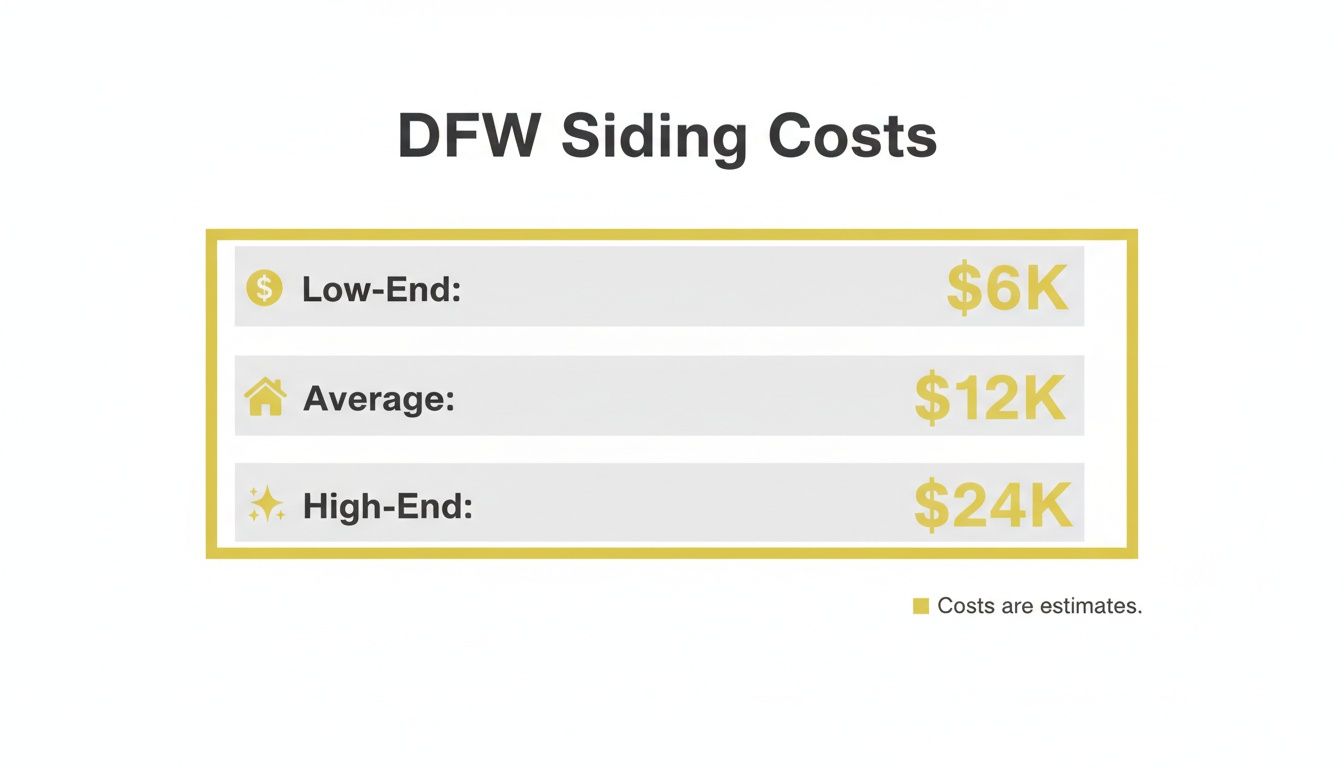
As you can see, an average job hovers around the $12,000 mark. But the final cost can swing quite a bit depending on whether you go for a budget-friendly option or a more premium setup.
Siding Materials: The Core Cost
The biggest chunk of your quote, without a doubt, will be the siding panels themselves. But even this isn't a simple, single line. A professional quote will break it down, specifying the brand, the style (like traditional lap or board and batten), and the quality of the vinyl. For instance, premium insulated siding costs more per square foot than a standard, builder-grade panel.
But the panels are only part of the puzzle. To do the job right, your home needs a handful of other critical components. These are non-negotiable for a clean, professional finish.
- J-Channel: This is the trim that goes around your windows and doors. It creates a neat, clean pocket for the siding to tuck into.
- Soffit and Fascia: Soffit is what you see when you look up at the underside of your roof's overhang, and the fascia is the board facing you at the roofline. They’re crucial for proper attic ventilation and protecting your roof structure from the elements.
- Starter Strips: You’ll never see them, but these strips are installed at the very bottom of the wall to lock that first row of siding securely in place.
- Corner Posts: These pieces create a crisp, finished look where two walls of siding meet at the corners of your house.
All of these trim and accessory pieces are essential for a weatherproof, long-lasting installation and are usually priced separately. If a quote seems to be missing these details, ask why. Sometimes minor issues with these can be fixed without a full replacement—you can learn more about common siding repairs and what to look for.
Labor and Associated Services
After materials, labor is your next biggest line item. This is what you’re paying for the crew’s experience, time, and hard work. Here in DFW, labor costs can vary, but they typically make up 30% to 50% of the total project price. It makes sense—a complex two-story house with lots of angles and dormers is going to require more labor hours than a simple, single-story ranch.
A quote that just lumps labor and materials into one vague number is hiding something. A transparent contractor will always separate these costs, so you know exactly what you’re paying for their team’s expertise.
Beyond just hanging the siding, a proper quote will also include other services that are part of the overall cost to replace vinyl siding.
- Tear-Off and Disposal: Ripping off all that old siding is tough work. This line item covers the crew's time to strip the old material down to the sheathing and the cost to legally haul it away and dispose of it. This can add $1,000 to $2,500 to the total job.
- Permits: Depending on which city you're in around the DFW metroplex, you might need a permit for a full re-siding project. A good contractor handles pulling the permit for you, and the fee is simply included in the quote.
- Supplies and House Wrap: This is a catch-all for things like nails, fasteners, and caulk. Most importantly, it includes the house wrap—a weather-resistant barrier that goes over the wall before the siding. It acts as a critical second line of defense against moisture getting into your walls.
Key Factors That Drive Your Final Siding Cost
It’s always a bit of a shock when you get two siding quotes that are thousands of dollars apart. You're left wondering, "What's causing such a massive difference?" The truth is, the total cost to replace your vinyl siding is about much more than just the price of the panels themselves.
Think of it like buying a car. The base model has one price, but as soon as you add the sunroof, a better engine, or all-wheel drive, that number starts to climb. Your siding project works the same way. The specific features of your home and the materials you pick are the "upgrades" that shape the final budget.
Your Home's Size and Architectural Complexity
The most obvious cost driver is the sheer size of your home. A sprawling 3,000-square-foot two-story house will simply require more material and more labor than a cozy 1,500-square-foot ranch. That’s just simple math.
But complexity can be just as important as square footage, if not more so. A simple, rectangular "box" of a house is straightforward. The work is clean, with minimal cuts and less fussy detail work.
Now, picture a house with more architectural personality:
- Multiple Stories: Working on a second or third story isn't as simple as working on the ground. It requires scaffolding and extra safety measures, which adds to the labor time.
- Gables and Dormers: Every peak and window popping out of the roofline means more precise cuts, custom fitting, and careful sealing to keep water out.
- Tons of Windows and Doors: Each opening has to be perfectly trimmed with J-channel. This adds up in both material cost and the time it takes an installer to get it right.
- Porches and Bay Windows: These beautiful features create extra corners and tricky transitions that demand a skilled hand to look seamless.
A home with a complicated layout can easily tack on 20-30% or more to the labor side of your quote compared to a simple house of the exact same size.
The Grade and Style of Siding You Choose
The quality and type of siding materials you select will heavily influence the final number. Not all vinyl is created equal, and the price per square foot directly reflects its thickness, durability, and special features.
While the national average project cost often sits around $12,297, we've seen complex homes here in the DFW area push past $31,000 based on these very choices.
To help you see where the money goes, it's useful to break vinyl siding into different tiers. Each grade offers a different balance of cost, looks, and longevity.
Vinyl Siding Grade Comparison Cost vs Benefits
| Siding Grade | Average Cost Per Sq. Ft. (Installed) | Key Features | Best For |
|---|---|---|---|
| Builder's Grade | $4 – $7 | Thinner panels (around .040"), basic color options, shorter lifespan. | Budget-focused projects, rental properties, or quick cosmetic fixes. |
| Standard Grade | $6 – $9 | Thicker panels (.042"-.044"), better color fade resistance, good durability. | The most common choice for homeowners seeking a balance of cost and quality. |
| Premium Grade | $8 – $12 | Thickest panels (.046"+), deep wood-grain textures, superior wind and impact resistance. | Homeowners wanting maximum curb appeal and long-term performance. |
| Insulated Vinyl | $9 – $16 | Panels with a rigid foam backing, improves energy efficiency (R-value) and noise reduction. | Homes in climates with extreme temperatures, like North Texas, to lower energy bills. |
Ultimately, the right grade for you depends on your budget and how long you plan to be in your home.
Style plays a role, too. Traditional horizontal lap siding is the most cost-effective option. If you opt for something more decorative, like vertical board and batten or vinyl shake shingles, expect both material and installation costs to go up because of the extra labor involved. If you're weighing all your options, our guide on James Hardie vs. Vinyl Siding offers more perspective on how different materials stack up.
The Unseen Costs Hiding Underneath
Sometimes, the biggest expenses are the ones you can’t see until the old siding comes off. Any professional contractor worth their salt knows to prepare for the unexpected.
The condition of your home's wall sheathing is the great unknown of any re-siding project. What we find underneath the old material can introduce necessary repairs that weren't in the initial scope.
Once we start the tear-off, we might discover issues like:
- Wood Rot: Water may have snuck behind the old siding over the years, causing the underlying plywood or OSB sheathing to decay. Any rotted sections must be cut out and replaced to give the new siding a solid, secure surface.
- Pest Damage: Termites, carpenter ants, or other pests can cause serious structural damage that has to be fixed before any new siding goes up.
- Poor or Missing House Wrap: If the original builders cut corners and skipped the weather-resistant barrier, we'll need to install a new one. It's a modest but absolutely critical cost for protecting your home.
A trustworthy contractor will always document this kind of hidden damage with photos. They’ll then provide a clear change order explaining the required repairs and costs before moving forward. It’s always a good idea to keep a contingency fund of 10-15% of your total project budget set aside, just in case.
Calculating the Real ROI of New Vinyl Siding
Seeing the price tag for a full siding replacement can feel like a gut punch. It’s easy to get sticker shock and see it as just a massive expense. But let’s reframe that number. Instead of thinking of it as money gone, see it as capital you’re investing in your biggest asset—your home.
New siding isn't just about making your house look pretty; it's a strategic move that pays you back in some very real ways. From boosting your home's value in a competitive market to literally cutting your monthly energy bills, it's an upgrade that works for you. The trick is to look past the immediate cost to replace vinyl siding and see the long-term financial benefits it unlocks.
Boost Your Curb Appeal and Resale Value
First impressions are everything in real estate, especially here in the hot Dallas-Fort Worth market. Siding that’s faded, cracked, or just plain outdated can scream "neglected," immediately dragging down a home's perceived value. On the flip side, a crisp, modern exterior is one of the fastest ways to grab the attention of serious buyers.
This isn't just a feeling; the numbers prove it. A vinyl siding replacement is one of the top home improvement projects for ROI. Industry reports consistently show homeowners recouping a huge chunk of their investment at resale, with a typical return on investment between 74.7% to 80%. That means a $16,000 project could add over $12,000 directly back to your home’s sale price. If you want to dive into the data, you can learn more about siding industry statistics and trends.
A home with fresh, clean siding tells potential buyers that the property is well-maintained and cared for. It builds immediate confidence and can be the deciding factor that leads to a faster sale at a higher price point.
Achieve Tangible Energy Savings Month After Month
While curb appeal pays off when you sell, another benefit starts putting money back in your pocket right away: energy efficiency. This is particularly true if you choose insulated vinyl siding. Standard siding offers some protection, but insulated panels have a rigid foam backing that essentially wraps your home in a cozy blanket.
This extra layer dramatically improves your home's thermal resistance, also known as its R-value. So, what does that actually mean for your wallet?
- Reduced Heat Transfer: During our scorching Texas summers, insulated siding helps block the sun's oppressive heat from getting into your walls. Your AC won't have to work nearly as hard to keep things cool.
- Improved Heat Retention: On those chilly winter nights, it does the opposite, keeping your expensive heated air inside where it belongs.
Those monthly savings on your utility bills really start to add up. Over the 20- to 40-year lifespan of new siding, the energy savings alone can offset a huge portion of the initial installation cost. You might even be able to snag some energy tax credits, sweetening the deal even more.
Enjoy Decades of Low-Maintenance Value
Finally, don't forget the savings that come from vinyl's incredibly low-maintenance nature. You’re not just buying siding; you're buying back your weekends and saving thousands on future upkeep.
Just think about the alternatives:
- Wood Siding: This requires scraping, sanding, and repainting every 3-7 years. That’s a job that can cost thousands of dollars a pop, not to mention its vulnerability to rot and pests.
- Painted Fiber Cement: While it’s tough, it still needs a fresh coat of paint every 10-15 years to keep it looking good and properly sealed from the elements.
Vinyl siding, on the other hand, asks for almost nothing. The color is baked right into the material, so you’ll never have to paint it. Ever. An occasional rinse with a garden hose is all it takes to keep it looking great. This frees you from thousands of dollars in future expenses and countless hours of work, making that initial investment look better and better every year.
Smart Strategies to Save on Your Siding Replacement
While replacing your siding is a significant investment, it definitely doesn't have to break the bank. With some smart planning and a few strategic moves, you can manage the cost to replace vinyl siding without skimping on the quality of your home's new look. It really just comes down to knowing where you can find savings.
Think of it like booking a vacation—the price can change quite a bit depending on when you decide to go. The same logic applies to construction. By being proactive, you can stretch your budget further and get the absolute best value for your money.
Time Your Project for the Off-Season
One of the most effective ways to save is also one of the most overlooked: schedule your siding replacement during a contractor’s slow period. For most of us here in the Dallas-Fort Worth area, peak season runs from late spring through summer when the weather is perfect and everyone is trying to get projects done.
Booking your project during the off-season, typically in the late fall or winter, can lead to real savings. Contractors are often more flexible with their pricing to keep their crews busy during these slower months. This simple shift in scheduling could cut your overall cost without changing a single thing about the materials.
Get Multiple, Detailed Quotes
You should never, ever accept the first quote that comes your way. It's crucial to get at least three detailed bids from reputable, local contractors. This isn't just about finding the lowest price; it’s about understanding the market rate and making sure you're getting a comprehensive and fair offer.
A professional quote should be an itemized document, not just a single number scribbled down. Comparing detailed bids lets you see exactly what each contractor includes, from tear-off and disposal fees to the specific grade of vinyl and type of house wrap.
This level of transparency helps you spot any outliers—bids that are unusually high or even suspiciously low. A surprisingly cheap quote might be a red flag for a contractor who cuts corners on materials or doesn't carry proper insurance.
Make Smart Material and Color Choices
The type of siding you pick is a huge cost driver, but you can save money here without settling for a low-quality product. Often, the difference between a mid-grade and a premium-grade panel is more about aesthetics, like deeper wood-grain textures, than it is about core durability. Choosing a quality standard or mid-grade siding can give you excellent performance for a lower price tag.
Color choice matters, too. While custom colors are an option, they almost always come at a premium. Sticking with a manufacturer's standard color palette can significantly trim your material costs. These palettes offer a huge range of popular and attractive options, so you won't feel like you're sacrificing style. If your siding was damaged by a storm, it’s also a good idea to research how to maximize your insurance claim payout to help cover these costs.
Consider a DIY Demolition (With Caution)
If you're handy and don't mind some physical labor, you could think about tearing off the old siding yourself. This can save you the $1,000 to $2,500 that contractors typically charge for demolition and disposal. However, you need to know this approach comes with some serious risks.
Before you start swinging a hammer, keep a few key things in mind:
- You'll be responsible for renting a dumpster and getting rid of all the old material properly.
- It's possible to accidentally damage the underlying wall sheathing, which could lead to more expensive repairs down the line.
- This is a physically demanding job that requires the right safety equipment.
If you decide to go this route, make sure you talk it over with your contractor first. For those curious about the proper techniques, our guide on how to install siding offers some valuable insights into the process.
Hiring the Right DFW Siding Contractor for Your Home
Picking out the perfect siding is only half the job. Even the best insulated vinyl on the market can fail if it’s put on your home the wrong way. That’s why the most important decision you'll make isn't about what it costs, but who you hire to install it.
A truly experienced contractor does so much more than just nail up panels. They make sure every single cut is precise, every seam is weatherproof, and every corner is sealed perfectly. Think of them as the captain of your renovation—their skill determines whether your project is a success or springs a leak with costly mistakes down the road.
Your Checklist for Vetting DFW Siding Professionals
Finding a trustworthy siding expert in a busy market like Dallas-Fort Worth can feel like a huge task, but having a clear plan makes all the difference. Don't just settle for the first name that pops up. Use this checklist to properly vet every contractor and protect your home investment.
Here are the non-negotiable steps you should take:
- Verify License and Insurance: This is step one, and it's the most important. Any legitimate contractor must have general liability insurance and worker’s compensation. You need to ask to see the certificates. This is what protects you from being liable if an accident happens on your property.
- Check Local Reviews and References: Look for recent, detailed reviews on sites like Google and the Better Business Bureau. A great contractor will also be happy to give you a list of past clients in the DFW area you can call to hear about their experience firsthand.
- Demand a Detailed Written Contract: Never, ever move forward on just a verbal agreement. A professional contract clearly lays out the scope of work, the specific materials (brand, color, grade), the total cost, a payment schedule, and the estimated start and end dates.
A contractor who hesitates to show you proof of insurance or give you a detailed written quote is waving a giant red flag. Transparency isn't just a nice bonus; it’s the absolute minimum for any professional you let work on your home.
Why Choose Moore Construction Co. as Your Partner
Figuring out the cost to replace vinyl siding and finding a team you can count on is a big deal, but it doesn't have to be a stressful one. For over 25 years, Moore Construction Co. has been the go-to partner for homeowners all across North Texas. We aren't just another siding company; we're your neighbors, and we’re dedicated to protecting and beautifying homes right here in the DFW community.
We’ve built our name on a foundation of top-quality craftsmanship and straightforward honesty. When you work with us, you get a clear, itemized quote with no hidden surprises, so you know exactly where your money is going. Our experienced crews are true masters of their craft, guaranteeing your new siding is installed to the highest possible standards.
Ready to take the next step with confidence? Let’s talk. Schedule your free, no-obligation consultation with Moore Construction Co. today, and let us show you how the right professional partnership can completely transform your home.
Common Questions About Vinyl Siding Projects
Even after getting all the details, it’s completely normal to have a few more questions pop up. The total cost to replace vinyl siding is a significant investment, and you deserve to feel 100% confident before moving forward. We’ve put together some quick, straightforward answers to the questions we hear most often from homeowners right here in the DFW area.
How Long Does a Siding Replacement Take?
For a typical home in North Texas, a full vinyl siding replacement usually takes about one to two weeks.
Of course, this can vary. A straightforward, single-story ranch might be on the shorter end of that timeline. On the other hand, a complex two-story home with lots of gables, dormers, and other architectural features could take a bit longer.
The project breaks down into a few main stages:
- Tear-Off and Prep: This usually takes 1-3 days. We’ll remove the old siding and get a good look at the wall sheathing underneath to check for any hidden issues.
- Installation: This is the longest part, typically 4-7 days. We'll install the new house wrap, trim, and of course, the siding panels themselves.
- Finishing Touches: We budget 1-2 days for a thorough cleanup and a final, detailed walkthrough with you to make sure everything is perfect.
Can New Siding Be Installed Over My Old Siding?
We get this question a lot, and while it seems like a great way to save a little on labor, the answer is almost always a firm "no." Trying to install new siding over old material is a shortcut that professional contractors will strongly advise you against.
Putting new vinyl over old siding—sometimes called "face-nailing"—is a bad idea. It prevents us from properly inspecting the wall sheathing for rot or damage, can create a lumpy and uneven finish, and might even void your new siding's warranty.
A quality, long-lasting job always starts with a clean slate. Removing the old siding is the only way we can guarantee your home's underlying structure is sound and that your beautiful new siding will be installed securely for a weatherproof finish that lasts for decades.
What Kind of Warranty Should I Expect?
A quality vinyl siding project should always come with two different warranties to protect your investment.
First, you'll have the manufacturer's product warranty. This covers any defects in the siding material itself, like cracking, peeling, or major fading. Depending on the quality of the siding you pick, this warranty can last anywhere from 20 years to a lifetime.
Just as important is the second warranty: the contractor's workmanship warranty. This is our promise to you, covering any issues that might come up from the installation itself. A trustworthy contractor will always stand behind their work, and we typically offer a labor warranty of 1 to 10 years.
Ready to get a clear, transparent quote for your siding project from a team you can trust? At Moore Construction Co., we provide detailed estimates and high-quality installations backed by decades of experience in the DFW area. Schedule your free consultation today and let's get started.


